
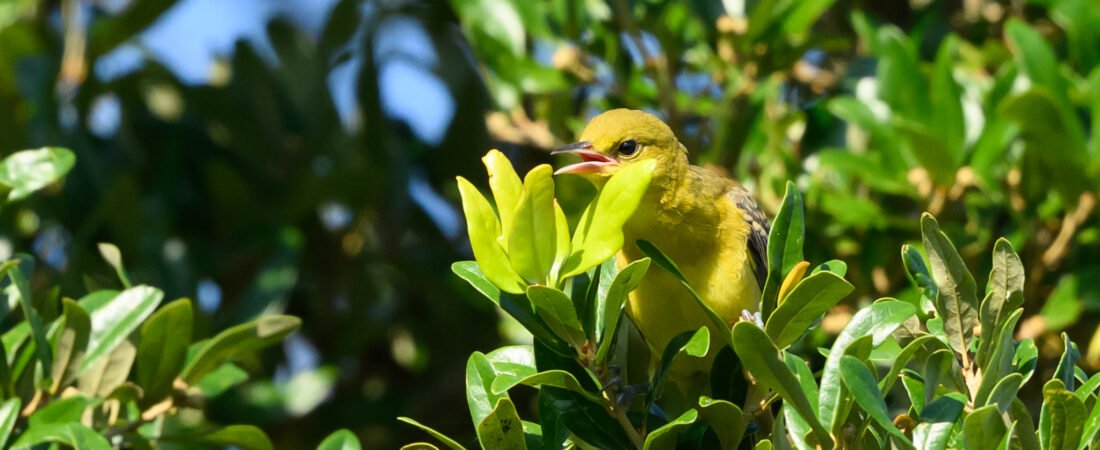
The Orchard Oriole is a small bird – smaller than a Baltimore Oriole, but larger than warblers and vireos. In fact, they’re the smallest of all America’s orioles. They have medium-length tails, rounded heads, and a straight, sharply pointed bill.
Males are mostly black above with chestnut underparts and a chestnut patch in the wing. Females and recently fledged young look similar – greenish yellow with white wingbars. Young males get a distinctive black throat patch in their first spring, but don’t molt into full adult colors until their second fall, roughly 18-20 months after hatching.
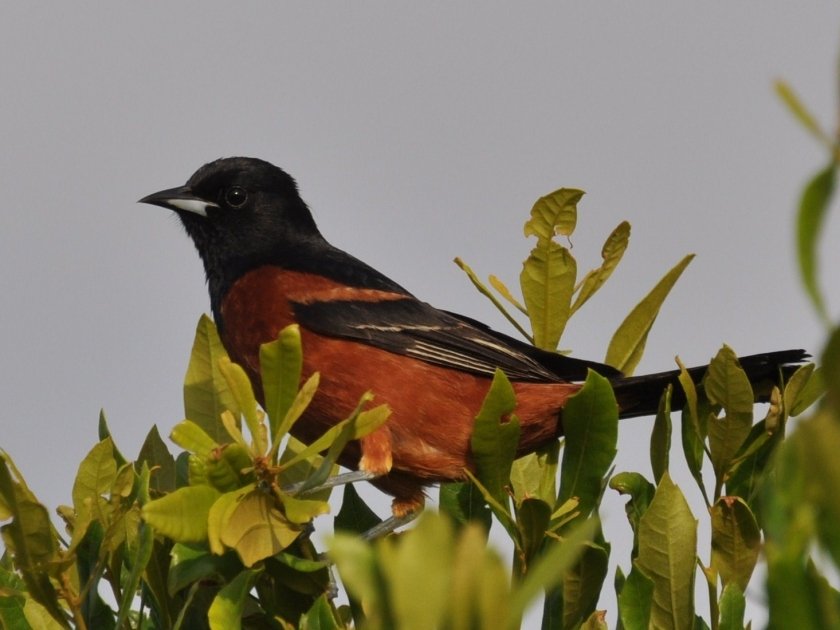
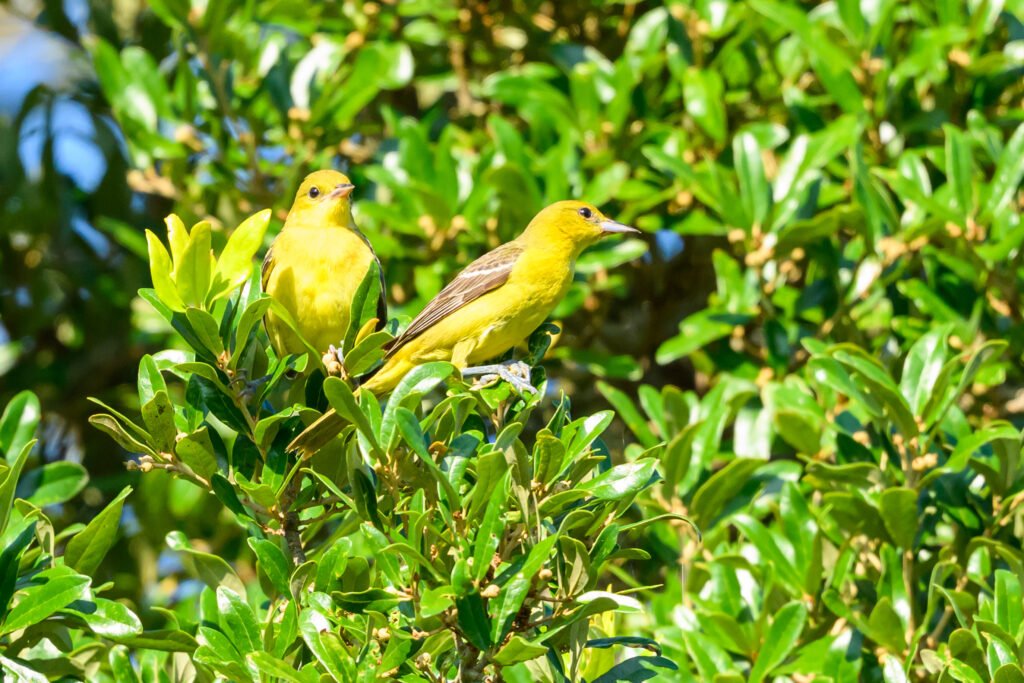
Like many birds, their song is often the best way to locate them. Their sweet whistles may at first sound like other familiar birds such as robins or grosbeaks, but listen for harsh churrs and chatters mixed with the sweet notes to help distinguish this species. Click here for an example of their song.
Orchard Orioles don’t visit seed feeders, but they may drink nectar from hummingbird feeders or visit slices of oranges or offerings of fruit jelly (although provide jelly in small amounts at a time so it doesn’t get too messy). They’re also insectivores, so a shrubby backyard may provide enough insects and spiders to attract them. Other insects they eat include parasitic wasps, ants, bugs, caterpillars, grasshoppers, crickets, beetles, and mayflies. Sometimes they dip their head into a flower opening for nectar, picking up pollen along the way, but other times they take a more direct route, piercing flowers such as trumpet creepers and black locust at their bases and bypassing the pollen. Their diet shifts to mostly fruit just before fall migration. Migrating flocks forage on ripe mulberries, chokecherries, and other berries. On their Central American wintering grounds they feed on fruits, nectar, and pollen.
Orchard Orioles build nests in a variety of tree species, including maple, ash, cottonwood, willow, elm, white pine, Norway spruce, oak, magnolia, and pecan. The nests are usually attached to forked twigs or branches away from the main trunk, at varying heights from the ground.

The female does most of the nest building, completing the project in about six days. Suspended from a forked twig, the nest is woven from long blades of green grass that turn yellow as they dry, and usually lined with fine grasses, plant down, catkins, cotton, animal wool, bits of yarn, and feathers. It measures about 4 inches across and 3 inches deep on the outside, with an inner cup measuring 2.5 inches across and 2 inches deep. The eggs are usually visible through the loosely woven nest bottom. Each clutch size is 4-6 eggs, and they have 1-2 broods per season.
Orchard Orioles are monogamous within each breeding season, but they find a new mate each year. They are relatively unterritorial, but adult males may defend small foraging territories by chasing off females and immature males. Orchard Orioles show little aggression toward other birds; they may nest in the same tree as Baltimore and Bullock’s Orioles, and in close quarters with other birds such as Eastern and Western Kingbirds, American Robins, and Chipping Sparrows.
Orchard Orioles migrate north late in the spring and head southward early, with some returning to their wintering grounds as early as mid-July. Because of the short breeding season, researchers have trouble distinguishing between breeding orioles and migrating ones in any given location. The young Orchard Orioles pictured above were spotted at Palmetto Lake on July 2nd, so you may be able to see them flying between the trees while out on your morning walk.
If you’d like to learn more about Orchard Orioles, including a map showing their range, please visit: Cornell Lab All About Birds: Orchard Oriole