
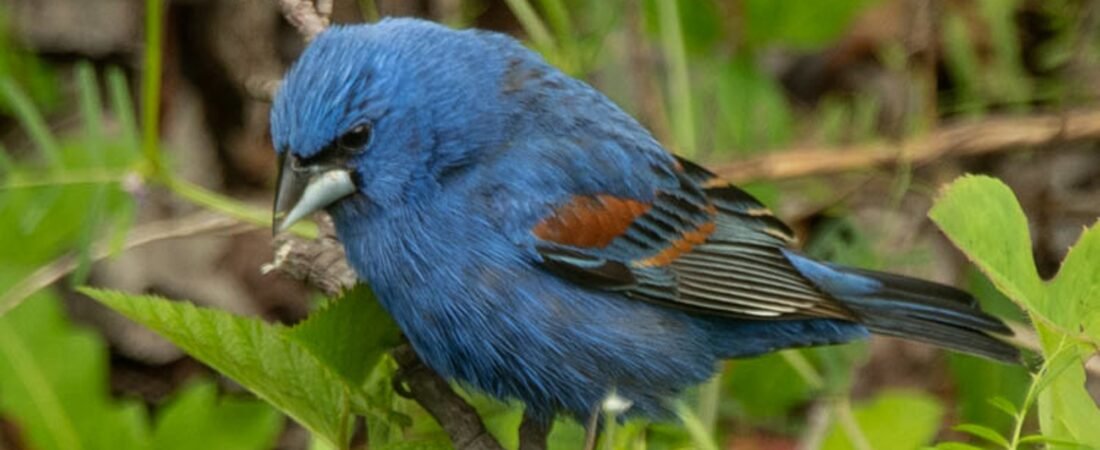
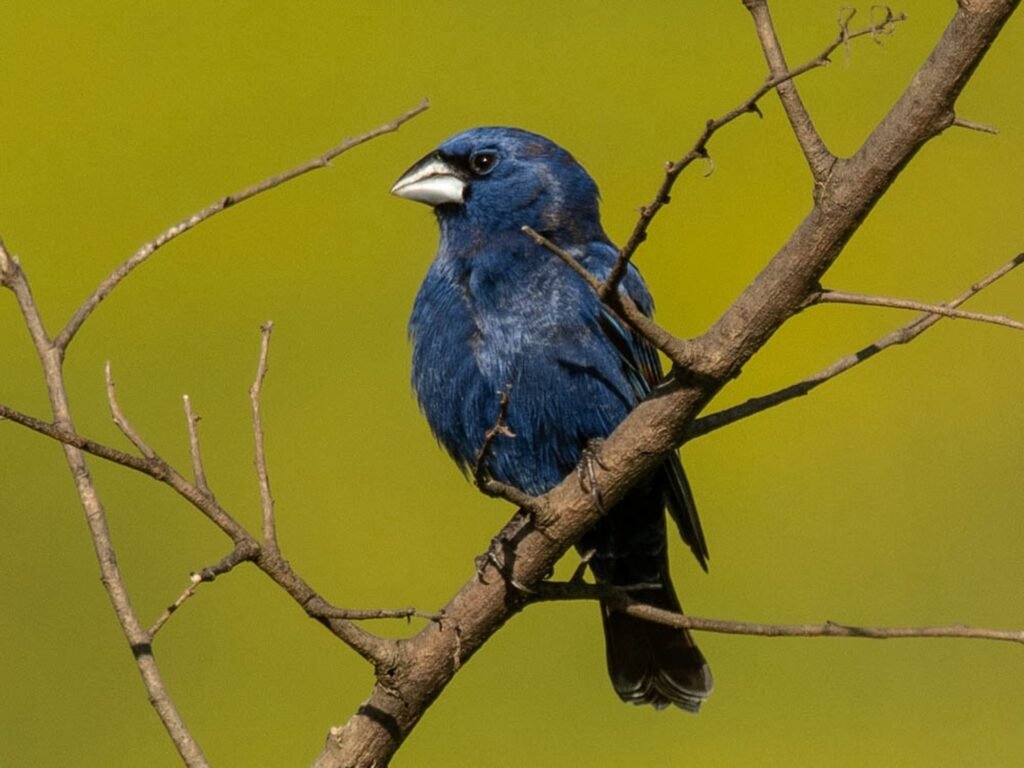
A large, vibrantly blue bunting, the male Blue Grosbeak sings a rich, warbling song from trees and roadside wires. A bird of shrubby habitats, these richly colored birds can be hard to spot unless you hear them singing first. They are widespread but not abundant across the southern U.S., and are expanding their range.
Breeding males are a beautiful, deep blue overall, with chestnut wingbars. Females and non-breeding males are a cinnamon color overall, with brown wingbars. They are larger than an Indigo Bunting, but slightly smaller than a Brown-headed Cowbird. They’re a stocky songbird with a very large, triangular bill that seems to cover the entire front of its face, from throat to forehead.
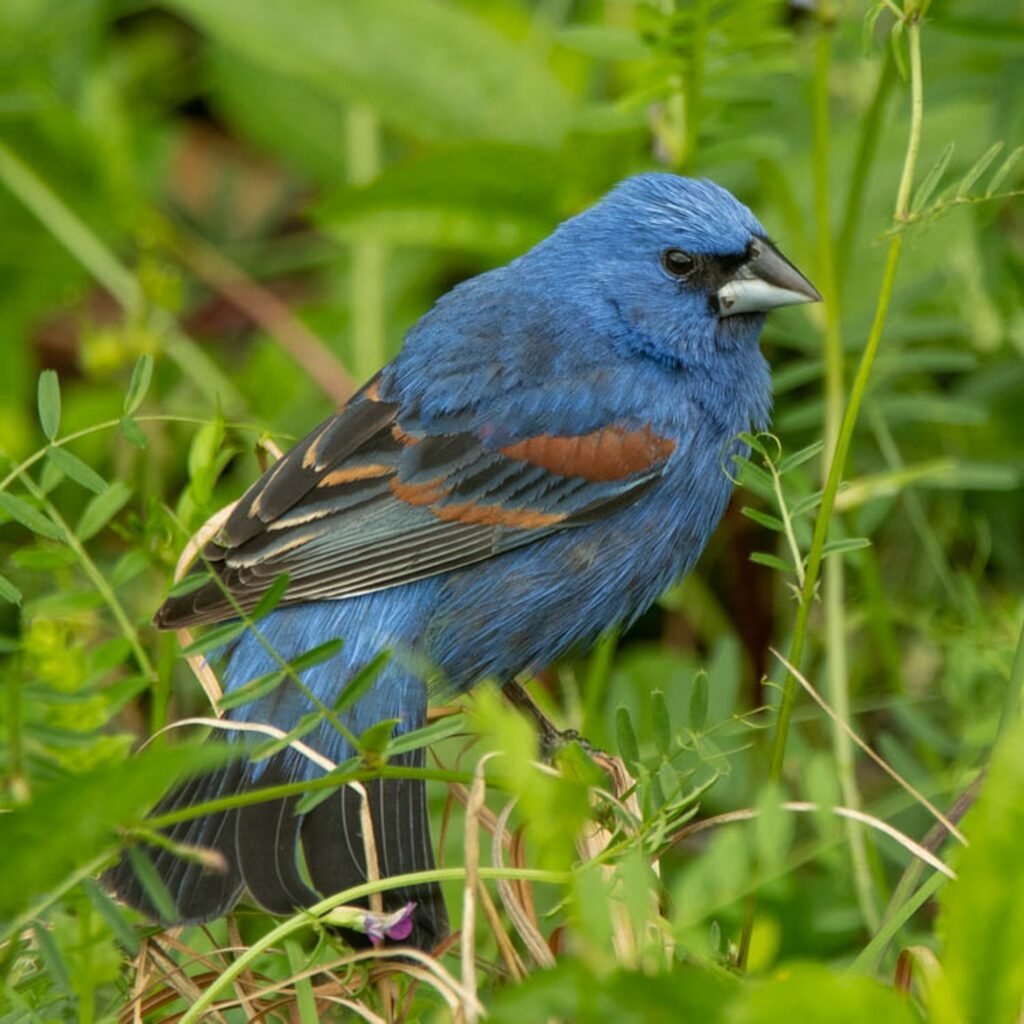
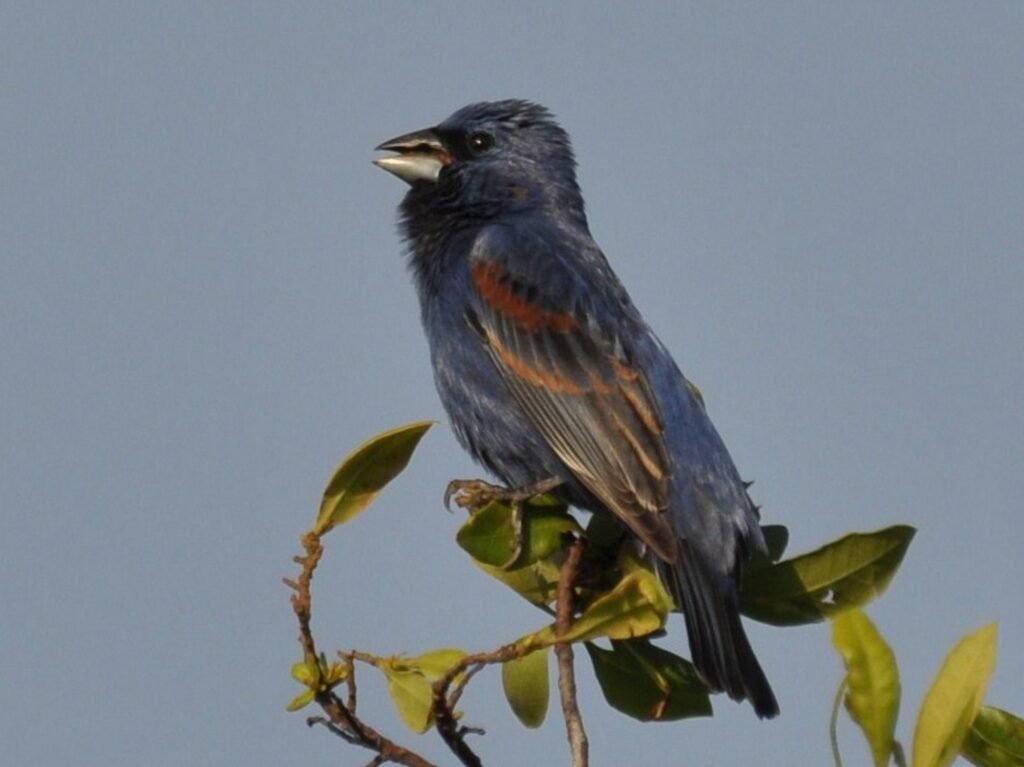
Blue Grosbeaks are characteristic species of old fields beginning to grow back into woodland. They breed in areas covered in a mix of grass and shrubs, with usually a few taller trees. In more-arid areas, they often use the shrubby growth along watercourses.
They’re unobtrusive despite their bright colors, although in summer males frequently sing their pleasant, rich, warbling songs. Often they sing while perched at high points in the shrubs and small trees of their generally open or shrubby habitats. Listen for their loud, almost metallic chink call. Also watch for this species’ odd habit of twitching its tail sideways.
Although they feed mostly on insects (especially grasshoppers and crickets), Blue Grosbeaks also eat other invertebrates such as snails, along with the seeds of wild and cultivated grains. Their insect diet includes beetles, bugs, cicadas, treehoppers, and caterpillars. The grain portion of their diet includes seeds of bristlegrass, panicgrass, wheat, oats, rice, corn, and alfalfa. They hover and glean food from foliage, sally out for flying insects from a perch, and even hunt for insects on the ground. Before feeding an insect to their nestlings, they remove the head, wings, and most of the legs.
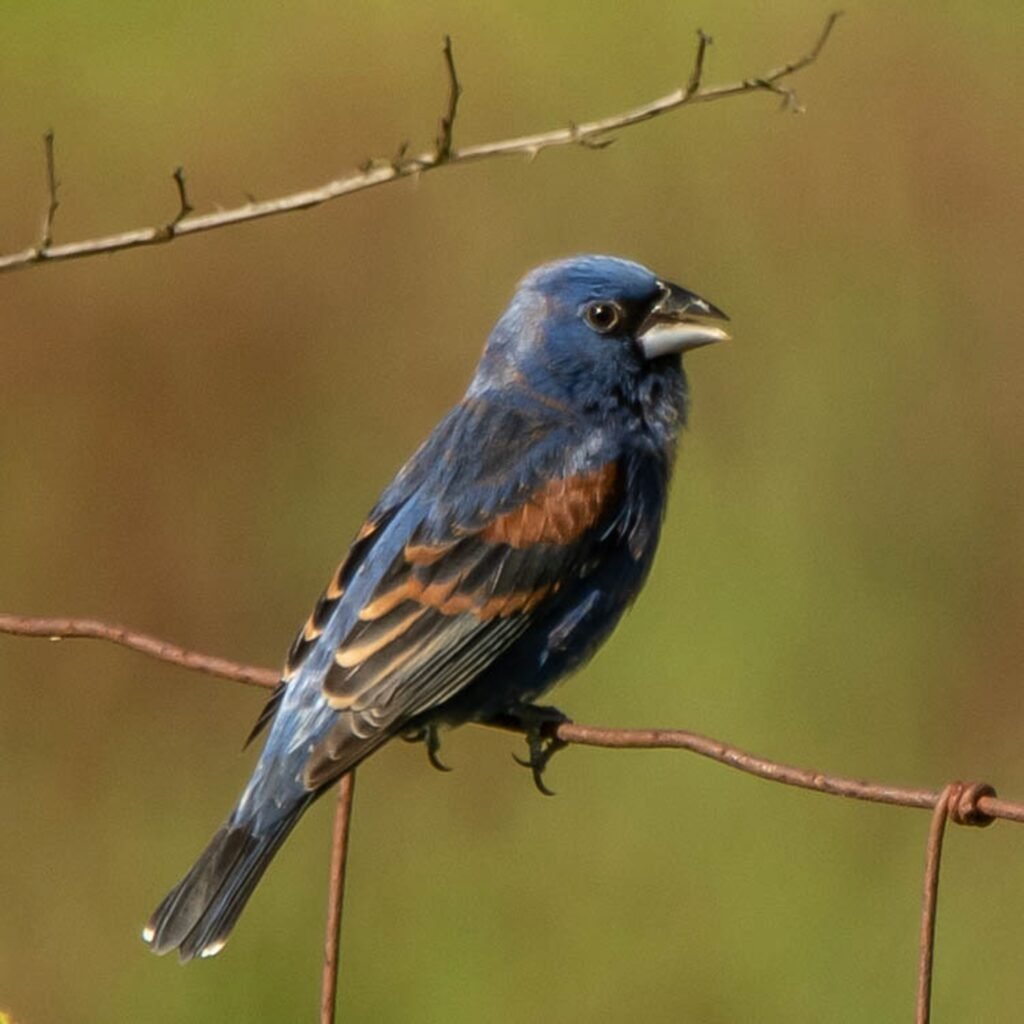
Males arrive on the breeding grounds early in the season and form feeding flocks before females arrive. Each breeding pair defends a territory 2-20 acres in size during nest building and incubation, allowing the territory to shrink once the nestlings hatch. Blue Grosbeaks usually build their nests low in small trees, shrubs, tangles of vines, briars, or other vegetation, often near open areas or roads.
The female probably does most of the construction, but males sometimes build nests as well. The compact, cup-shaped nest is woven from twigs, bark strips, rootlets, cotton, rags, newspaper, string cellophane, snakeskin, dead leaves, or other materials. The inner cup measures 2–3 inches across and about 2 inches deep, and is often lined with rootlets, hair, and fine grasses. Each clutch has 3-5 eggs and they raise 1-2 broods. Hatchlings are helpless, with brownish-gray down and closed eyes, but they mature quickly, leaving the nest in approximately 10 days. Blue Grosbeaks are unfortunately heavily parasitized by cowbirds, which lay their own eggs in the grosbeak’s nest.
Fun Fact: The oldest Blue Grosbeak on record was a male and at least 10 years, 11 months old when he was recaptured and rereleased during banding operations in Ohio in 2017.
Photos by: Ed Konrad
Source: Cornell Lab All About Birds – Blue Grosbeak