

In the last three blogs, I discussed our Galapagos Island adventures with the Mockingbirds, Darwin Finches, Reptiles, and Mammals. While the whole ecology is built upon the geology, ocean currents, and resulting plants that would take a book and those have already been written.
With this next Galapagos Island blog, I intend to focus on some of the bird species unique to the island. Endemism can be confusing as some birds are endemic breeders and others endemic subspecies.
We have already explored 20 of the land species—four mockingbirds and 16 finch species. This blog contains two portions, the land birds and the sea birds. I will limit this land portion to just five species: Galapagos Dove, Lava Gull, Lava Heron, Galapagos Hawk, and Galapagos Flycatcher.
Birds that primarily nest on the Galapagos Islands, yet range out to sea include the Swallow-tailed Gull, Galapagos Penguin, and Wave Albatross.
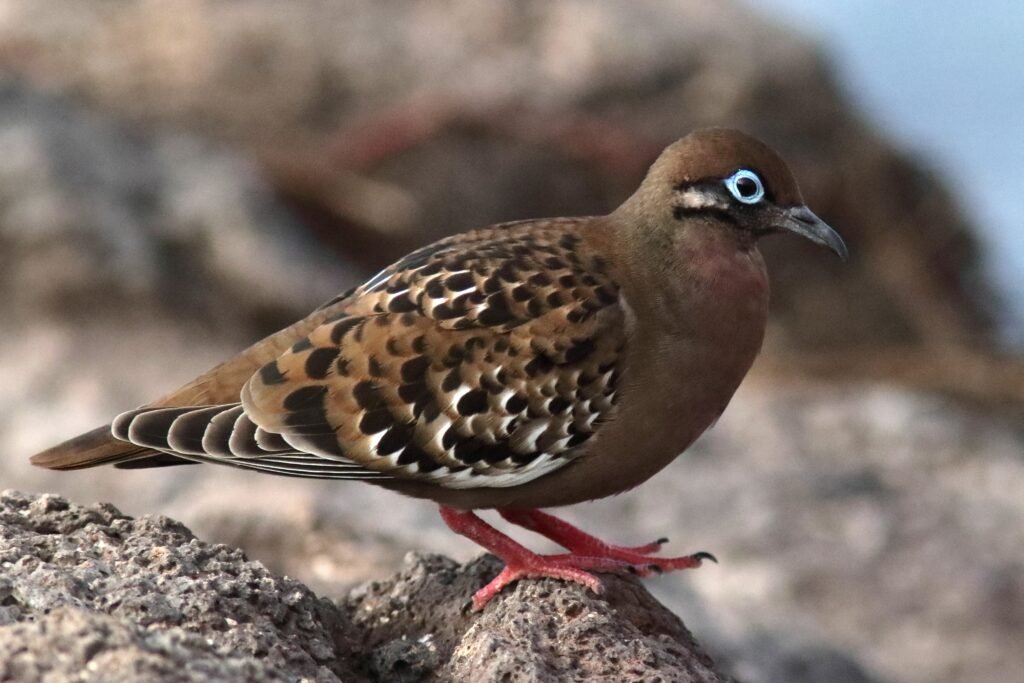
The Galapagos Doves, while considered “Near-Threatened” were on most of the islands we visited. This species may be the most attractive dove I have ever seen. Like many birds on the islands, they show little fear of humans and were easy to see and photograph. Early sailors reported that they would wait until the doves came close, then they bop them with a stick. There was one report from as recent as 1965 of ten men eating 9,000 doves in 10 months. Currently, their primary danger comes from feral cats.
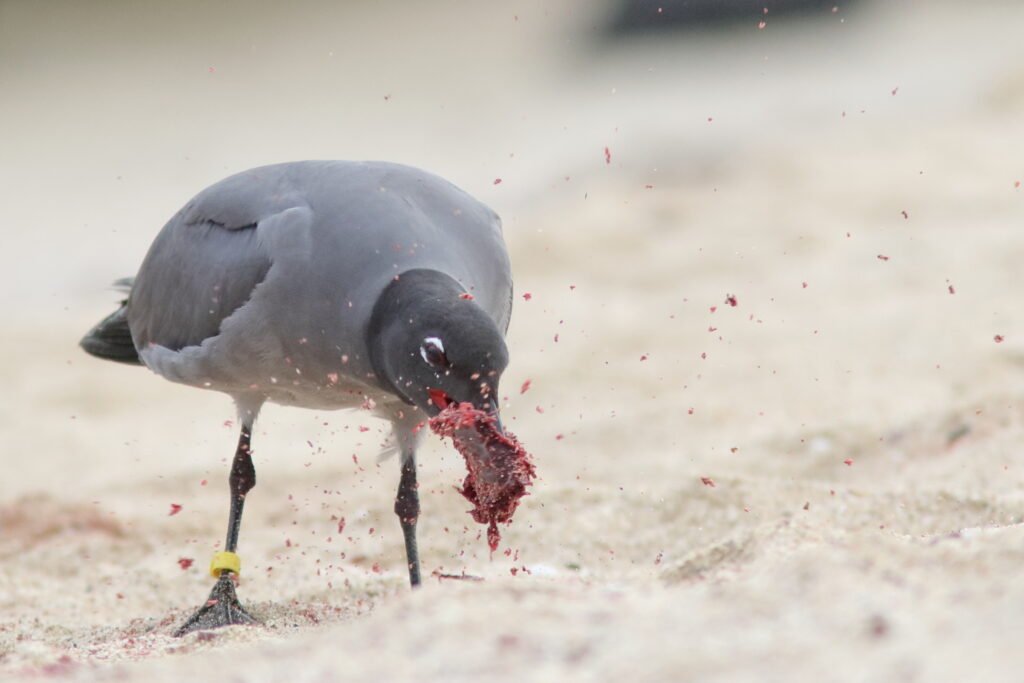
The Lava Gulls look like a Laughing Gull that rolled around in ashes. This dark color helps them blend in with the leave rocks of the islands. The Galapagos Conservancy Trust estimates that only about 400 Lava Gulls live on the earth, all restricted to the Galapagos Islands, making this the world’s rarest gull. We were fortunate enough to see them on five of the islands we visited. As scavengers, they feed on a variety of thing including the discarded Sea Lion placenta (as seen in the image), dead fish, baby iguanas and birds, and small fish. They will also steal crabs from the Lava Herons.
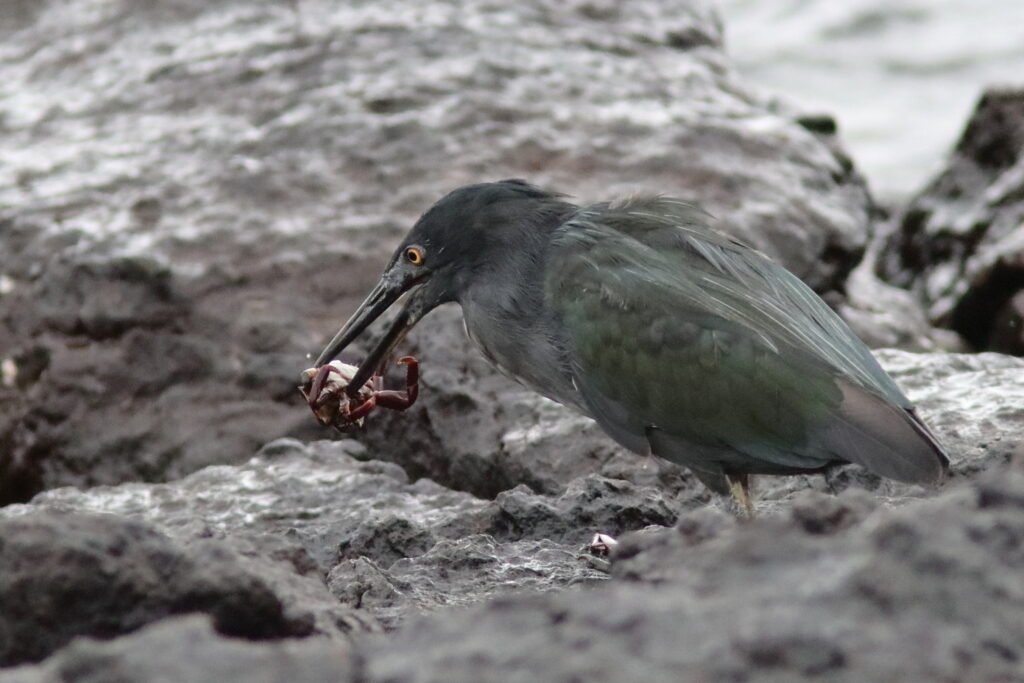
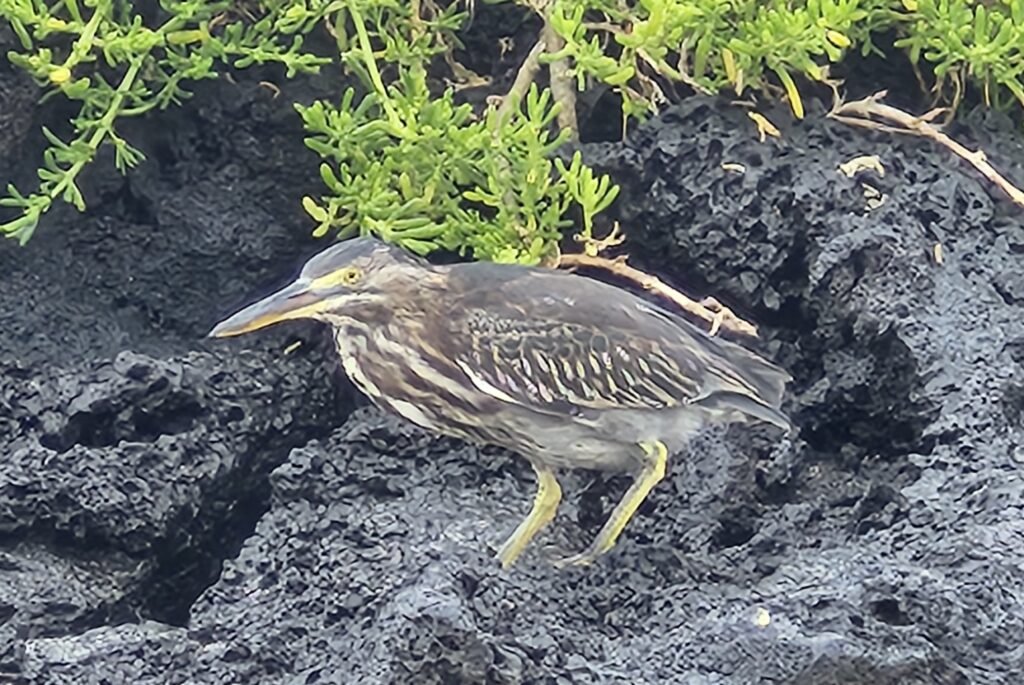
This dark grey heron, a Lave Heron, feeds along the rocky shoreline feasting on fish and crabs. The dark color may keep it hidden from its prey. Note the difference between this and the Striated Heron image below.
Some bird nomenclature organizations (including Cornell Labs Birds of the World) considered this a subspecies of the Striated Heron (which a split of the Green-backed Heron created “our” Green Heron and the rather cosmopolitan Striated Heron). Both the Striated Heron and the Lava Heron live on the Galapagos Islands. Others like the International Ornithological Community (IOC) treat it as a separate species. Both are found on the islands. You can see the difference here. Just this June, the various nomenclature agencies agreed the Lava Heron is its own species. The people on the Galapagos Islands were always convinced it was a separate species. Who said, “Taxonomy is dead?”
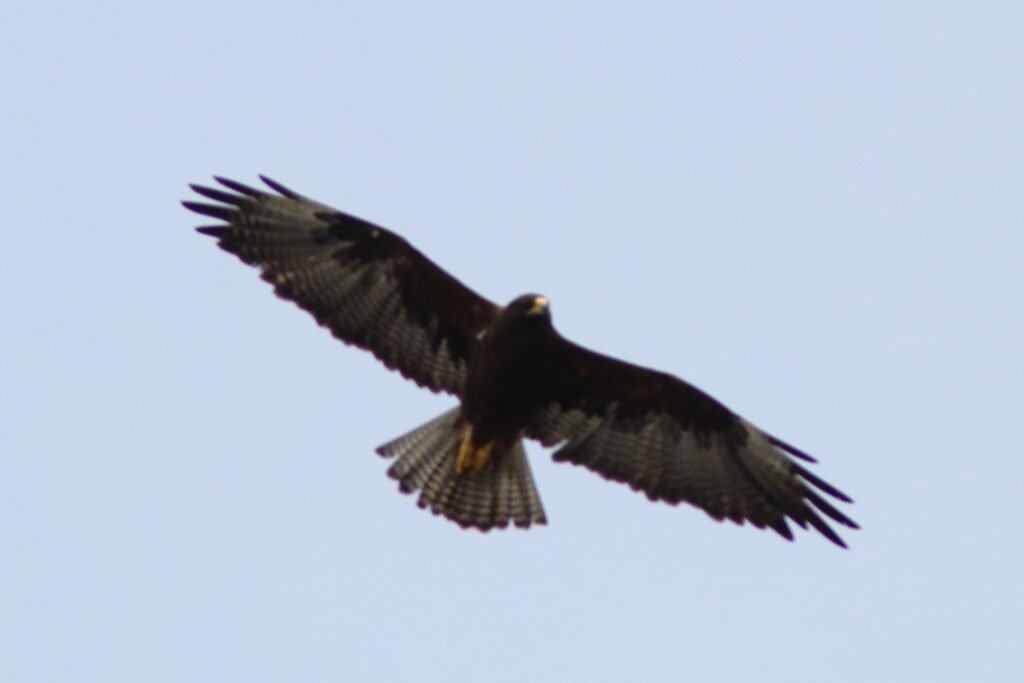
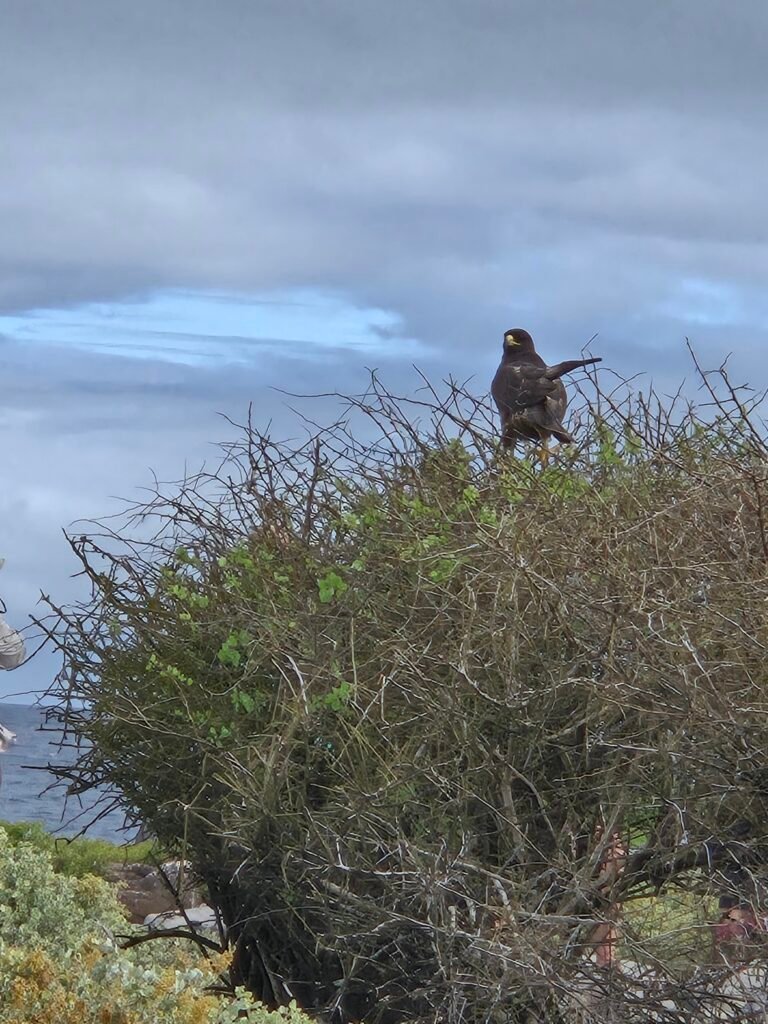
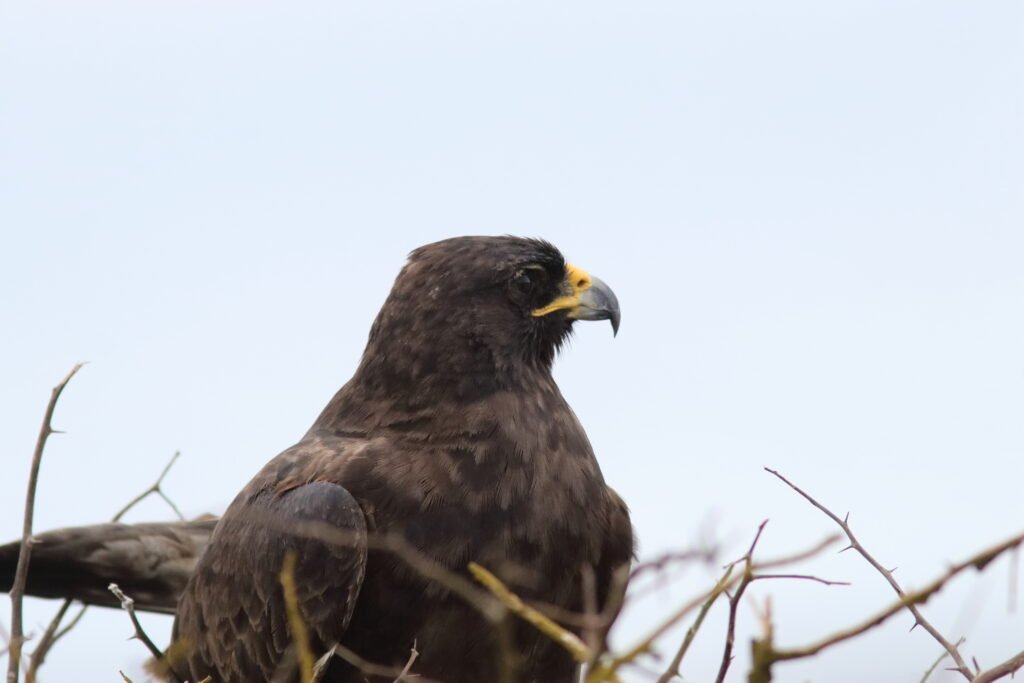
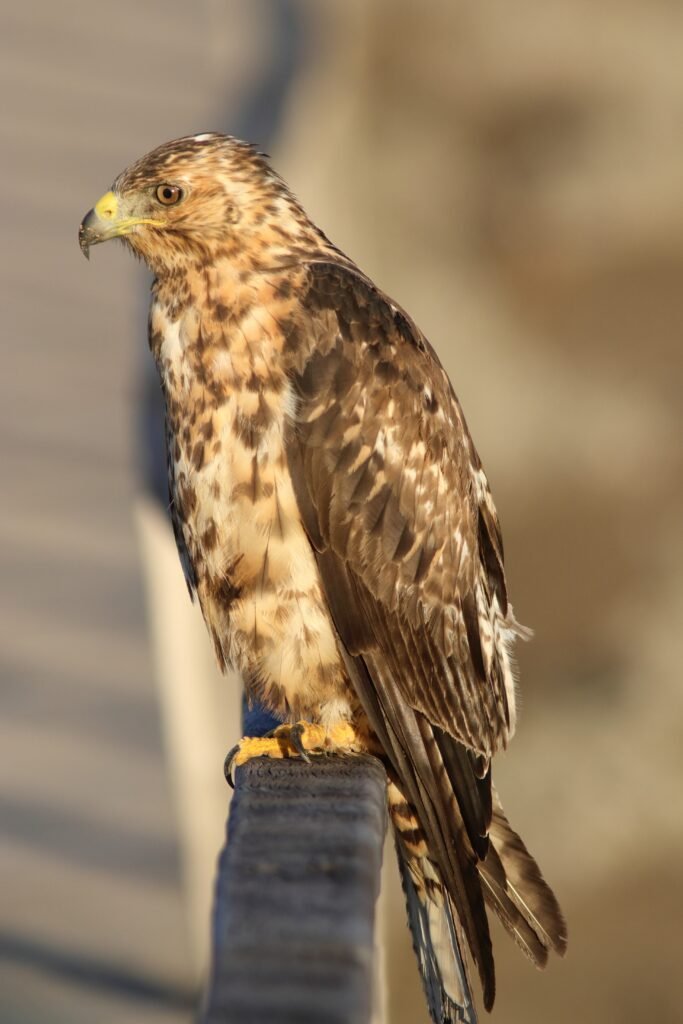
When Darwin found his Galapagos Hawk, he considered it a caracara. It was John Gould who set him straight. A dark hawk, it has the classic buteo shape, like a Red-tailed hawk, broad wings and broad tail. Uncommon on the Galapagos Islands they remain quite non-plussed by human beings. The four pictures include a fuzzy one that shows the buteo shape, a dark adult standing on a bush and a head shot and a pale young bird standing on a railing. Look closely at the bush and off to the left is someone’s arm. That picture was taken with a cell phone. The uncropped head shot is the same bird with my telephoto lens. The young bird was standing on the railing of a walkway. When we first came upon it, the bird sat so that the sun was behind it and just a shadow. To get this image, the whole boat load (15 people) walked past the bird and then I could get a nice shot.
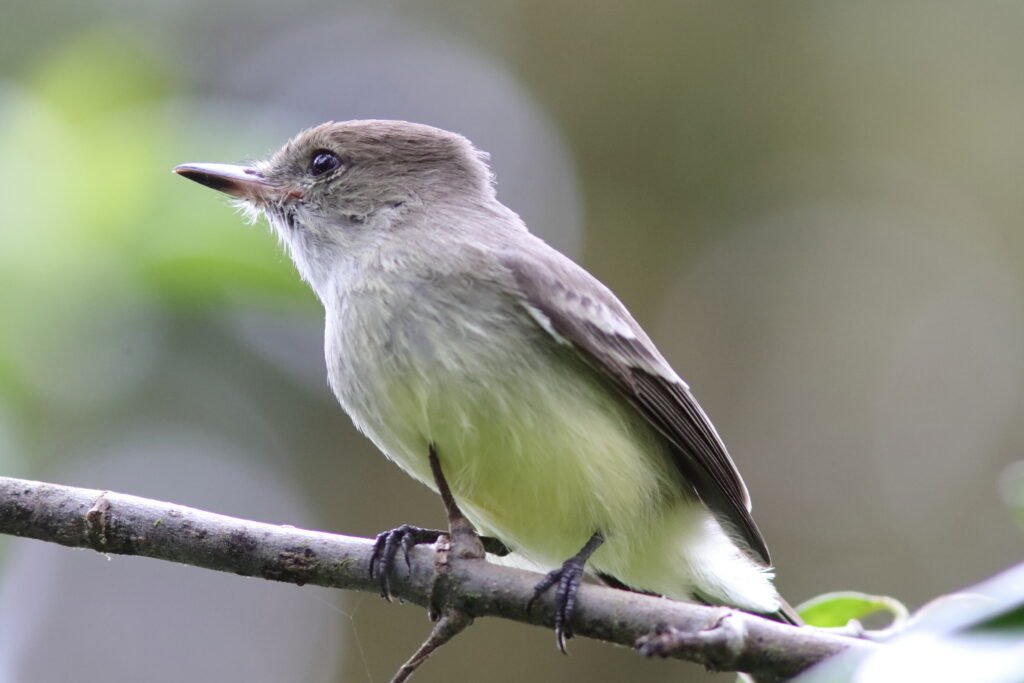
The final land bird, the Galapagos Flycatcher looks very similar to the Brown-crested Flycatcher of Texas and Arizona because it is closely related. Those of us in the east might compare it to the Great-crested Flycatcher, another relatively close kin. While common, not much is known about this species. It has benefited from human development as it likes the non-native trees that develop nesting cavities something in short supply on the native Galapagos Islands.
This is one of only three flycatchers on all of the Galapagos Island. The other two look like the very common Vermillion Flycatcher, but genetics indicated the Galapagos Island has two separate species. Unfortunately, one has already gone extinct, and the other is very close to being gone forever due to rats, and the avian vampire fly (Philornis downsi) which lays its eggs on newly hatched birds so the fly larva can eat the baby birds.
The Galapagos Conservancy Trust and the Galapagos National Parks now provide insecticide-soaked nesting material for the Galapagos Vermillion Flycatcher to use. It appears to be working, bringing these birds back from extinction.
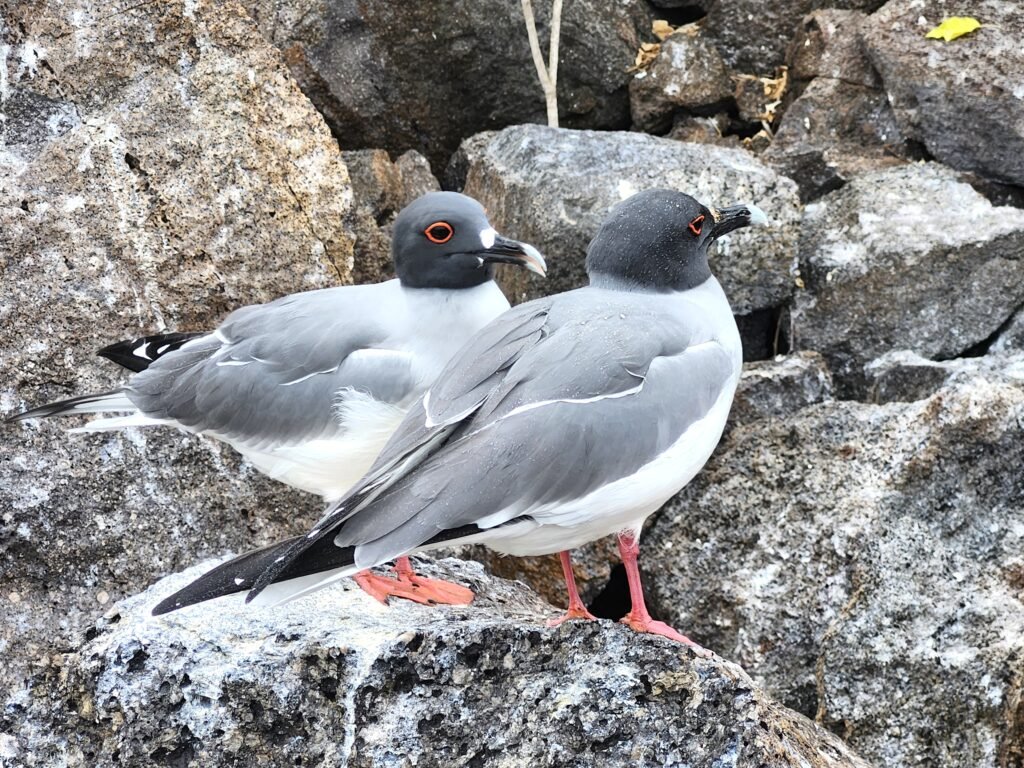
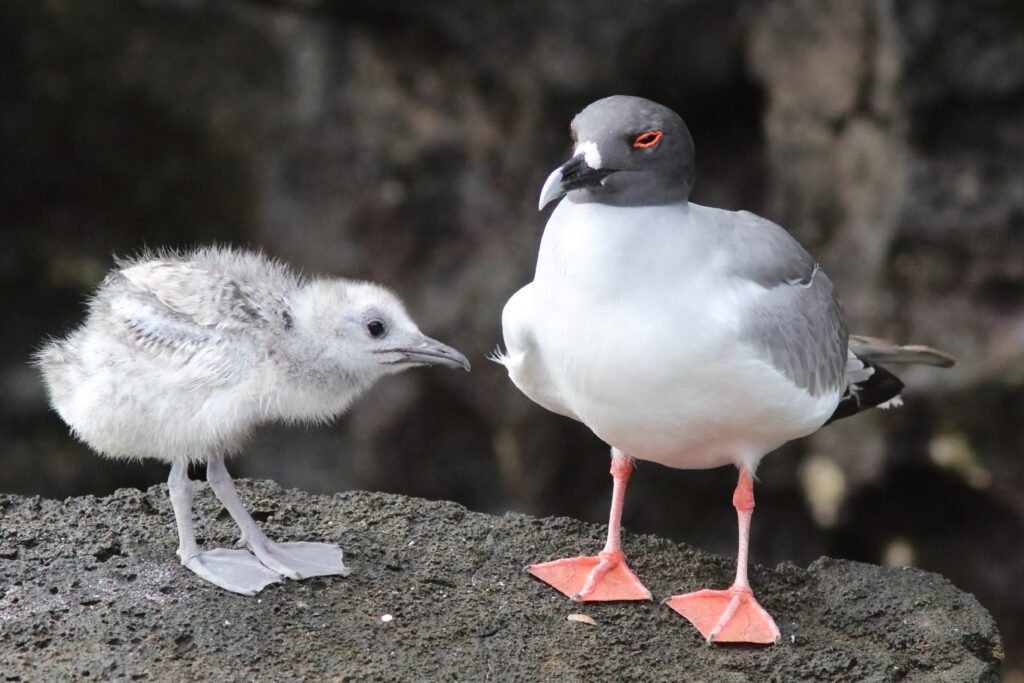
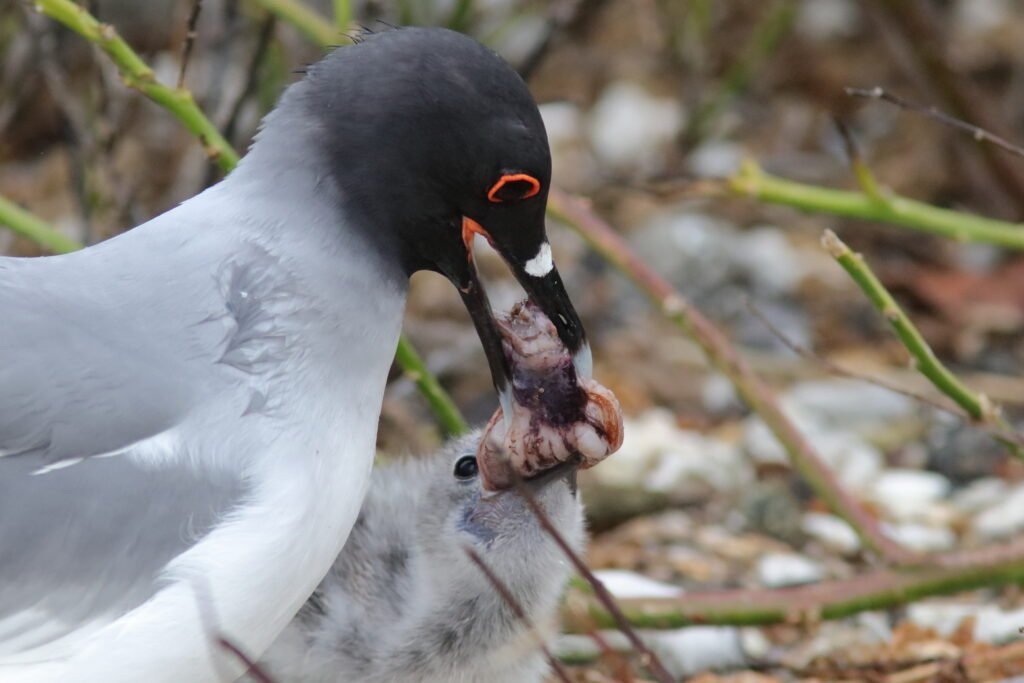
Virtually endemic, the gorgeous Swallow-tailed Gull breeds on the Galapagos Islands and one tiny island in Columbian Waters. We often found these birds lounging around all day, occasionally feeding their young their favorite food, squid. The squid hunt happens at night when the squid rise up in the water column to where the gulls can catch them. That makes this the only nocturnal gull species. Presumably, its larger eyes help it to see at night.
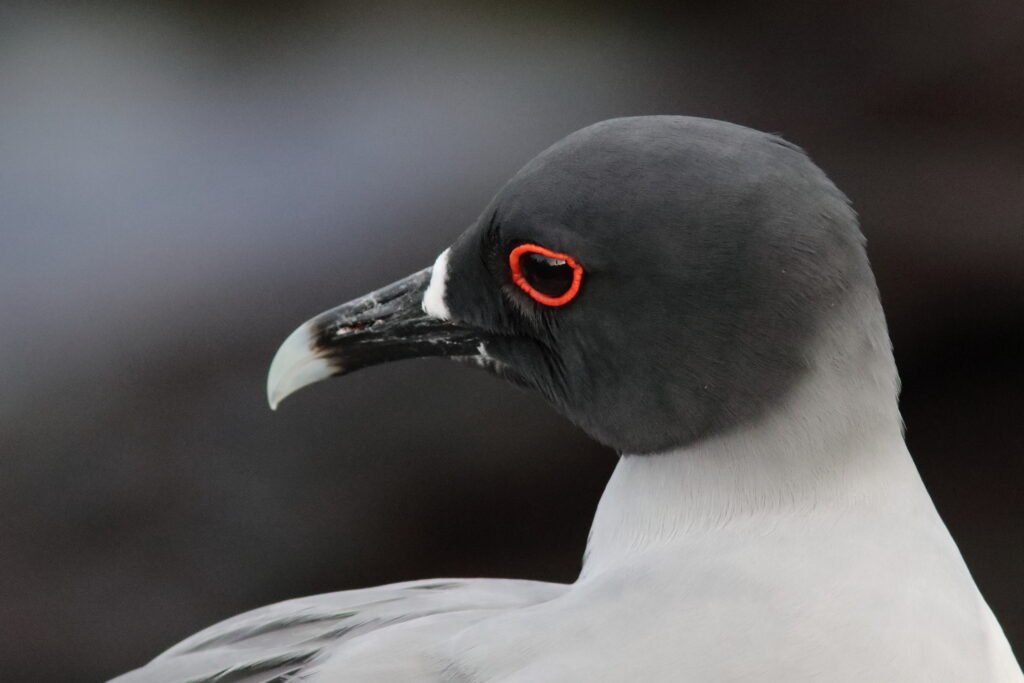
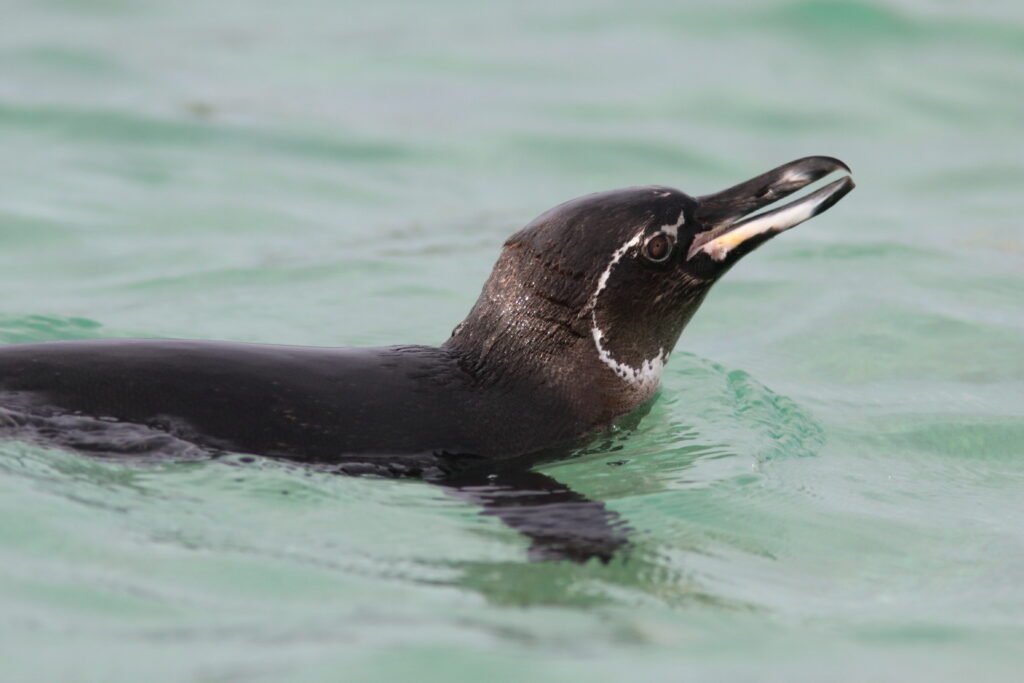
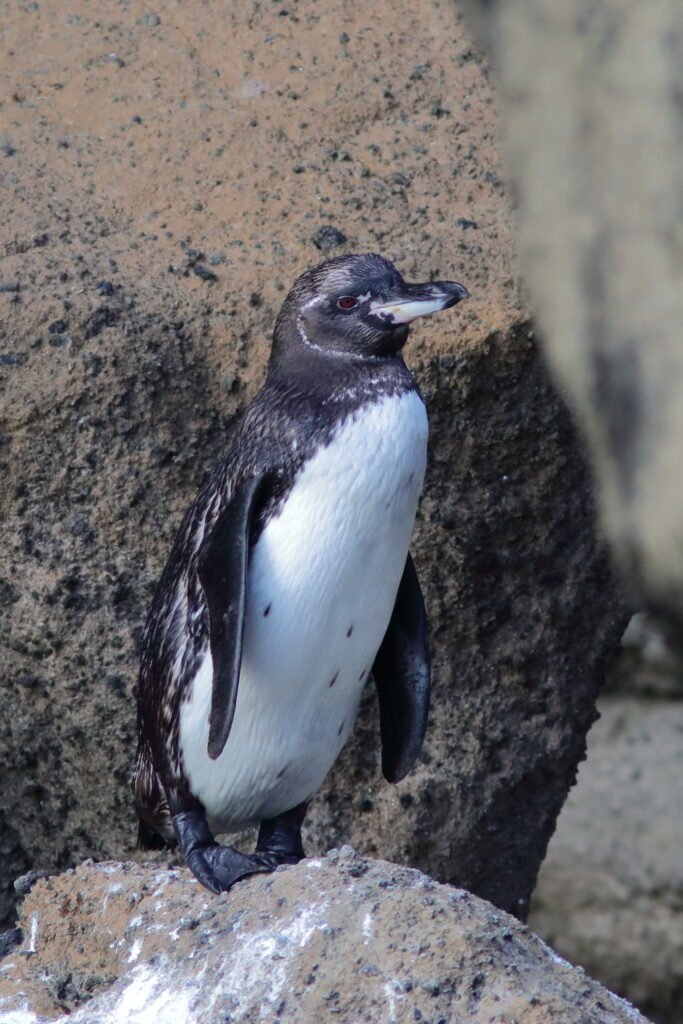
One of the reasons Eileen wanted to go to the Galapagos Islands was to see the Galapagos Penguins. The penguin found the farthest north, this species survives because of the cold Cromwell Current coming up from the deep Pacific Ocean and approaching from the west and Humbolt Currents that bring cold water up from near Antarctica. Despite being on the Equator, we needed to wear wetsuits whenever snorkeling. One of my highlights was swimming with a penguin and having it stare me in the face. I wish I had a picture.
Besides being the northernmost penguin, this bird also is the rarest of penguins. When an El Nino-Southern Oscillation event happens, the cold nutrient rich water gets cut off and the food disappears. In 1982/83, the El Niño reduced Galapagos penguin numbers by approximately 80%. It happened again in 1997/98 where the population dropped by 65%. As our oceans become less predictable due to climate change, these birds are at risk!
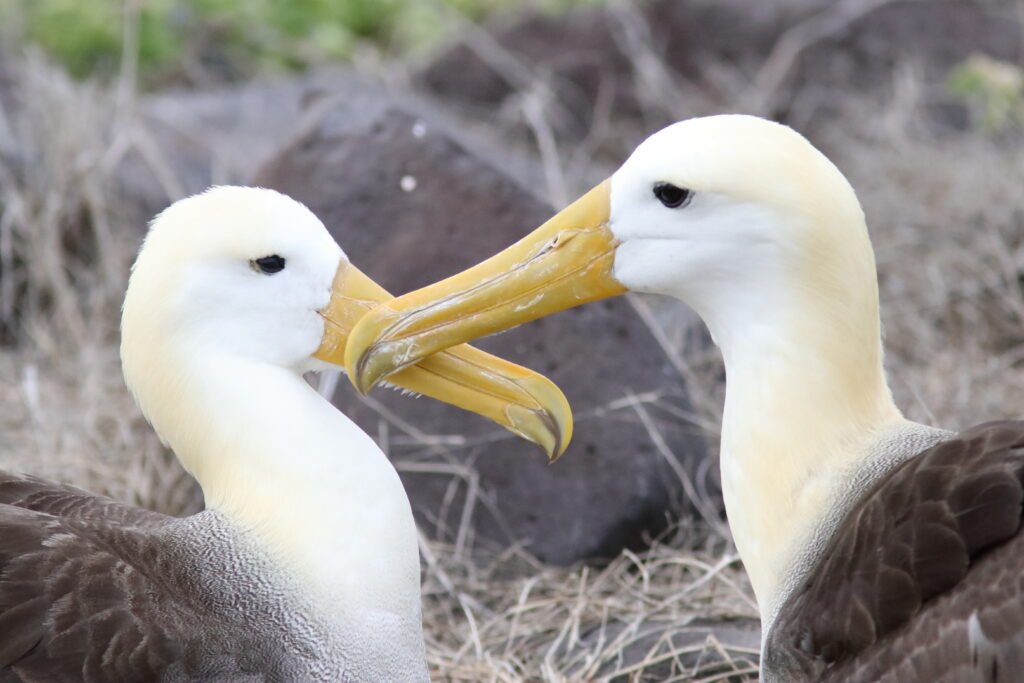
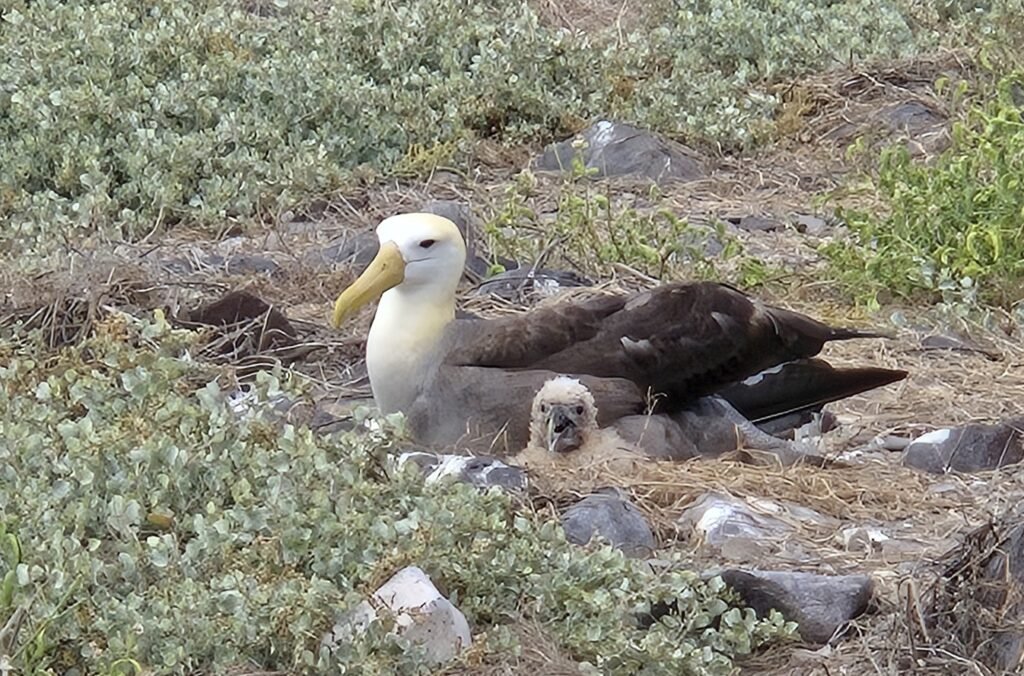
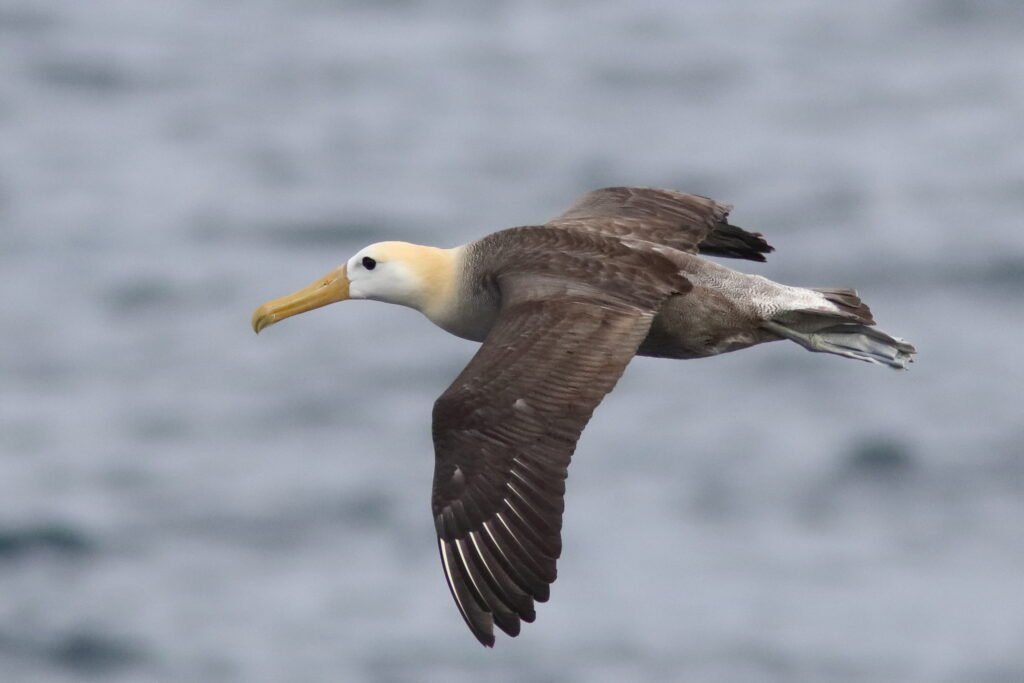
Another bird that nests only on the Galapagos Island, and specifically only on Espanola Island, the Wave Albatross, hunts the ocean between the Galapagos Islands and Colombia, Ecuador and Peru. Hunting primarily in the tropics makes this albatross unique. Without the cold Humbolt Current, it would be in trouble, which is why it is considered Critically Endangered.
We were there during the nesting season and could see young downy chicks peeking out from under the parent. Adults take turns caring for the young. When relieved of duty after an average of 19 to 22 days without eating, the gangly parent waddles its way to the high cliff edge, stands there like it is thinking about making the big leap. After several false starts, lifting their 7 feet of wings, they jump off, going from awkward to graceful.
I chose not to explore with you in detail the Galapagos Petrel nor the Galapagos Shearwater, both endemic birds we would see in the hundreds, if not the thousands. So I hope you are looking forward to one more blog.
References
Baptista, L. F., P. W. Trail, H. M. Horblit, and G. M. Kirwan (2020). Galapagos Dove (Zenaida galapagoensis), version 1.0. In Birds of the World (J. del Hoyo, A. Elliott, J. Sargatal, D. A. Christie, and E. de Juana, Editors). Cornell Lab of Ornithology, Ithaca, NY, USA. https://doi.org/10.2173/bow.galdov1.01
Galapagos Conservation Trust Species – Lava Gull https://galapagosconservation.org.uk/species/lava-gull/
Avibase – The World Bird Database – Galapagos Heron. https://avibase.bsc-eoc.org/species.jsp?lang=EN&avibaseid=7F14FB50AB9DC01D
Wiedenfeld, D. A. (2020). Galapagos Flycatcher (Myiarchus magnirostris), version 1.0. In Birds of the World (T. S. Schulenberg, Editor). Cornell Lab of Ornithology, Ithaca, NY, USA. https://doi.org/10.2173/bow.galfly1.01
The Galapagos Conservation Trust One species of Vermilion Flycatcher in the Galapagos appears extinct. Does the same fate await another? https://www.galapagos.org/newsroom/one-species-of-flycatcher-in-galapagos-appears-extinct/
Galapagos Conservation Trust Species – Swallow-tailed Gull https://galapagosconservation.org.uk/species/swallow-tailed-gull/
Galapagos Conservation Trust – Waved Albatross https://galapagosconservation.org.uk/species/waved-albatross/
Kirwan, G. M., P. Pyle, and V. Pantoja-Maggi (2024). Waved Albatross (Phoebastria irrorata), version 1.1. In Birds of the World (F. Medrano, Editor). Cornell Lab of Ornithology, Ithaca, NY, USA. https://doi.org/10.2173/bow.wavalb.01.1
Photos and Video by Bob Mercer