
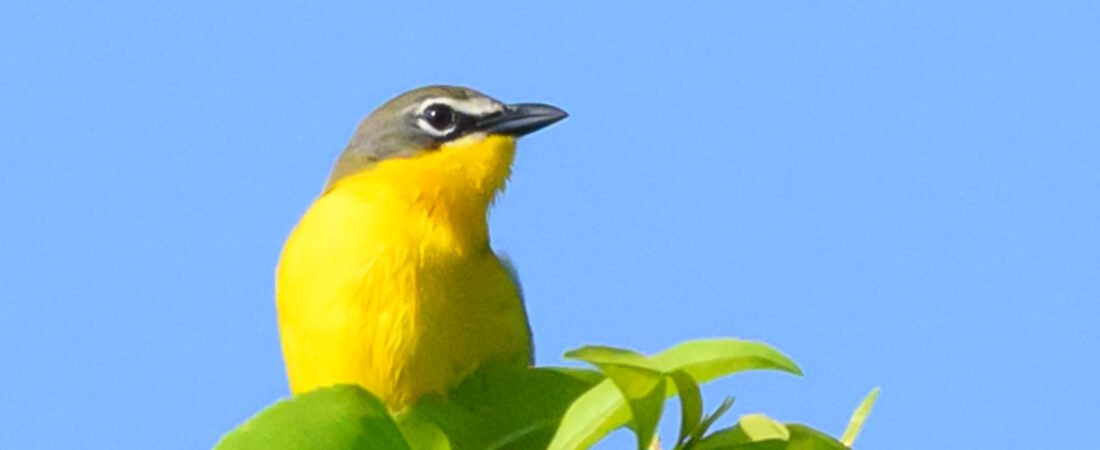
This week we look at a bird that can be hard to find, the Yellow-breasted Chat. Even though it’s widespread throughout our area during spring/summer breeding season, their habit of skulking in dense thickets makes it a challenge to locate. You’ll have the most success looking (or listening) for them when the male performs his extensive repertoire of loud whistles, rattles, catcalls, grunts, and other sounds. He often sings from an exposed perch or while doing an exaggerated display flight that ends with a thumping sound (probably made by his wings).
It’s seldom seen or heard during the rest of the year, when both males and females move about silently in the shadows of dense thickets, gleaning insects and berries for food. Larger and chunkier than a warbler, chats have a big chest, long tail, and heavy bill. A yellow breast, white spectacles, and a white mustache stripe help to identify this species. The female looks nearly identical to the male except she has dull gray facial markings (lores) rather than the male’s jet-black markings.
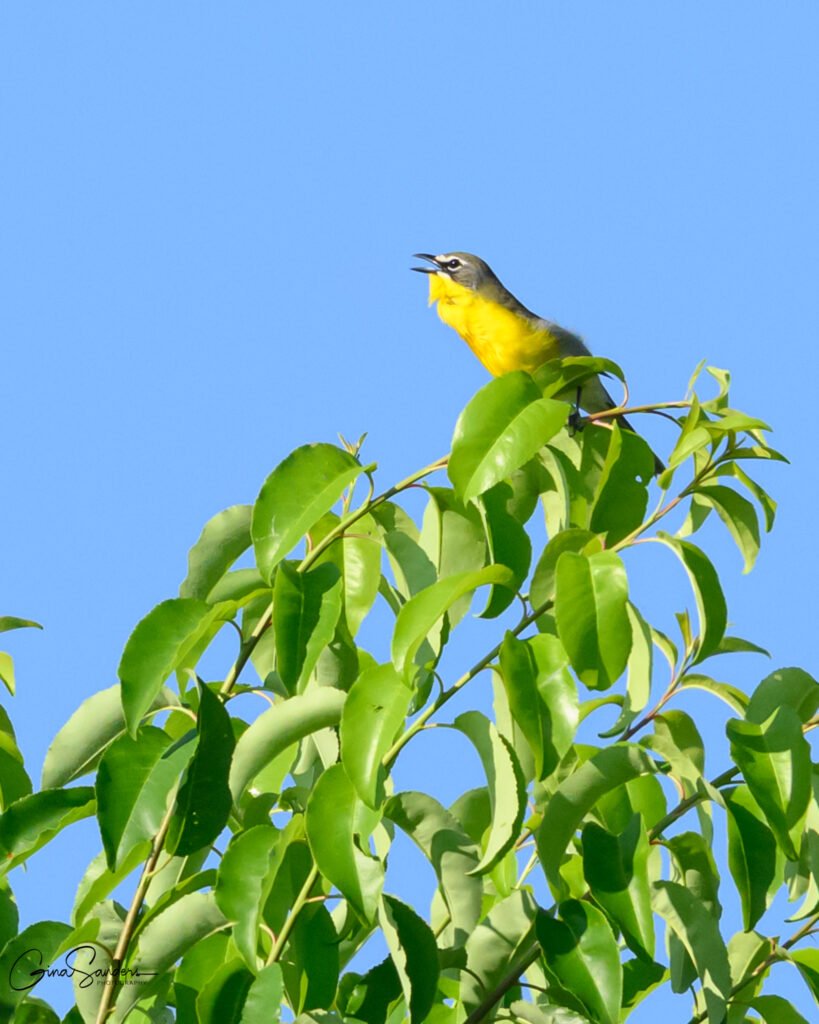
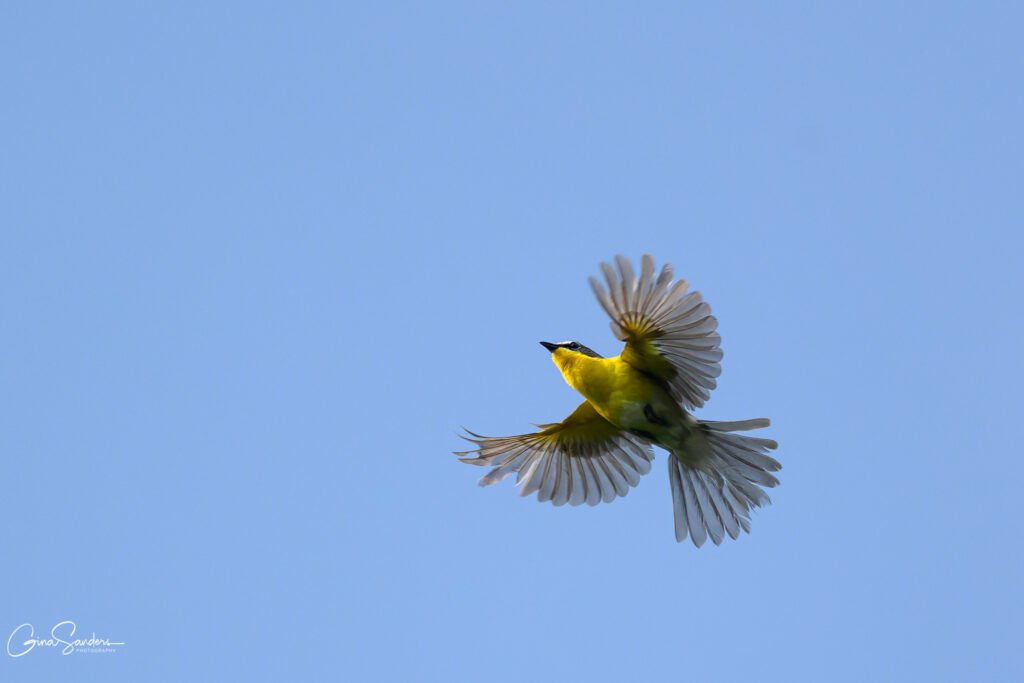
The Yellow-breasted Chat has always been a mystery to taxonomists—it looks similar to warblers but is larger, with a more varied repertoire of songs and calls, and also has other differences in behavior and anatomy. The species was placed in the warbler family (Parulidae) for decades, but in the late 2010s was given its own family (Icteriidae), in recognition of these differences.
As mentioned, the Yellow-breasted Chat breeds in areas of dense shrubbery, including abandoned farm fields, clearcuts, power-line corridors, fencerows, forest edges and openings, swamps, and edges of streams and ponds. Its habitat often includes blackberry bushes, which is the habitat surrounding the area in upstate South Carolina where this particular bird was photographed.
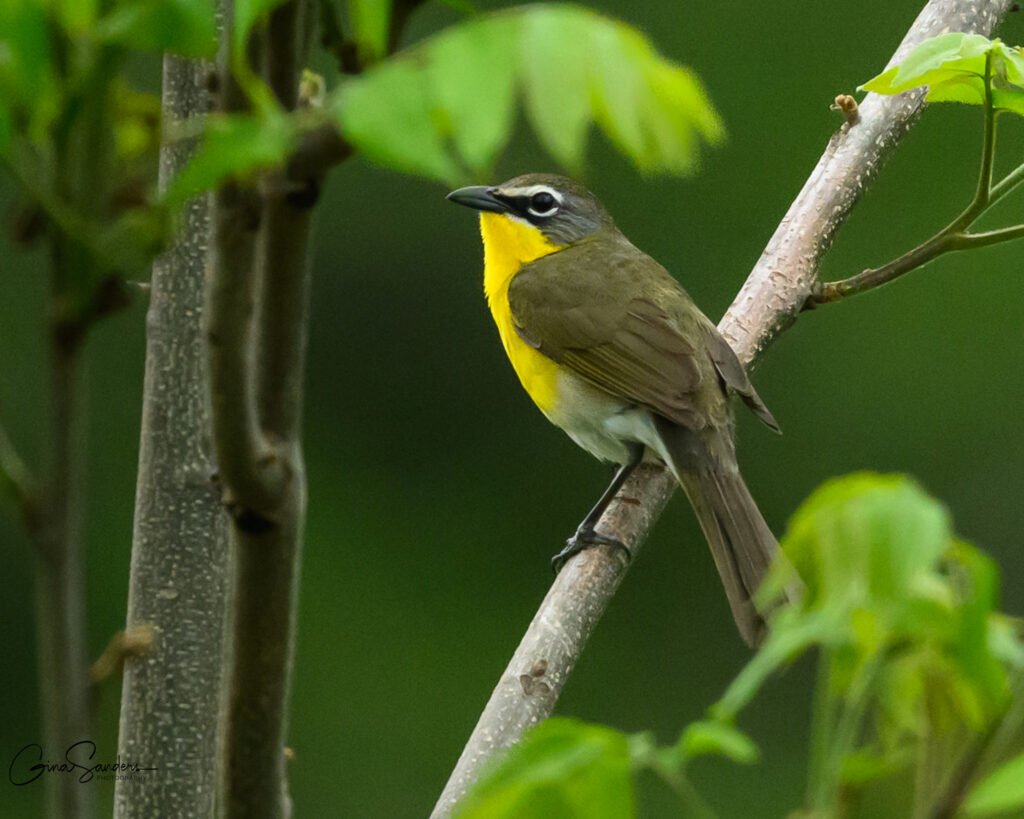
Yellow-breasted Chats forage mainly on spiders and insects, including beetles, bugs, ants, bees, mayflies, cicadas, moths, and caterpillars. They glean invertebrates from foliage in the dense thickets on their breeding grounds, using their feet to hold prey. Chats may also eat fruits and berries, including strawberries, blueberries, blackberries, raspberries, elderberries, and wild grapes. They feed their nestlings caterpillars, grasshoppers, and other soft-bodied insects. On wintering grounds, Yellow-breasted Chats rely on a combination of insects, spiders, and fruits for food.
Yellow-breasted Chats nest in low, dense vegetation—such as raspberry, blackberry, grapevine, dogwood, hawthorn, cedar, multiflora rose, honeysuckle, and sumac. Their build their nests 1–8 feet above the ground, supported by branches and often by masses of vegetation. They may use nest sites previously used by different individuals, although they rebuild the nest each time.
Chats have a clutch size of 3-6 eggs and raise 1-2 broods. Nestlings are helpless and naked, have closed eyes, and fledge quickly, leaving the nest in 7-10 days.
To hear the various sounds made by the Yellow-breasted Chat, click here.
Source: Cornell Lab All About Birds – Yellow-breasted Chat.
Submitted and photographed by Gina Sanders