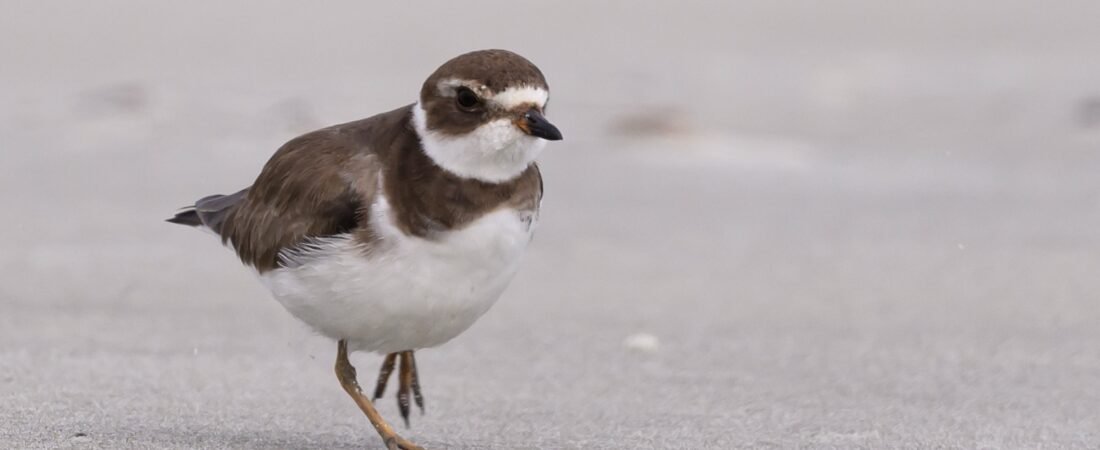
If you’re out on Seabrook Island’s North Beach in winter, there’s a good chance you’ll spot a Semipalmated Plover mixed in with other shorebirds. As with many shorebirds, they can be tricky to identify, so here are some traits to look for.
Semipalmated Plovers are small, compact shorebirds. They have a short, stubby bill, a round head and large eyes. Their coloring is dark brown above and white below, with one black band across the breast. Their legs are a yellow-orange.
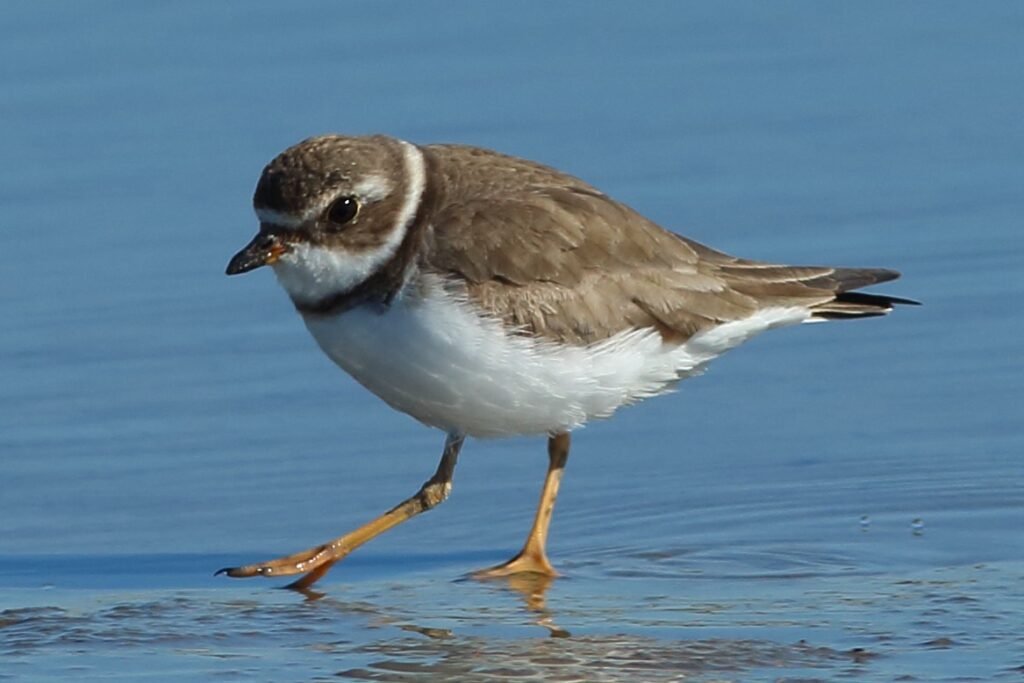
They’re 6.7″ – 7.25″ in length, larger than a Least Sandpiper but smaller than a Killdeer. Their wingspan is 19″. Their bill is orange with a black tip, short and stubby.
They can be easily confused with Piping Plovers, especially since they often forage together. A good way to tell them apart is the Piping Plover is a lighter color, like the color of dry sand. The Semipalmated Plover is dark brown, the color of wed mud.

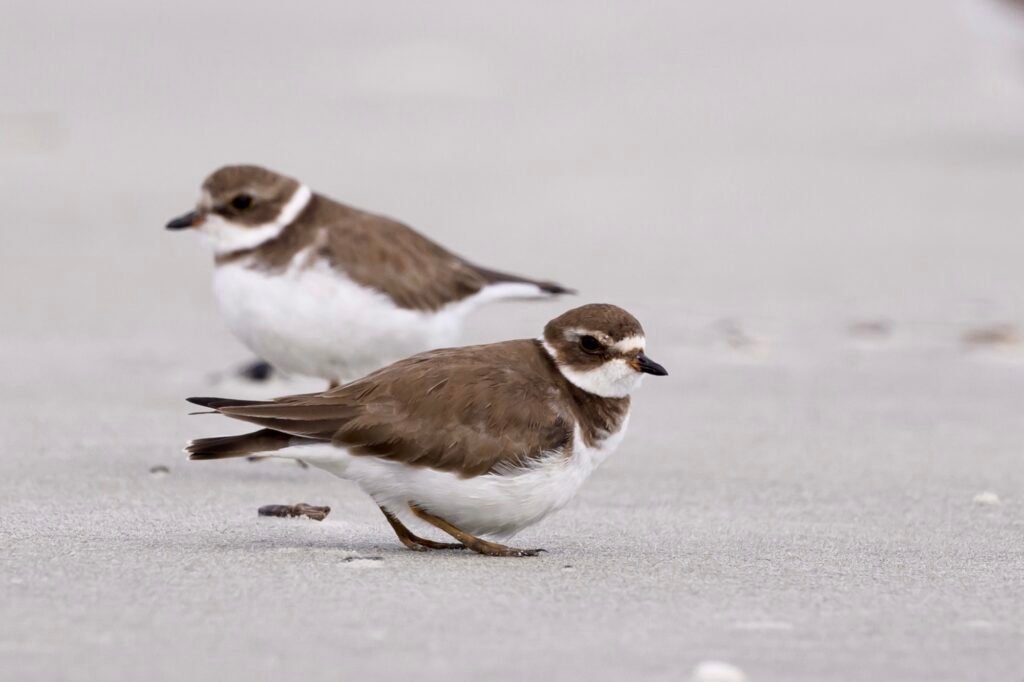
Semipalmated Plovers are often seen in large flocks, and forage both on sandy beaches, sandbars, and mudflats. You may even spot them in a plowed farm field.
Another way to identify Semipalmated Plovers is by their stop-and-go feeding style. They’re visual hunters and will run a few steps, pause, then grab prey off the ground, or pull up a worm, similar to a robin. On beaches and in fields they eat spiders, fly larvae, beetles, eggs of horseshoe crabs, earthworms, and plant seeds. In saltwater environments their prey includes marine worms, snails and slugs, clams, mollusks, crabs, shrimp, and other tiny crustaceans. Their large eyes help them forage at night, especially on nights with some moonlight.
They nest on pebbles, tundra heath, or sand in subarctic and arctic environments. Males lead females to potential nesting scrapes or make new ones as females watch. The female selects the nest site by sitting in the scrape and calling. The nest is a shallow scrape lined with nearby materials, such as leaves, shells, rocks, seaweed, etc. Their clutch size is typically 2-5 eggs and only one brood a year.
The next time you’re out on North Beach this winter, look closely at the foraging shorebirds and see if you can spot the Semipalmated Plovers.
If you’d like to learn how to identify the shorebirds of North Beach, this booklet, written by Seabrook Island Birders’ very own Robert Mercer, is an excellent resource. Click here for the viewing version of the Field Guide to Shorebirds of North Beach.
For a printable version of this Field Guide, click here. Please note, it must be printed DOUBLE SIDED, FLIPPED ON SHORT SIDE, and folded as a booklet.
To read more about Semipalmated Plovers in Cornell Lab All About Birds, click here.