
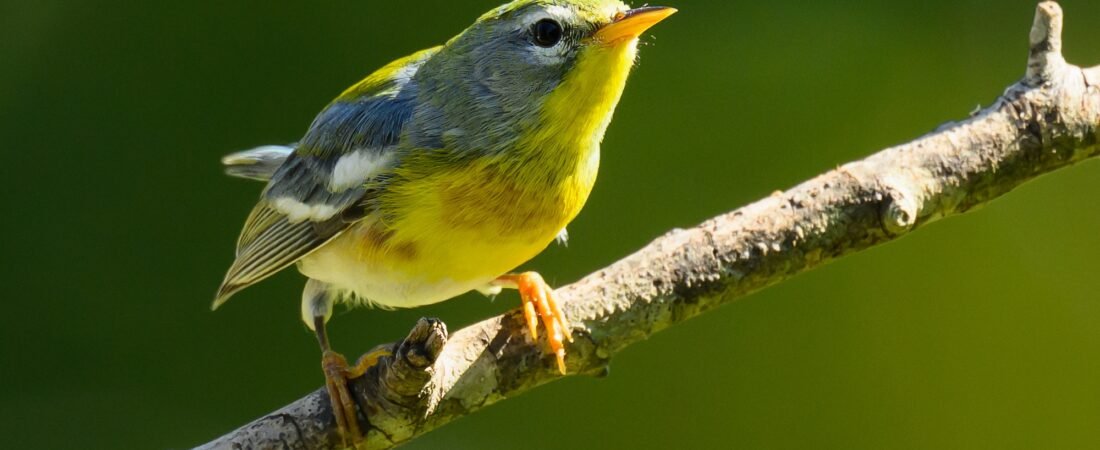
If you read our recent blog about spring arriving birds, you already read a little bit about Northern Parulas. When we hear their distinctive song we know spring is here! This weekend, all around the island, I heard a few Northern Parulas – they have arrived!
As Judy mentioned in the spring blog, these beautiful warblers are very active and sometimes hard to see because they love to forage in the dense foliage of mid to upper tree canopies. Most birders hear their familiar rising buzzy trill with a final sharp note long before they get a glimpse of this warbler. If you’d like to know what to listen for, here’s a clip of their song, by wildlife photographer Ray Hennessy. And speaking of photography, if you want to photograph these birds in your yard, just know they’re little, about the size of a kinglet, and they don’t sit still for very long! And don’t forget to look up – you won’t find these birds at your feeders. Be sure to share your photos with us!
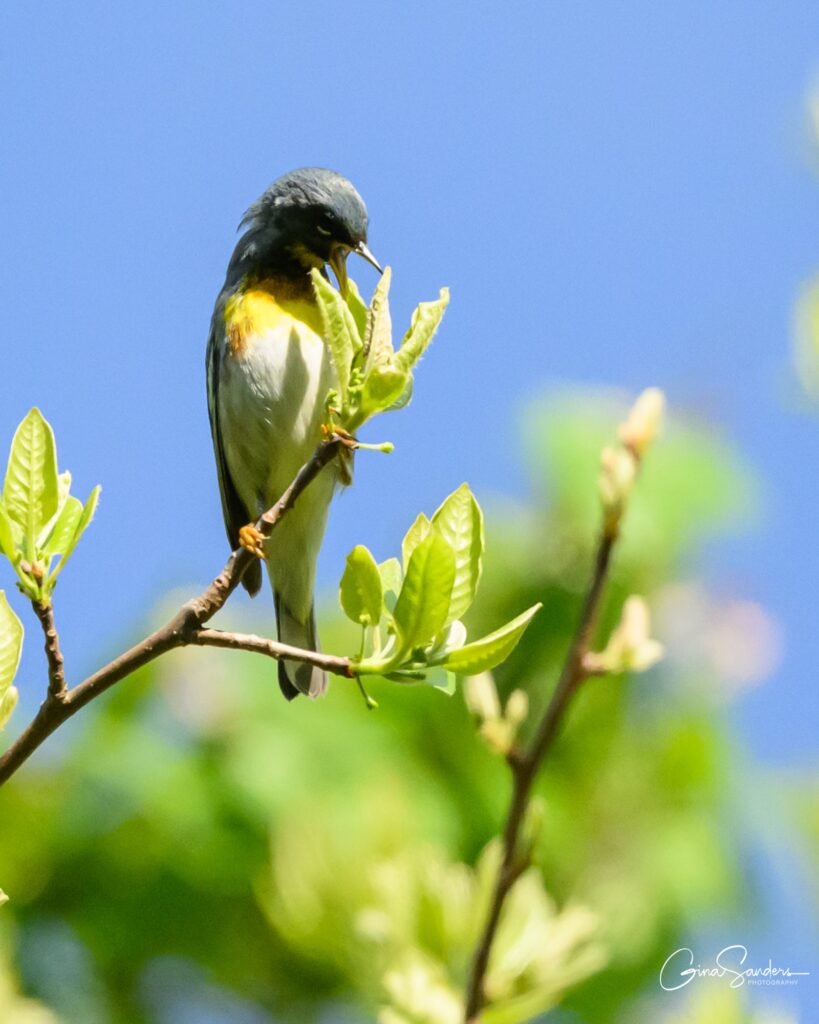
On Seabrook Island we are fortunate to have these birds from late March through summer months while they are breeding. Once you are familiar with their sound you will be amazed as you drive/walk around our island how many Northern Parulas make Seabrook their home.
Male Parulas are mainly blue-gray above with two conspicuous white wing-bars and a partial white eye-ring. They have a light greenish-yellow triangular patch on back; throat and yellow breast and white belly. Adult males have chestnut and black bands across breast. Female colors are similar to males but duller and generally lack breast bands. First-year (<1 yr old) birds are similar to females but more greenish on upper parts.
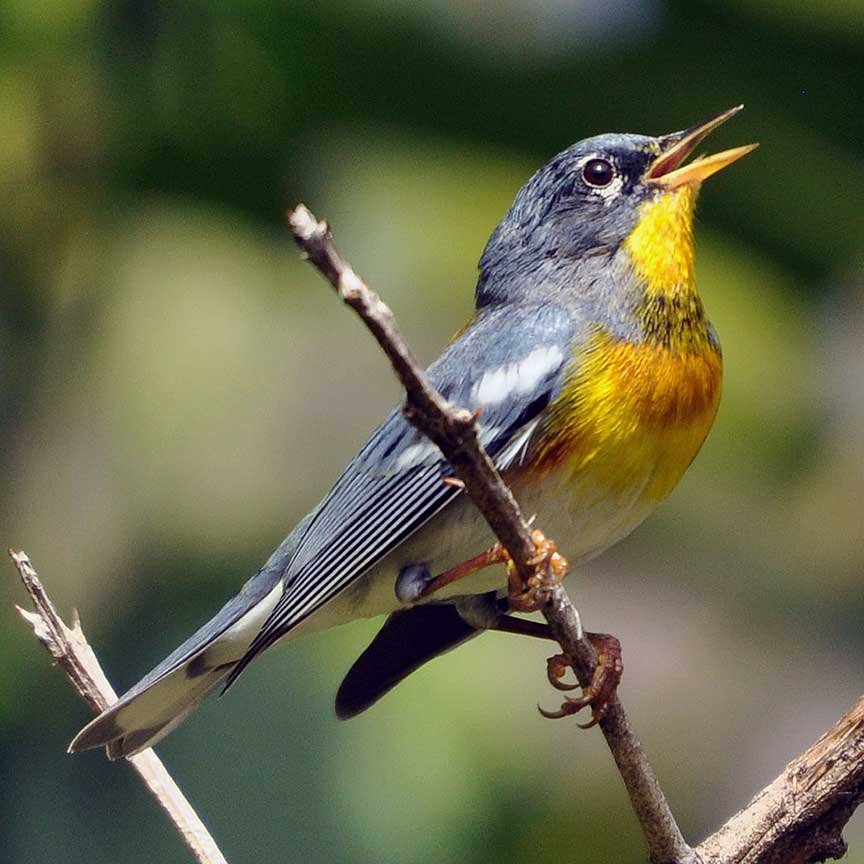
Northern Parulas are mainly insectivorous. They feed mainly on spiders, damselflies, grasshoppers, beetles, caterpillars, flies, wasps, and ants. Regardless of season, caterpillars and spiders are consumed most often. During the winter, the Northern Parula consumes more beetles and occasionally forages on berries, seeds, and nectar.
They are a monogamous species. Their habitat during breeding is along swamps, ponds or lakes in humid woodlands where they can nest in Old Man’s Beard lichen or Spanish moss. Pairs often return to the same nesting site year after year. Males sing during migration and throughout nesting season, even when feeding young. Nestlings are fed mainly by females and the average rate of feeding: 1 trip/13.6 min. Over a 6-hour period, one female carried food 19 times. When they are not breeding you might find Northern Parulas in pastures; dry or wet forests; and agricultural fields.
A group of warblers has many collective nouns, including a “bouquet”, “confusion”, “fall”, and “wrench” of warblers.