
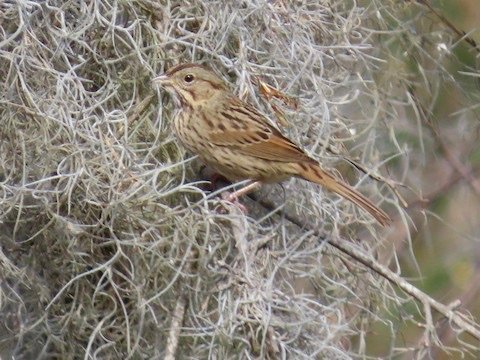
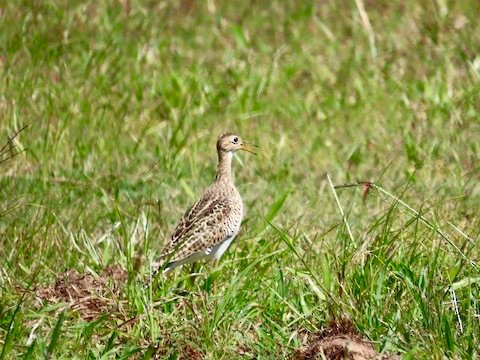
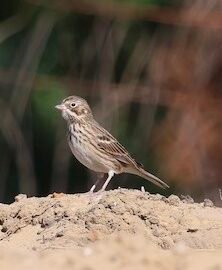
Another group of birds that wintered in significant numbers this past year here were many of the sparrows. Many of these sparrows are known from the state, yet primarily in the Midlands or upstate, and in much lower numbers. However, I believe due to the extended harsh winter conditions in Canada and the northern US, many of these sparrows ventured further south. There are a few of these species found in the area during migration and each winter, yet this past season and winter, Patriot’s Point supported Lark, Clay-colored Sparrow, Lincoln’s, Vesper, Grasshopper and White-crowned Sparrows at the same time!! This was truly remarkable and I do not recall a time in my years here when this occurred. These sparrows typically prefer shrubby thickets and grasslands habitats, and the nearby Romney St. Landfill yielded a Yellow Rail, Upland Sandpiper, and many of these same species of sparrows recently, attesting to the quality of the grassland habitats there. The Upland Sandpiper is a migrant and likely found that habitat suitable during its migration, and the Yellow Rail is a winter visitor here. I suspect Yellow Rails are much more common than us birders realize, utilizing these more expansive grassland habitats that are yet not often visited.
Another major period of rarities appearing in South Carolina is the spring and fall migration periods for the passerines, birds in the Order Passeriformes, or songbirds. These periods are often influenced by weather fronts from the north and west in the fall, and from the south and west in the springtime, carrying many migratory birds, and often times, birds that have strayed due to the weather or whose migration path has been altered (see previous factors affecting migration). They often show up before or after a front has moved through, taking advantage of the prevailing winds, with some species getting off course. Some appear here annually, such as Bell’s Vireo, Rufous Hummingbird, Bullock’s Oriole, Say’s Phoebe, and Western Tanagers, with several locations being reported throughout the state. Another species from Florida, the Black-whiskered Vireo has made recent appearances on Sullivan’s Island in May on the Sullivan’s Island Nature Trail, a species whose range is also shifting slightly north in Florida, possibly due to the range expansion of the mangrove forests, and again, birds have wings. If you want to find this bird, go to the Sullivan’s Island Nature Trail in early to mid-May, and pay particular attention to its song (Chip-John-Phillip, repeated).
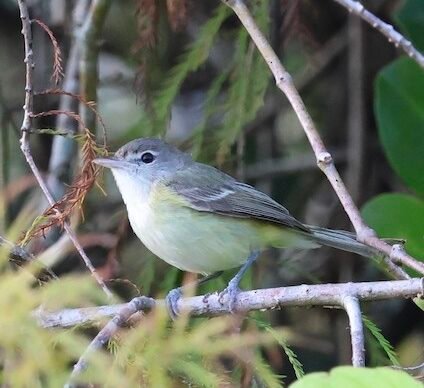
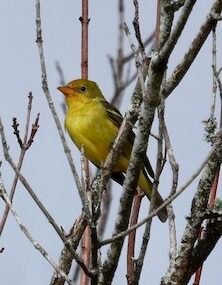
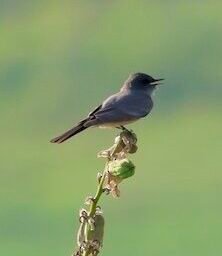
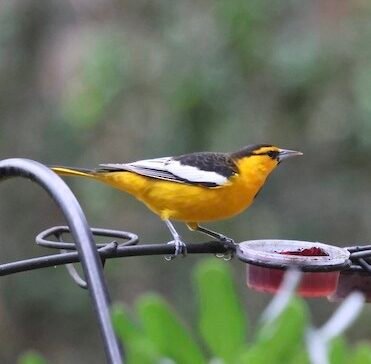
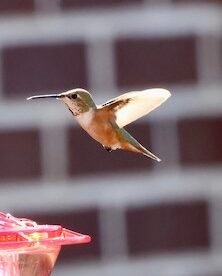
Another example is the Black-chinned Hummingbird. While there were only two that were documented this past winter, this species winters along the Gulf Coast, and midwinter strong weather events coming across the Gulf from west to east may push these hummingbirds to our area. Knowing these weather patterns and where birds spend their winter will help you in your search for rare species in the state, and part of the key to finding rare birds is to know past patterns and get out during those times. It does seem that there have been subtle changes in migration patterns and rarities showing up over time, and as I look back on my 3+ decades here compared to the present time, there have been some shifts in species occurrence and timing of migration.
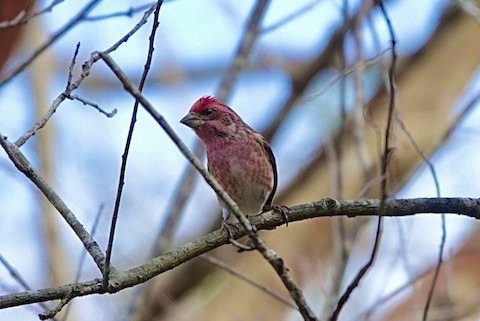
For me, one disappointing aspect of the winter season was the lack of “irruptive” species visiting South Carolina, and yet however disappointing it might be, it was still great fun to get out and search for these species. These species are the northern finches and grosbeaks that are highly affected by the cone crops in the northern forests, and failures of those crops often lead to these species moving south to find adequate food resources, sometimes to South Carolina. The winter finch forecast was for many of these birds to move south, which they did, but many did not reach South Carolina. These are Pine Siskin, Purple Finch, Evening Grosbeak, Red-breasted Nuthatch, Redpoll, Red and White-winged Crossbill. We did have Purple Finches in numerous places and a few Pine Siskins, but not large numbers, as many of these species found good food sources just to the north of us.
Red-breasted Nuthatches were observed in small numbers, yet these birds breed in the upstate of South Carolina, as do Red Crossbills (rare and localized). What a treat it would be to find Evening Grosbeaks visiting the state, or even a Redpoll. In March 2004 I was fortunate enough to see a Redpoll in the Charleston area at a feeder at a local residence. There is still a chance of some irruptive species showing up in the state as this last huge winter storm dumped several feet of snow in the northern states, particularly Michigan and Wisconsin, and there are reports of Redpolls making their way further south.
No true vagrants have really shown up in the state recently, although in the past there have been some notable ones, and we must keep an eye out for the unusual. At Ft. Moultrie in the past, I and others observed Lark Bunting and Fork-tailed Flycatcher, and one true vagrant I recall is the White Wagtail which showed up at Huntington Beach State Park in 1998. Fort Moultrie/Sullivan’s Island Nature Trail and Huntington Beach State Park do seem to capture many of the rare species in the state, and these are really two good areas to focus your birding.
Ok, so one question is, are these birds really rare? It depends, let me explain. They are rare to us as they are out of their normal range or are being observed in a season or time that is not typical. Most of these birds are “common” in their breeding range, migration routes, and wintering areas, but when they occur here out of season or outside of their range, they are “rare” to us and show up as rare in reporting via eBird. Even true vagrants such as the Fork-tailed Flycatcher, Lark Bunting, or White Wagtail are common in their normal range. There are really true rare birds, and some do show up here and are often listed as Federally Endangered or Threatened, or known internationally as Critically Endangered, these are the true rare birds. If you are interested in these species, there are several books available, Rare Birds of North America and America’s 100 Most Wanted Birds. Another source is the U.S. Fish & Wildlife Services list of Endangered and Threatened Species: Endangered and Threatened Species in the US. Additionally, the American Birding Association has designated codes for North American Species (ABA Bird Codes), most of ours are Codes 1-3 yet there have been some more rare birds found in the state, mostly Code 4, such as the White Wagtail.
Another question is, are there more rare birds out there? Perhaps but likely not until their populations are so low as to be designated Endangered or Threatened. More and more bird species are declining, and it has been well documented that North America has suffered a loss of 3 billion birds since the 1970s, and those declines will likely continue (https://www.3billionbirds.org/). Many common birds are becoming less common, and some listed as Endangered or Threatened may becoming more endangered or threatened, but not all, there are some success stories.
Why are we finding more rare birds? I think the answer here is twofold. One is that there are considerably more birders out there. The COVID era created a huge surge of outdoor activity, with birdwatching and birding increasing significantly, therefore, there are exponentially more eyes out there finding birds! Additionally, technological advances in bird identification bird sound identification via eBird and Cornell have enabled birders to learn faster and report rare birds quickly. Birding festivals, bird clubs, and younger birders are all facilitating growth of birding as a mainstream hobby.
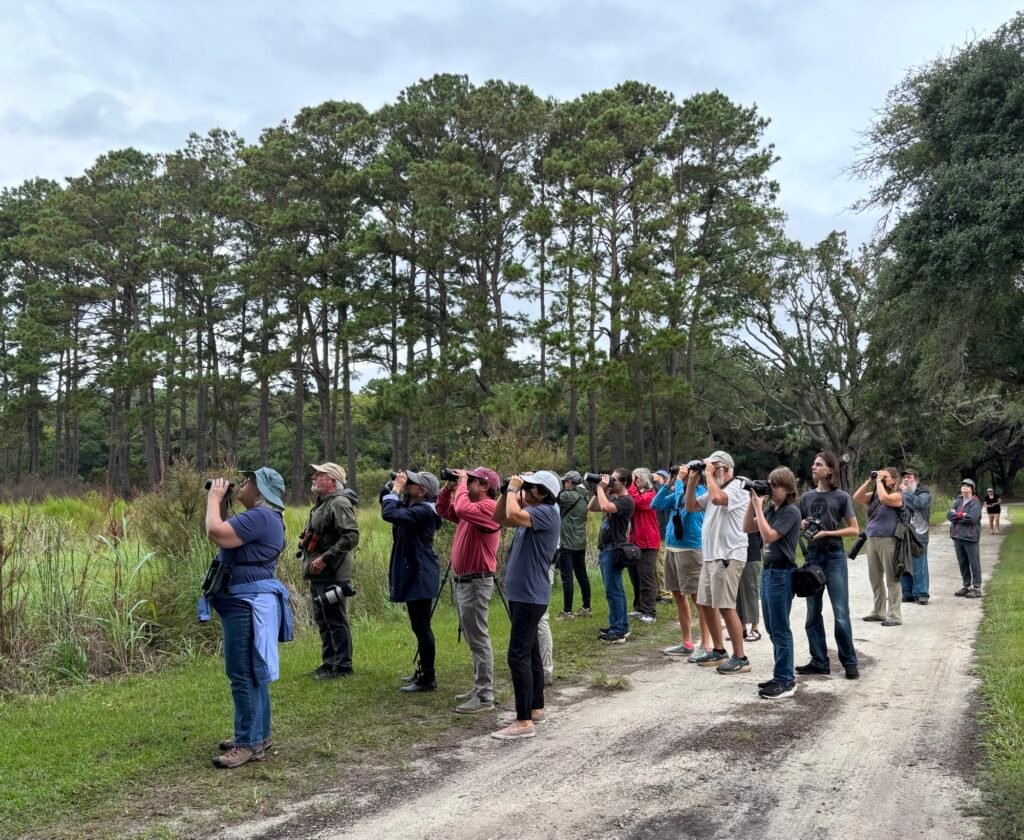
There have been many rare species to grace the Lowcountry and South Carolina in past years, yet this past year seemed exceptionally good, due to many factors, I believe primarily influenced by weather patterns across the US, affecting many aspects of a bird’s behavior and migration, and the presence of more birders in the field. Studies in the UK have indicated that only 40% of the rarities on the landscape are detected with all the birders out there, so we are undoubtedly overlooking and/or not finding all the rare birds. I encourage you to watch weather patterns in the appropriate season, (including tropical storms and hurricanes) for movements of birds, study the birds and their habitat, their preferred food sources, and their vocalizations. I certainly do not know this for every species, and this is one reason I love birding, I learn something every time I go out. For me, it’s season, weather, habitat, and vocalizations, study these and we all can find that other 60% or rarities on the landscape.
And remember:
-watch the weather fronts (primarily behind fronts)
-“bird every bird”, look at all those gulls, cormorants, terns, etc. for that odd bird
-birds have wings and can show up anywhere
-check out those vine tangles, thickets, grasslands
-keep an open mind, find birds, and document them
-go where the rare birds might be (ocean, top eBird hotspots, known rare bird locations)
-join the SC and local rare bird alerts on the GroupMe app (click here for more information about this alert)
-subscribe to eBird rare bird alerts
-join your local bird groups!!
HAPPY BIRDING!!
Written and photographed by Craig Watson
About Craig: Craig currently resides in Mount Pleasant, South Carolina where he previously worked as a full time migratory bird biologist for the U.S. Fish & Wildlife Service (retired three years ago). Craig moved to South Carolina 37 years ago and began his career with the U.S. Forest Service managing Red-cockaded Woodpeckers, particularly after Hurricane Hugo decimated the habitat and population of the woodpeckers. Craig transitioned into his position with the U.S. Fish & Wildlife Service 28 years ago, where his primary duties were securing funds for bird habitat conservation from North Carolina to Puerto Rico. His most recent effort was the newly released Black Rail Conservation Plan, working on this species for the last 6 years of his career.
Craig was past Chair of the Grants Committee Carolina Bird Club (CBC) and served as Vice President of the CBC. Craig worked for Ventures Bird Tours several y ears and has retired from that work as well, but still volunteers with local groups. He is a trip leader for various birding festivals in the US, including the North Shore Birding Festival in Lake Apopka area in Florida, and The Biggest Week in American Birding on the shores of Lake Erie. Craig participates in many Christmas Bird Counts and leads other local birding activities. Craig spends most of his time exploring and birding, and spreading the word about birds!
Leave a Reply