
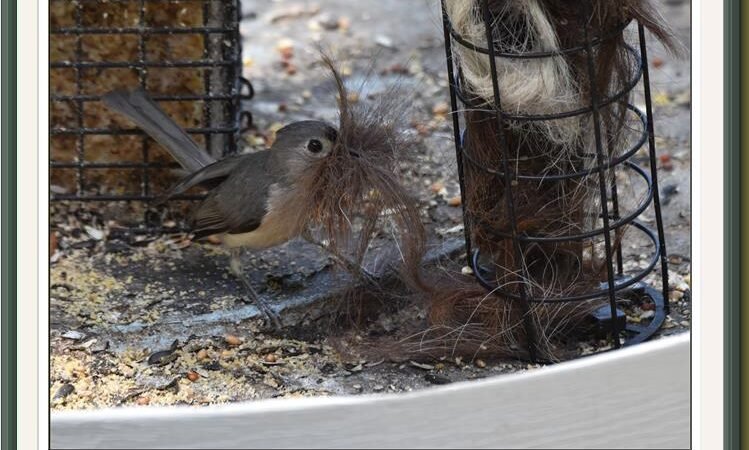
As we’ve seen in recent blogs, birds can build either cavity or non-cavity nests. Support local birds by offering natural nesting materials like twigs, dried grass, pine needles, mud, moss, and pet fur (untainted by chemicals) in early spring. Place materials in mesh bags, suet cages, or small piles in your yard. Avoid dryer lint, synthetic yarn, human hair, and plastics.
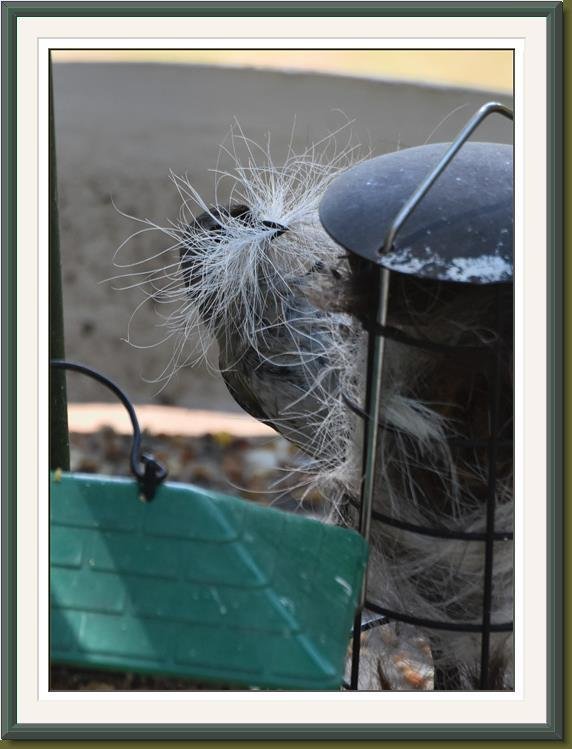
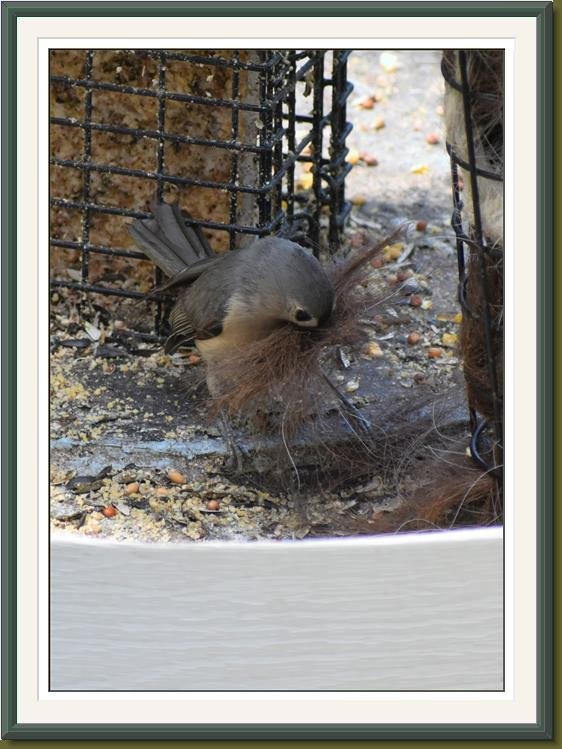
At a recent SIB activity, Susan Markhum shared hair her horse Dallas was happy to contribute to our nests. As she was grooming Dallas, she collected the hair. A Tufted Titmouse quickly took advantage of the offering. If you happen to have a horse and wanted to do something similar, she reminds us to make sure the animal is not on any topical flea or heartworm medicine that could be toxic to the birds.
Another member, Gregg Elliot, reports she collects the trimmings from her poodle in the winter when she isn’t treating it for fleas. When she put some out on her deck, a Carolina Chickadee was already gathering it before she got back in the house.
A search on All About Birds site gave some helpful Do’s and Don’ts:
If your yard has safe nest sites and adequate construction material, it will be more attractive to birds, including those that don’t visit feeders. Fallen leaves and twigs left unraked make excellent nest materials for many birds. Providing nooks in your backyard where this untidy debris can collect provides a variety of material for the birds to check out when they are building nests. They may even pick through your compost pile looking for suitable nest material.
Do provide any combination of the following:
- Dead twigs
- Dead leaves
- Dry grass (make sure the grass hadn’t been treated with pesticides)
- Feathers
- Plant fluff or down (e.g. cattail fluff, cottonwood down)
- Moss
- Bark strips
- Pine needles
Don’t provide:
- plastic strips
- tinsel
- cellophane
- aluminum foil
- dryer lint
Do provide nesting material in any of the following ways:
- in piles on the ground (works well for leaves and twigs)
- in clean wire-mesh suet cages, or in mesh bags hung on tree trunks, fence posts, or railings
- pushed into tree crevices
- draped over vegetation
- in open-topped berry baskets
- spiral wire hangers made especially for putting out nest material (one type looks like an oversized honey-dipper)
If your yard has safe nest sites and adequate construction material, it will be more attractive to birds, including those that don’t visit feeders.
Submitted by: Judy Morr
Photos: Susan Markhum