
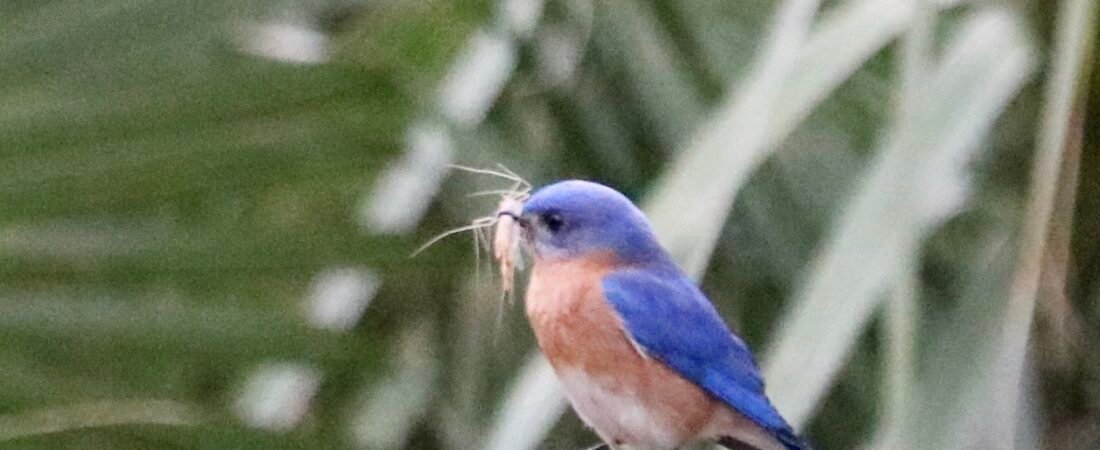
Baby birds need special foods to get the proper nutrition for healthy growth, and their parents work hard to provide extra protein with insects, fish or meat, depending on the species. Some species, including flamingos and doves, produce crop milk to feed young baby birds, while others, such as shorebirds, teach their babies to forage from a young age, letting them experiment in finding food. At first, chicks eat several times an hour which makes it very difficult for humans to hand raise young chicks.
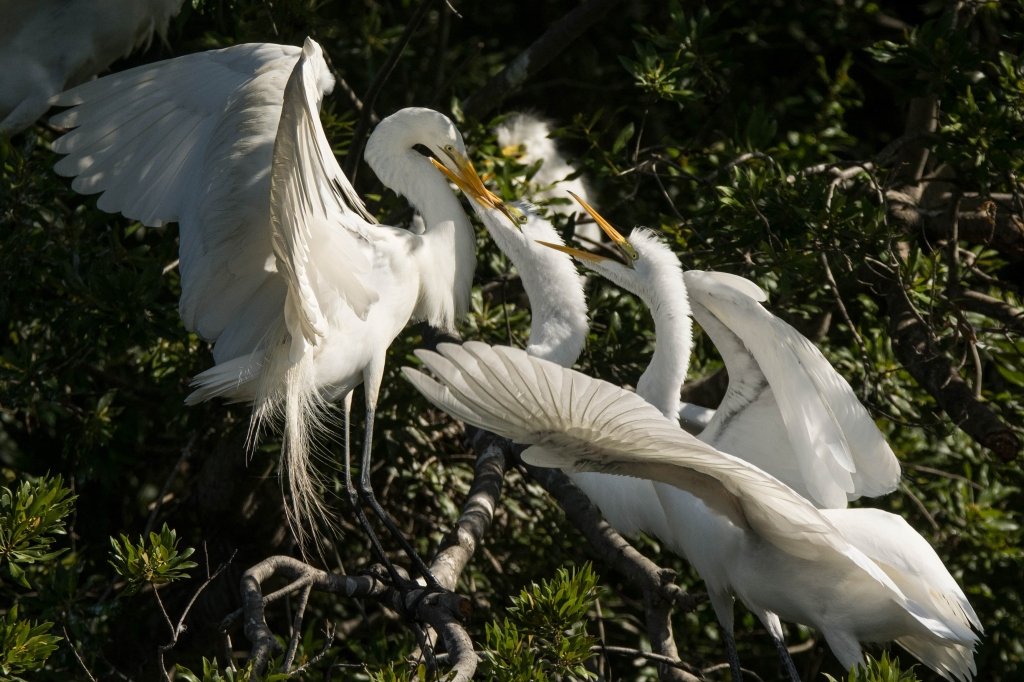
The food provided by parents varies by species. Both White Ibis parents feed young, by regurgitation. Egret and Herons also use this method. Young may clamber about near nest after 3 weeks, can make short flights after 4-5 weeks, capable of sustained flight at 6 weeks, may leave colony to forage with adults after 7 weeks.
Brown Pelicans feed their small young predigested fish that they regurgitate onto the nest floor. By 3-4 weeks of age, the young are large enough to swallow whole fish, which they obtain by thrusting their bills into their parents’ throats, forcing them to disgorge.
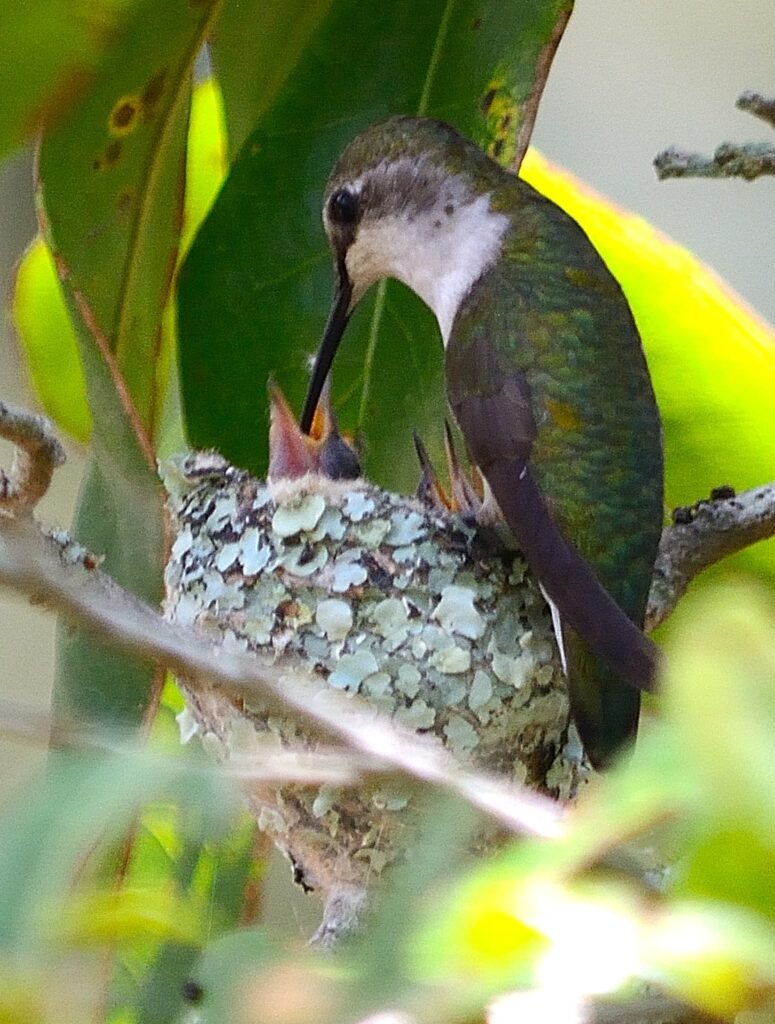
Female hummingbirds feed their young by regurgitating a slurry of nectar and insects (such as spiders, gnats, and aphids) directly into the chicks’ throats. She inserts her long beak deep into the mouths of her hatchlings to deliver food, often feeding them three times an hour or up to hundreds of times a day to support their fast growth.
Wilson Plover parents tend their chicks but the young feed themselves.

Osprey parents feed their young by delivering freshly caught, live fish directly to the nest. The male typically brings the fish, often holding them headfirst, while the female tears the fish into small, tender pieces to feed the chicks, a process that continues for 7 to 8 weeks until they can eat on their own.
Eagle chicks are fed a steady diet of fish, occasionally supplemented by waterfowl (ducks, geese) or water birds (gulls, cormorants). About 85% of a chick’s diet will typically consist of fish. The adults capture and tear the fish into small strips, offering them to the chicks. The chicks snatch the food from the adult’s beak and swallow it whole. An eagle chick will eat as much as it can at a single feeding, storing food in its crop. The crop, an organ located near the base of the bird’s neck, will enlarge as it fills, resembling a golf ball. The size of the pieces increases as the chick matures. As fledging approaches, adults may start withholding food, perching with food near the nest, or flying over with food to tempt the nestlings to fly. Adults will continue to bring food to the young bird outside the nest as long as they know where the fledgling is. Adult birds are tied to their fledglings, not to the nest, so they will tend to their young wherever they are after fledging. Adult parents will continue to provide food for some time after fledging, while the newly flighted birds hone not only their hunting skills, but their flying skills. On average, it takes about 4-12 weeks for young eagles to start hunting successfully. Specialized hunting skills probably take years to develop.
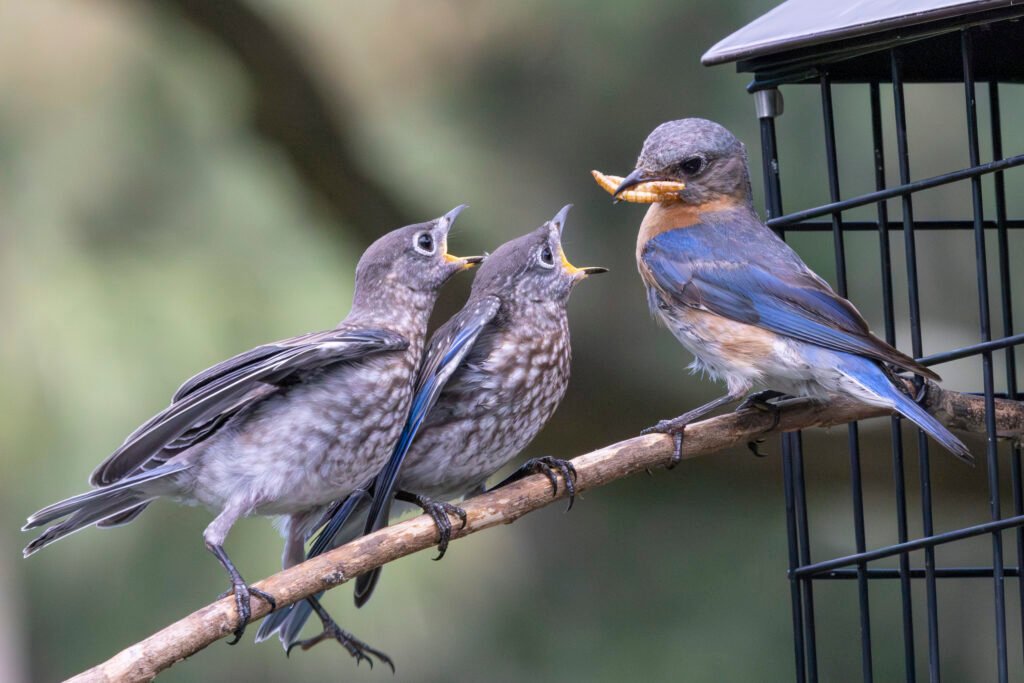
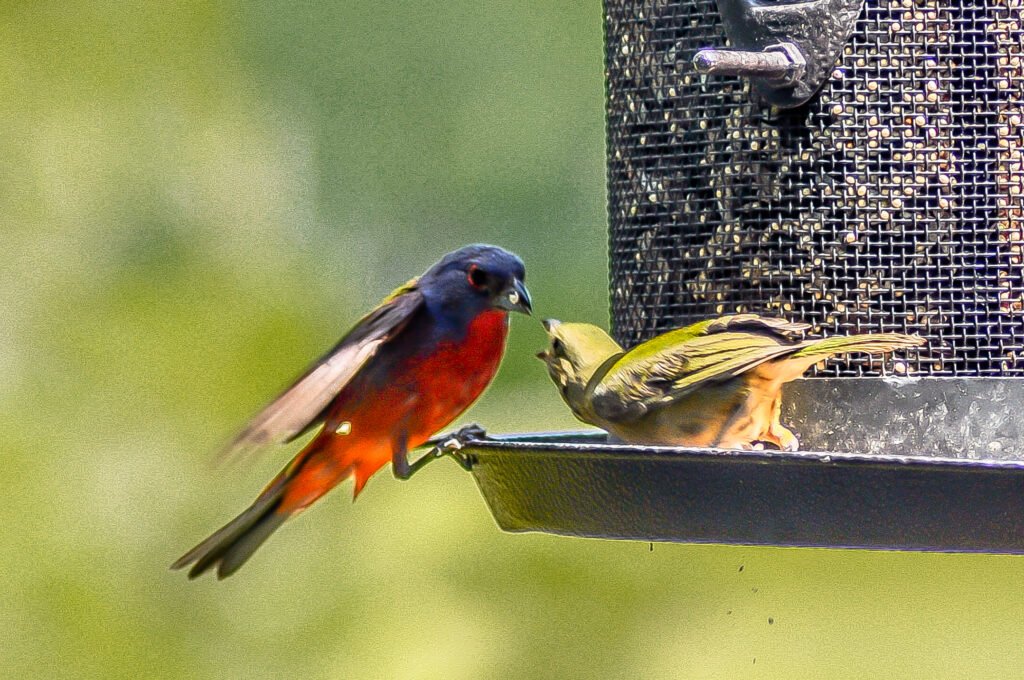
Even after the chicks have fledged, the adults will continue feeding their young. As you watch the adults feeding their young at a feeder, you can almost hear them say “Here’s where you get the food. Next time get it yourself”.
The next time you marvel at how much a human teenager can eat, think about the effort exerted by bird parents.
Submitted by: Judy Morr
Photos by: Ruby Throated Hummingbird and Great Egret – Dean Morr
Osprey – Ed Konrad
Eastern Bluebird – Jan Couch
Painted Bunting – Charley Moore