
Latest posts
-
SIB “Bird of the Week” – Western Cattle Egret
How did I miss the memo!?! The Cattle Egret that I’ve enjoyed observing, often in fields feeding near livestock and rarely ever near water like most other egrets and herons, got a name change! It wasn’t until I read about Judy Morr’s travels to Florida a few weeks ago that I even realized a change had happened!
-
SIB “Bird of the Week” – Eastern Bluebird
Eastern Bluebird – Sialia sialisLength: 7″; Wingspan: 13″; Weight: 1.1 oz. Slightly smaller than its cousin the Robin, this bird is distinctive in its rusty red colored breast and white belly with a sky blue head, back and tail. The female shares the rusty red breast and white belly but is grayer with faint blue tails and wings.
-
SIB “Bird of the Week” – Eastern Phoebe
Pictured above is an Eastern Phoebe, a bird in the Tyrant Flycatcher Family. These small flycatchers have gray-brown upper-parts and slightly darker wings and tail. Their underparts are pale with a light yellowish wash on the belly, they have black bills, legs, and feet. They weigh 0.7 ounces, which is about the weight of two
-
SIB “Bird of the Week “- WILLET
The Willet is a large shorebird that is a member of the sandpiper family. It is the largest and heavily built bird in the sandpiper family. In winter, Willets are easy to spot feeding along the water’s edge. They have a somewhat bland plumage in the winter and a darker mottled brown plumage during breeding
-
SIB “Bird of the Week” – Killdeer
Killdeer – Charadrius vociferusLength: 10.5″; Wingspan: 24″; Weight: 3.3 oz. I was birding at a horse pasture and was amazed to discover birds I had been searching for at the shore. They were Killdeer. I discovered that the Killdeer are the least water dependent of all shorebirds and can often be seen in farm fields where
-
SIB “Birds of the Week” – Hooded Merganser & Bufflehead
Hooded Merganser Lophodytes cucullatus L: 18″, WS: 24″ WT: 22.4 oz.Bufflehead Bucephala albeola L: 13.5 WS: 21″ WT: 13 oz For winter birding at Seabrook, I always look forward to the arrival of two of my favorite ducks….the Hooded Merganser and the Bufflehead. Both are winter visitors for us. On a quick look, the males
-
Bird of the Week … Osprey
I think he’ll be to RomeAs is the osprey to the fish, who takes itBy sovereignty of nature.Coriolanus Act 4 Scene 5 The Osprey (Pandion haliaetus) is one of the most widely distributed birds in the world, found on all continents except Antarctica. Its breasts and belly are mostly white with some dark speckling; the
-
SIB “Bird of the Week” – Northern Cardinal
Northern Cardinal – Cardinalis cardinalisLength: 8.75″; Wingspan: 12″; Weight: 1.6 oz. We know many of our readers may be traveling and busy with family , so we thought when you have time you’d enjoy learning more about one of the favorite backyard visitors throughout eastern North America. Among other things, the Northern Cardinal is said to symbolize
-
SIB “Bird of the Week” – American Robin
American Robin – Turdus migratoriusLength: 10″; Wingspan: 17”.Although generally this bird is thought to be a sign of spring in the more northern sections of North American, during the winter this migratory bird loves to hang in the warmer areas of the South gorging on our berries! The Robin is among the most abundant bird species on the
-
SIB “Bird of the Week” – Cedar Waxwing
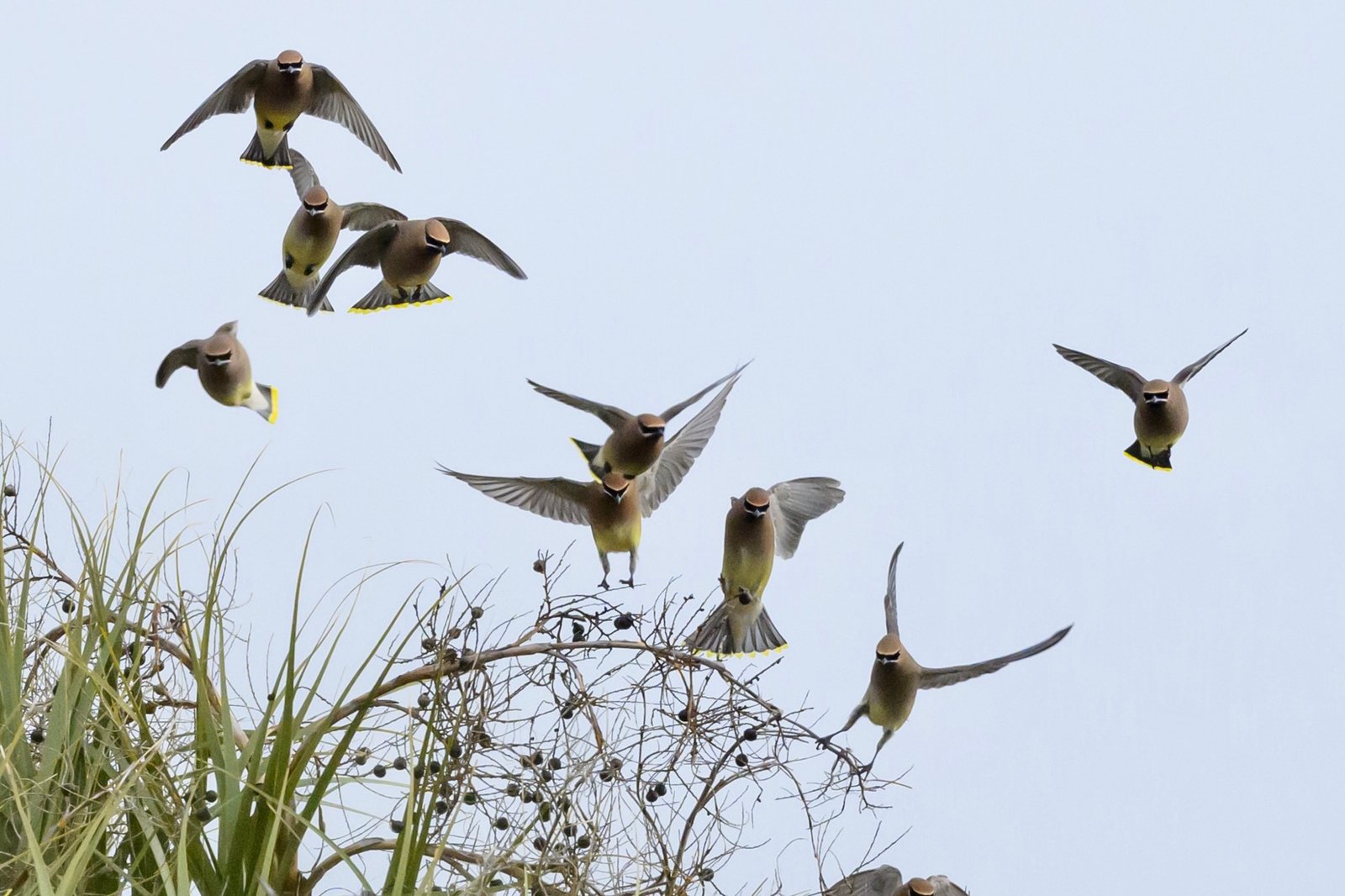
Cedar Waxwing – Bombycilla cedrorumLength: 7.25″; Wingspan: 12″; Weight: 1.1 oz. I just love Cedar Waxwings and they are one of my very favorite birds! They are such a cool looking bird with that sleek brown crest that often lies flat over the back of the head. Waxwings are medium-sized gregarious birds that are silky brownish