
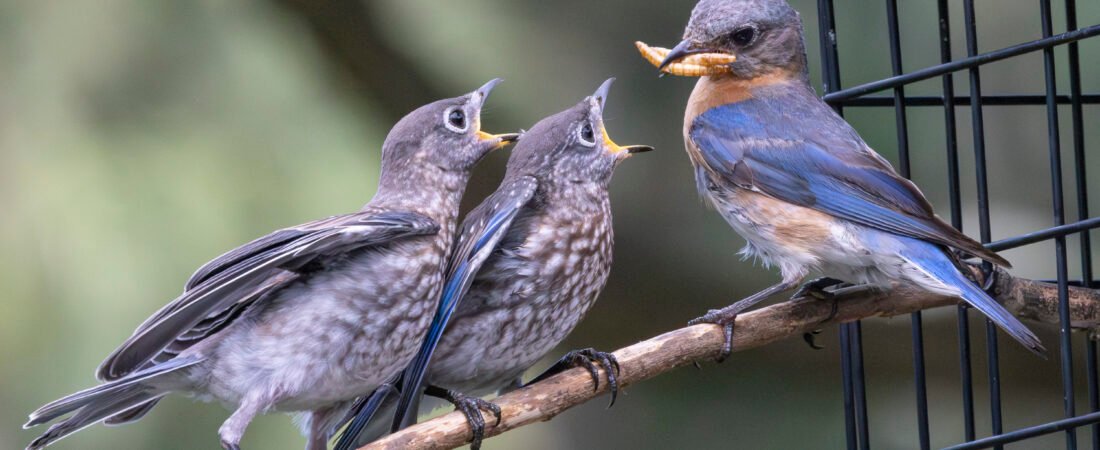
I was visiting my aunt recently and we got into a conversation about her bluebirds. Her bluebird pair was about to fledge their second brood for the summer. The more we talked, the more questions came up. Where do they go after they leave the nestbox? Do they come back to the nestbox to sleep? Will I get to see the young bluebirds at my feeders?
All great questions! Eastern Bluebirds fledge approximately 16-21 days after they hatch, with 17-18 being the most common, according to a post on SC Bluebird Society’s Facebook page. After they leave the nestbox, they do not come back, not even to sleep at night. Instead, they go up into the trees, hidden away in the foliage, where the parents continue to feed them for the first week or so. Weeks two and three are spent learning to forage and catch bugs on their own, even though they’ll continue to beg their parents for food.
The photos below illustrate exactly this process. On a recent walk this week, I heard young Eastern Bluebirds in a nearby tree. A glance around also showed mom and dad close by, busy foraging for food and carrying it to their fledglings in the tree.
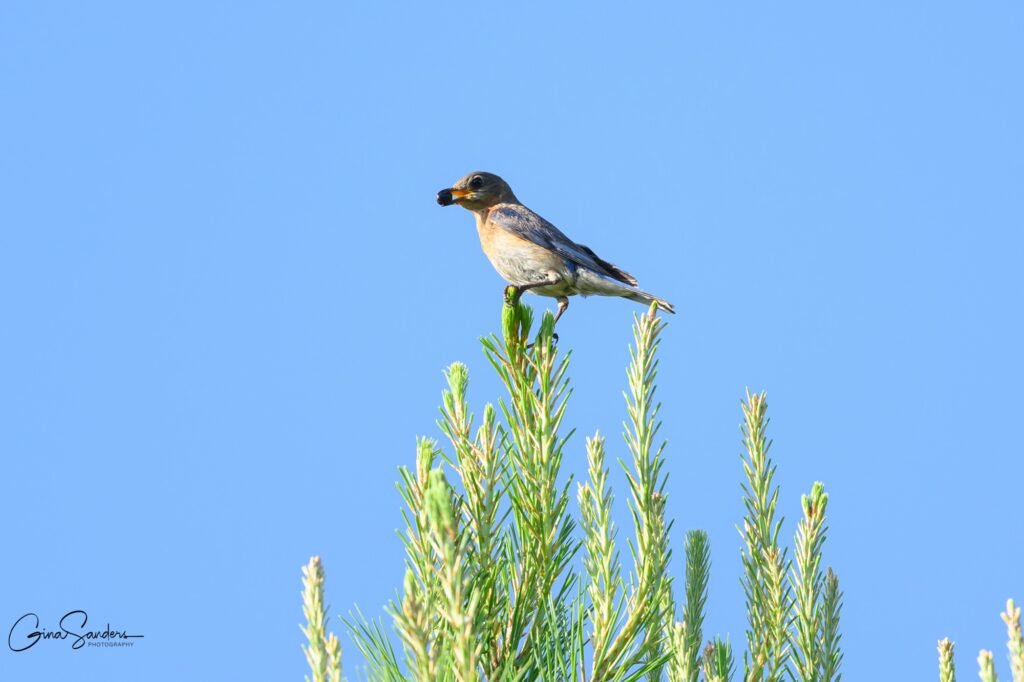
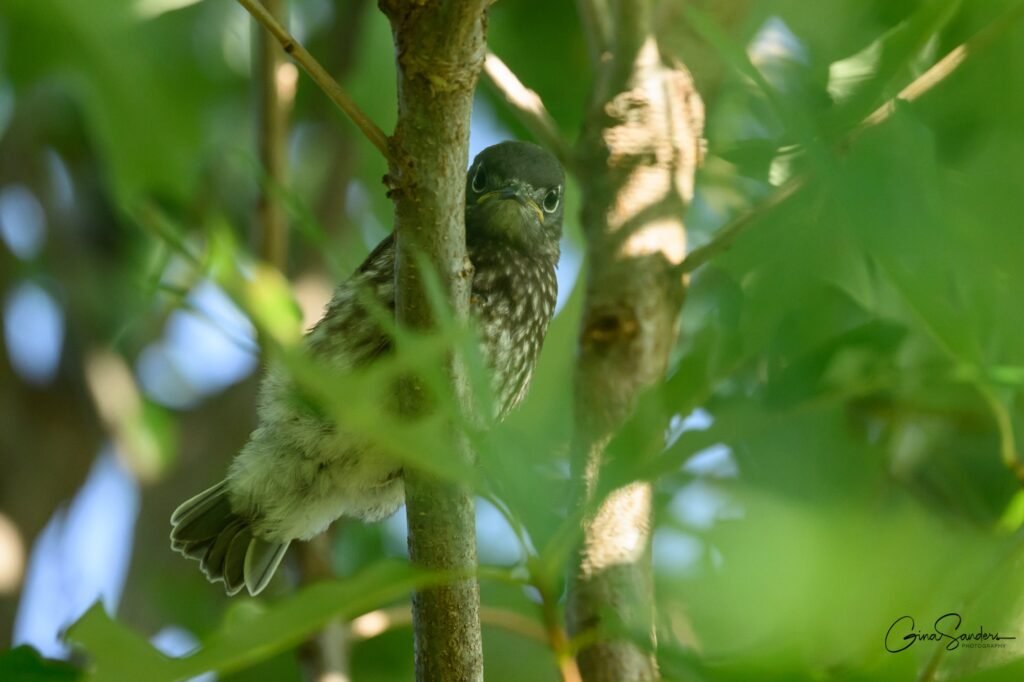
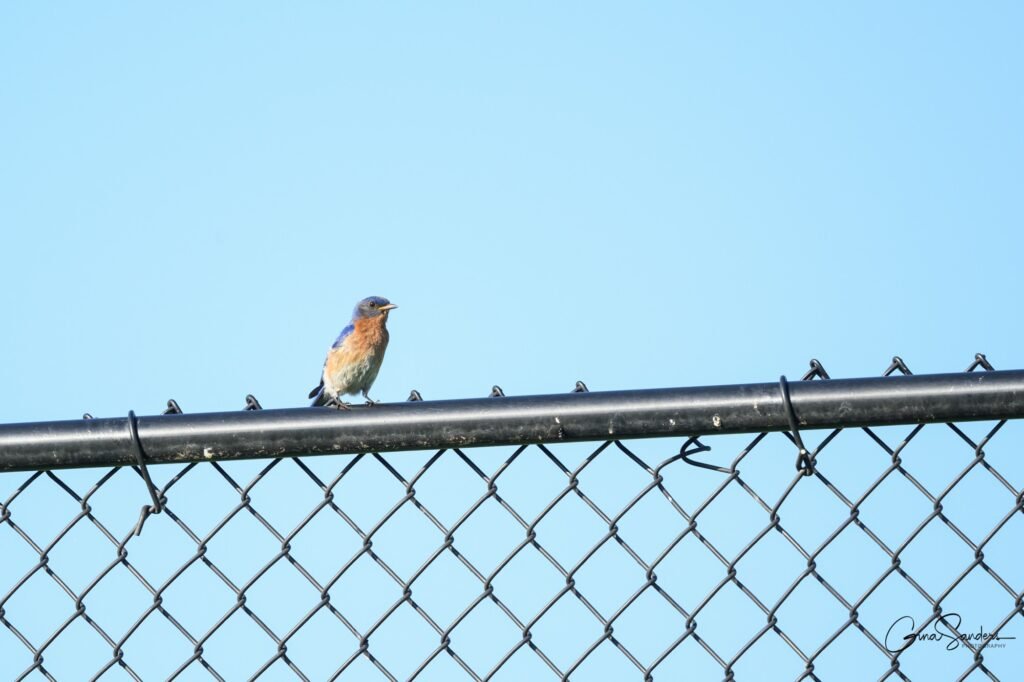
If it’s early enough in the season, the female bluebird will go back to the nestbox and start building another nest, for the next brood. If the old nest is still in there, she won’t reuse it, she’ll simply build a new nest on top of it. This is why it’s generally recommended to thoroughly clean out the nest box, throw away the old, dirty nesting materials, and clean the interior. This gives the next brood a healthy, clean start, and more space in the nestbox, keeping the new eggs and babies further from the opening, and safer from predators. If you’d like more information about how to properly clean out your bluebird nest box, click here.
Since mom is occupied with the next brood, dad assumes the caregiver role and teaches the young bluebirds how to survive. Once they’re fully independent, juvenile bluebirds may stick around to help their parents feed the next brood, but after the summer nesting season they typically leave their natal area to avoid inbreeding and find their own mates and territories. While they may settle in the general region, they rarely stay exactly where they were born.
What about other species of birds? Juvenile chickadees follow a similar pattern as bluebirds. Earlier this spring we had a Carolina Chickadee nest in a chickadee box I bought just for them. I happened to be out in the yard with my camera when they fledged and was able to capture a few photos of them in bushes around the backyard, after their first clumsy flight. For four or five weeks we heard the three young chickadees chattering to one another, and where one flew the others followed. As the weeks went by they became very skilled at flying and we thoroughly enjoyed watching them zip around the backyard. But gradually they moved on, and now we only have two that we see on a daily basis, which we assume are the parents that stayed in their territory.
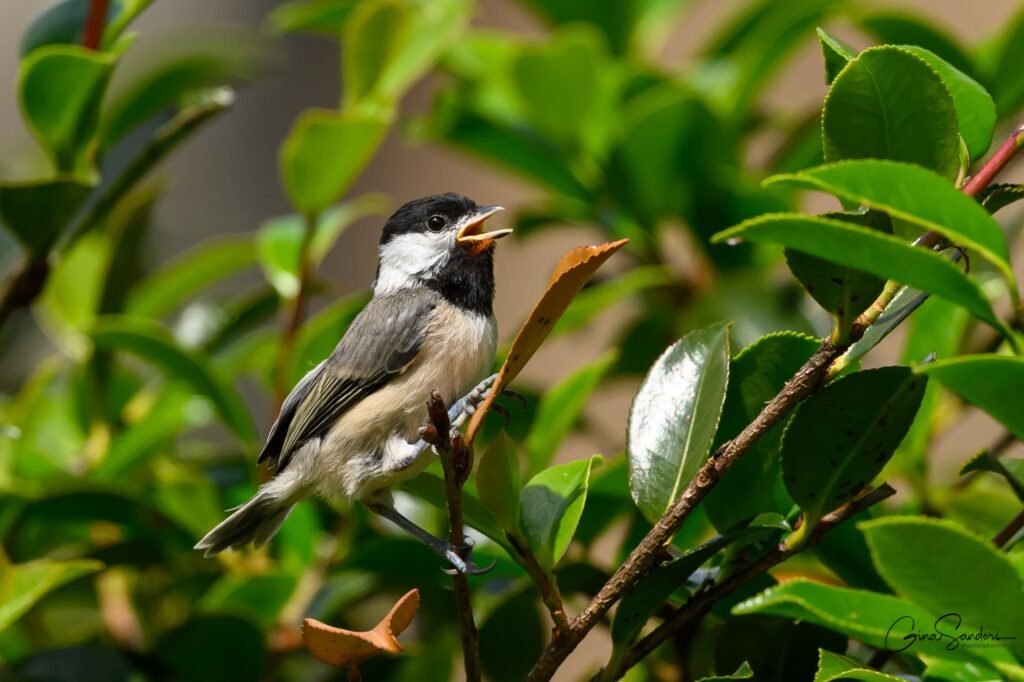
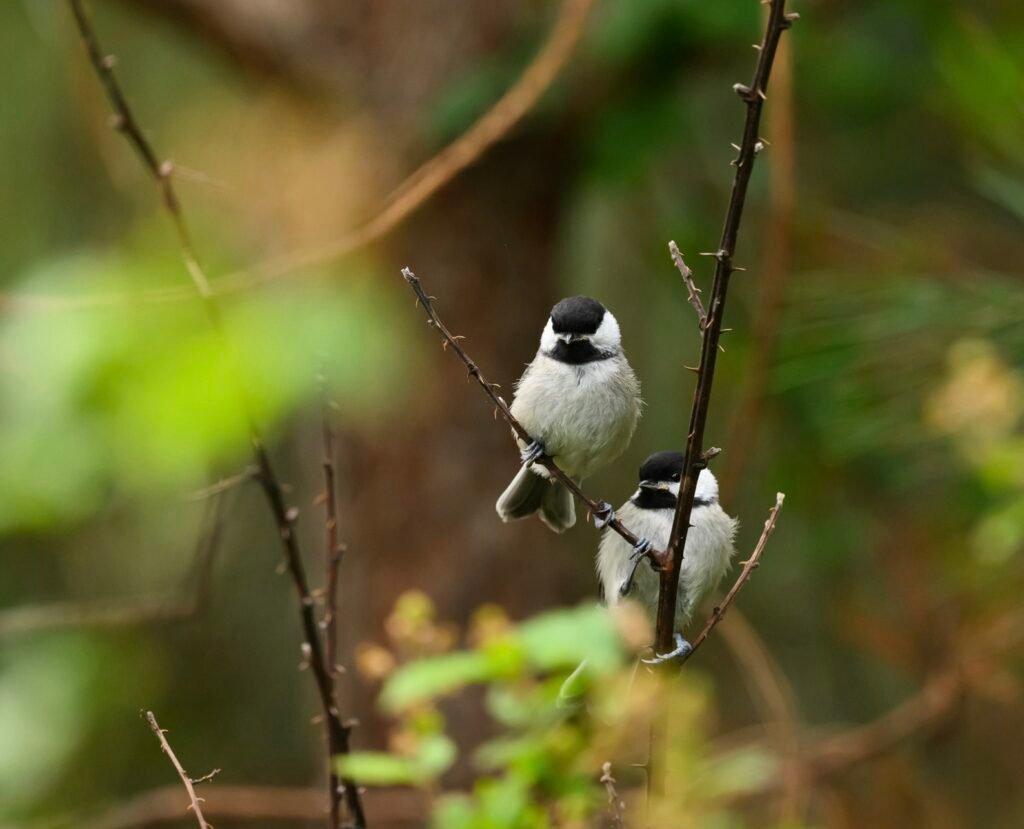
Most resident songbirds follow this pattern. Migrating songbirds will move away from the nesting site, yet stay in the general area, developing their flight and foraging skills until it’s time to migrate to their wintering grounds. Driven by natural instincts, waning daylight, and changing temperatures, they eventually join mixed-species flocks. Depending on the species, they will migrate to specific wintering grounds in the southern United States, the Caribbean, Central America, or South America. The following year, when they return to their breeding grounds, they spread out and develop their own territories.
Seabrook Island has many more birds than just songbirds. Marsh birds, seabirds, shorebirds, raptors. Many of these follow the same patterns as songbirds, but what about our resident herons and egrets? Where do their young go once hatched?
Once herons and egrets become independent (around 9 to 12 weeks of age), they leave their natal colonies and embark on a phase called post-fledging dispersal. They travel to shallow-water wetlands, coastal estuaries, and agricultural fields to hunt independently, sometimes migrating hundreds of miles away. This is why we see such a variance in the numbers of Wood Storks, Roseate Spoonbills, and other wading birds throughout our fall and winter.
Within the next week or so, we will start to see shorebirds on Seabrook Island. On close observation, you may notice they are all adults. After the baby shorebirds can fend for themselves, the parents leave them and fly south. Later in August, the young birds get the message and start their flight south, long after the parents have left. The young birds show up here in August, and often look significantly different than the adults.
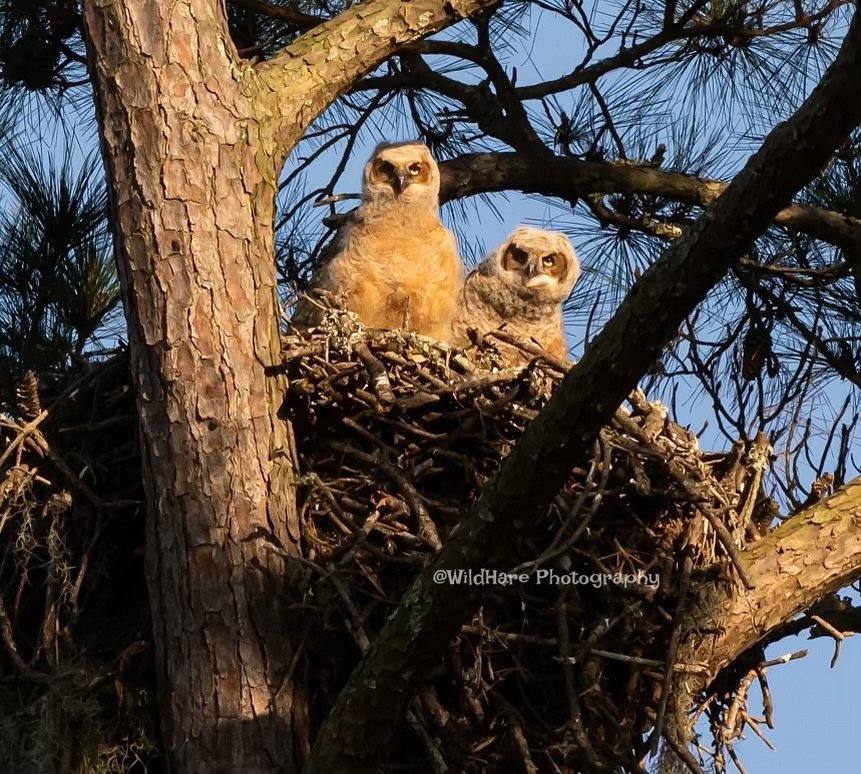
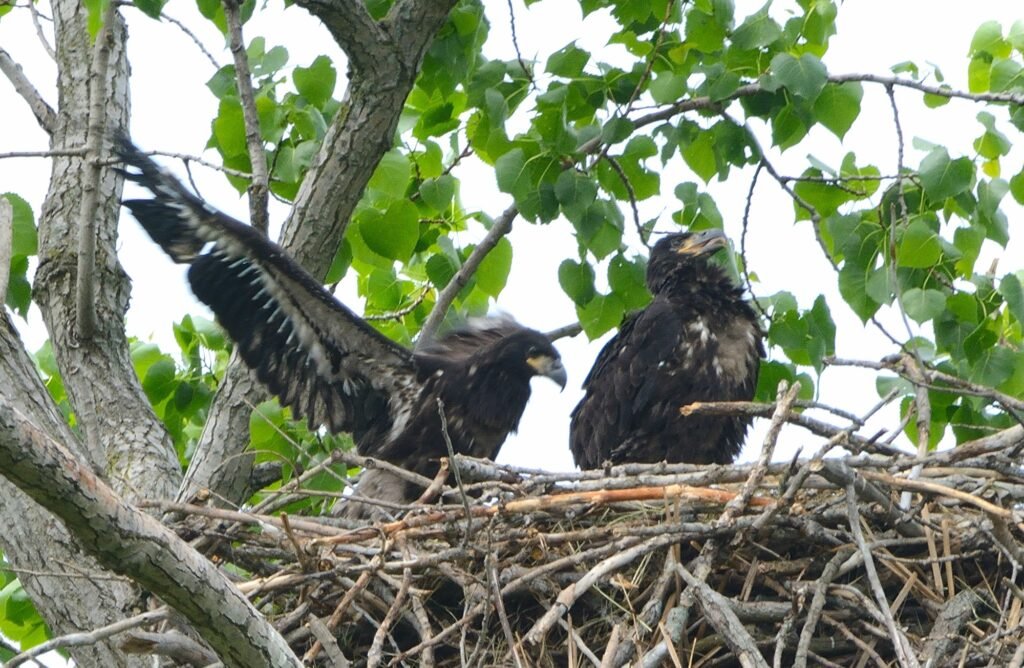
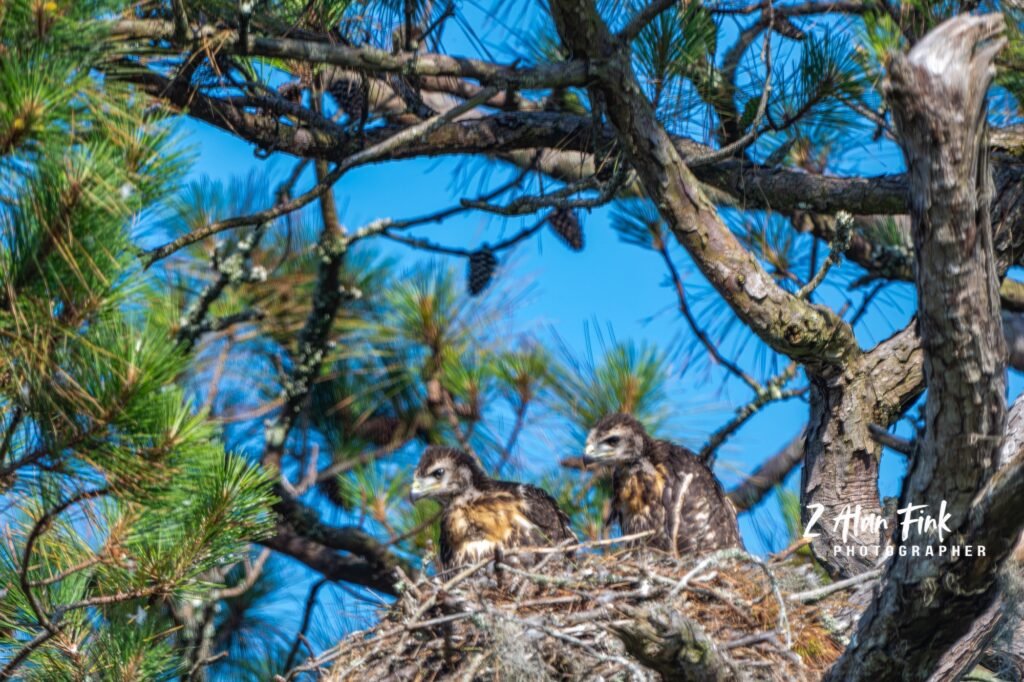
Like most birds, adult raptors defend a breeding territory. The young of year need to move on so the parents push them out of the territory. The young birds need to set up their own territory, so they wander about. Owls have a smaller territory so they settle closer to home. Studies show Barred Owls disperse within 7-15 miles. Red-tailed Hawks typically 10-30 miles away, and Coopers Hawks have been known to disperse as far as 62 miles from where they hatch. According to National Audubon Society, Bald Eagles have larger wingspans, allowing them to range widely. Studies on Bald Eagles show a median natal dispersal distance of about 42 miles, with females consistently traveling further than males. Juveniles often migrate hundreds of miles south during their first winter.
There are a few species like the American Crow and the Red-cockaded Woodpecker where the young stay in their natal territory to help the parents raise the next brood.
As you can see, where baby birds go after they fledge varies greatly, according to the species. As we wrap up the breeding season for the year, keep your eyes out for young birds passing through. You never know who may show up in your backyard!
Written by Gina Sanders and Bob Mercer
Feature photo of Eastern Bluebird family – Jan Couch
Leave a Reply