
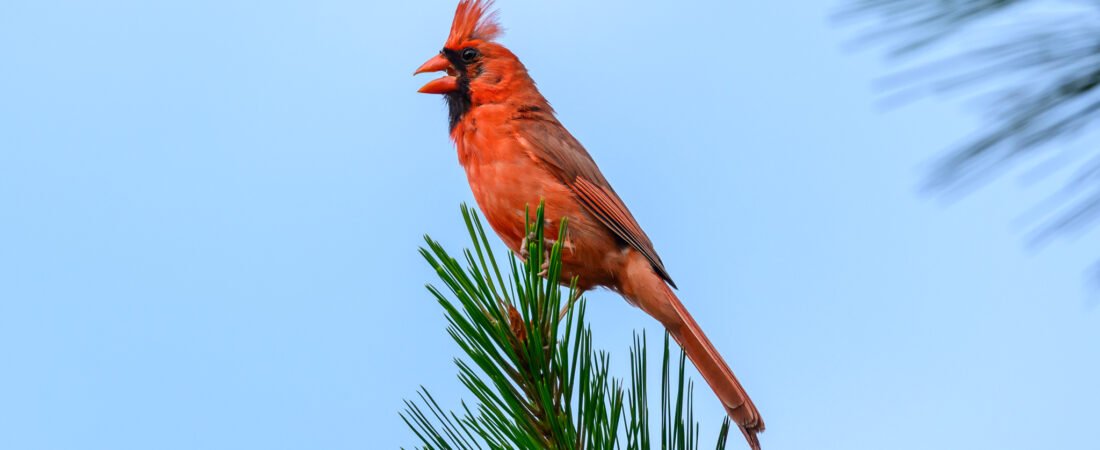
This morning, I woke up extra early. Yesterday, the temperatures in Pennsylvania rose into the 90’s. During the night, the temperatures dropped into the high 60’s; perfect for sleeping with the windows open. That means the early morning “Dawn Chorus” woke me up. At 5:20 AM, though it was still dark outside, the abundant American Robins sang and sang and sang—cheery-up, cherry-o. As I listened, I picked out a variety of birds.
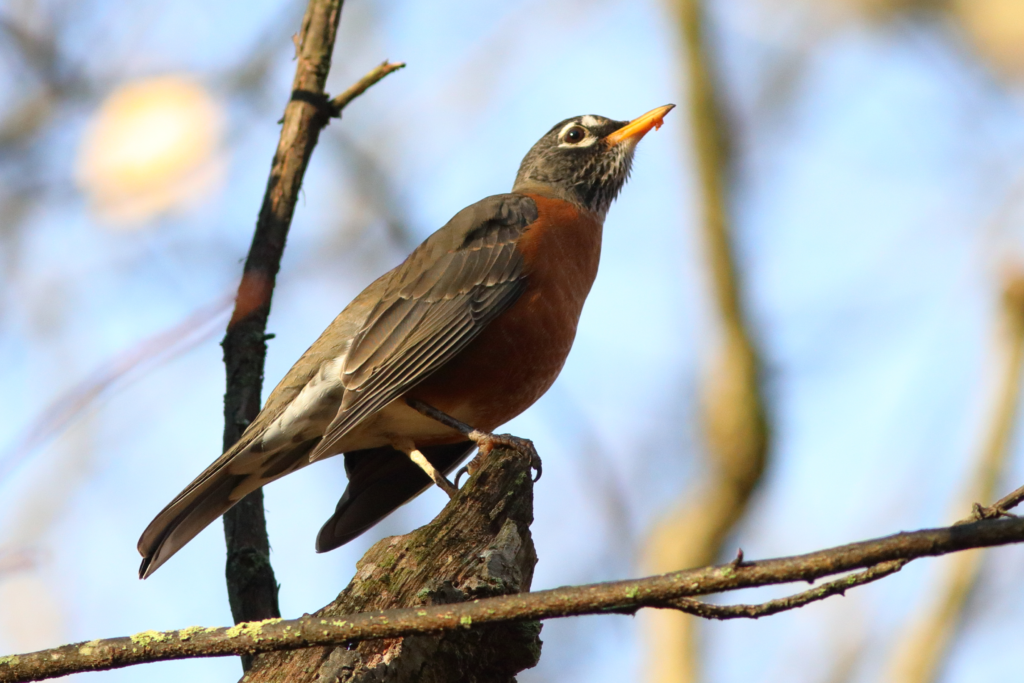
It just so happened that yesterday was also the day I was asked to write a blog on early bird songs, so my mind started churning on the question, “Why?”.
Anyone who is up before dawn knows that, especially during the breeding season, as dawn approaches, one hears a cacophony of bird sounds. It can be quite challenging to separate individual birds singing through the noise. It starts about an hour before sunrise and slows down dramatically around sunrise. Then by mid-morning, very few birds continue to sing. Forest birding goes from an audio experience to a visual experience. The thrill of hearing the dawn chorus drives many birders to get out early, really early. Those of us who like to sleep late miss a spectacle.
The standard hypotheses for the Dawn Chorus include: 1. the birds after spending a dark night need to proclaim to their neighbors and potential competitors that they still live and still hold their territory. 2. It might be a way to connect with a current or potential mate – “I am alive, healthy and over here.”

To both of those ends, getting an early start serves a purpose and it isn’t being the first to find food. Food sources may not be so visible in the dark. Furthermore, the insects the birds eat may not be as active in the cool weather and therefore not as visible. Once the sun is up providing ample light and warming the worms high up in the trees, then the feeding can begin. After a night with no food, the birds will be hungry.
Today, while lying in bed thinking about how to write this, I noticed that the Dawn Chorus in my yard had stopped. I looked at the clock. It read 6:19 AM. Sunrise today was 6:19.
None of this answers the question as to how they decide when to start singing.
A study published by The Royal Society in March 2002 titled “Eye size in birds and the timing of songs at dawn” by Robert J. Thomas et.al. addressed that question using species in Britian. While the bird species are irrelevant to our birds, the findings most certainly are not.
The study found a direct correlation between the size of a bird’s eye and its mass related to when it started singing. In other words, a bird with a big eye and small body will sing before a bird with a small eye and big body or even a big eye and a big body.
Since I am in Pennsylvania, our birds do not match those in South Carolina, so I am taking some guesses as to which birds sing first in South Carolina. Readers can help by reporting the accuracy of my predictions.
To make my guesses, I needed to know the size of a bird’s eye. An internet search sent me to a page used by wood carvers. They like to make lifelike carvings and have a chart where a carver can pick the right sized eye bead for the appropriate bird. While not super precise, I think it made a possible foundation for my guesses. After looking at the common birds on Seabrook Island using the Seabrook Island Birders check list, I picked some of the most common species and divided the eye bead size in millimeters into the average weight of a bird in grams. From there I will make the following predictions.
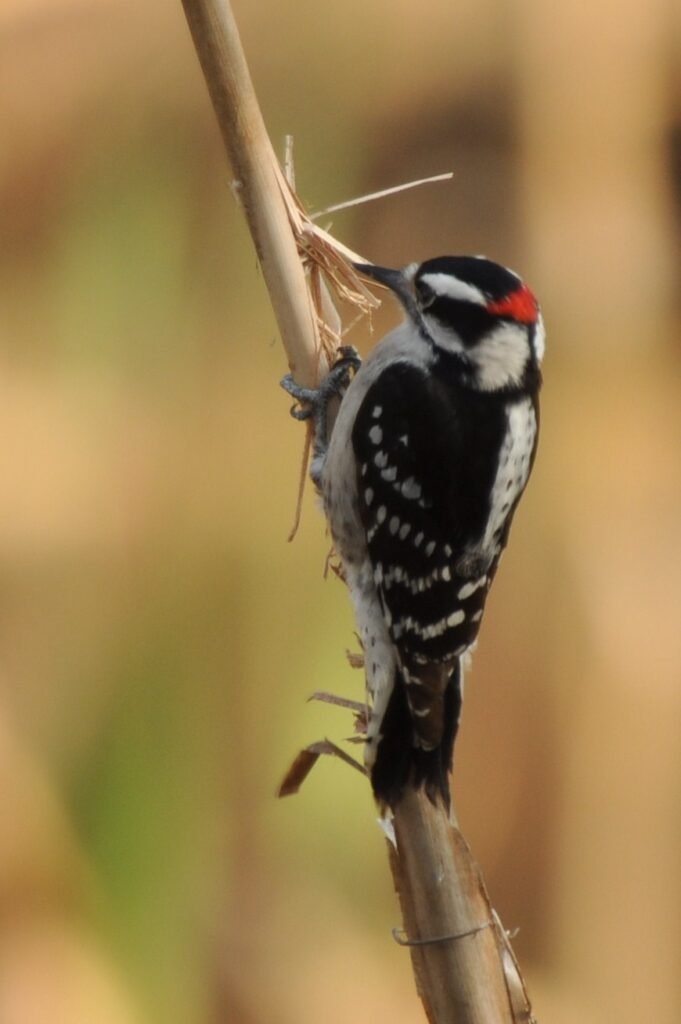
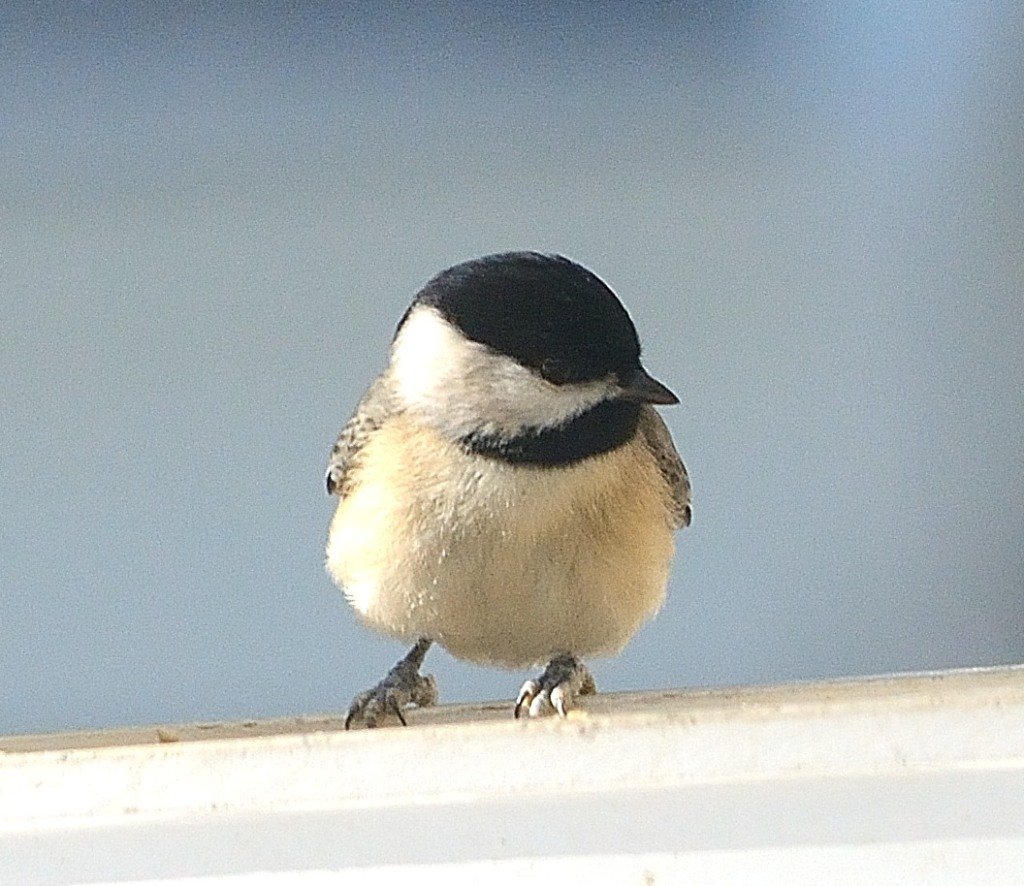
Using this very unscientific method, it would predict the order to be Carolina Chickadee, House Finch, Downy Woodpecker, Brown-headed Cowbird, Eastern Bluebird, Gray Catbird, Northern Cardinal, Northern Mockingbird, Red-bellied Woodpecker, Mourning Dove and finally the Blue Jay.
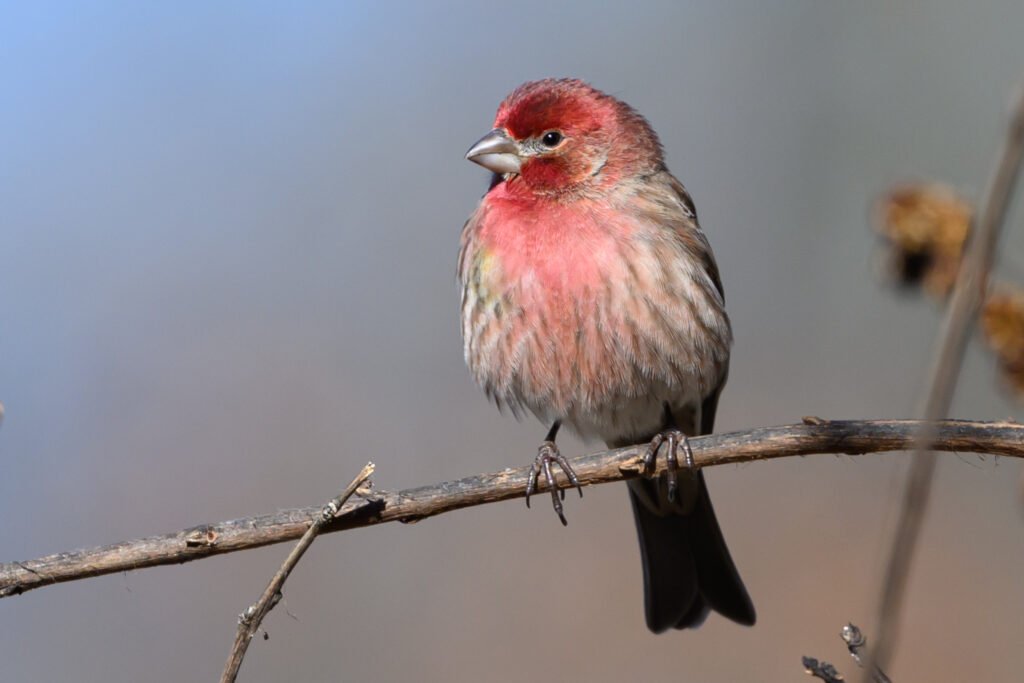
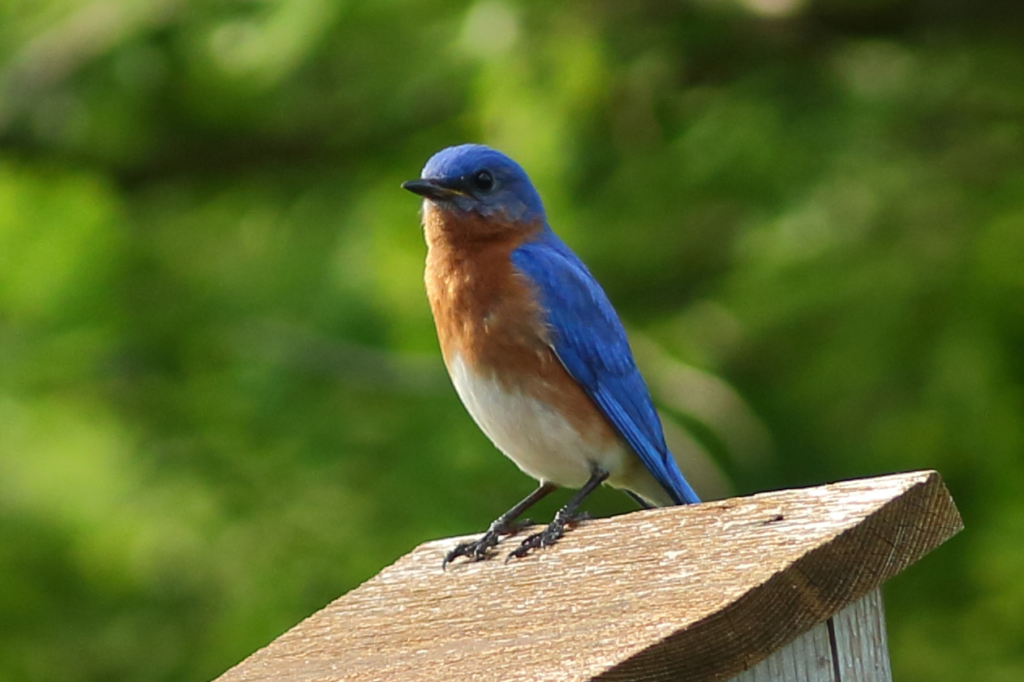
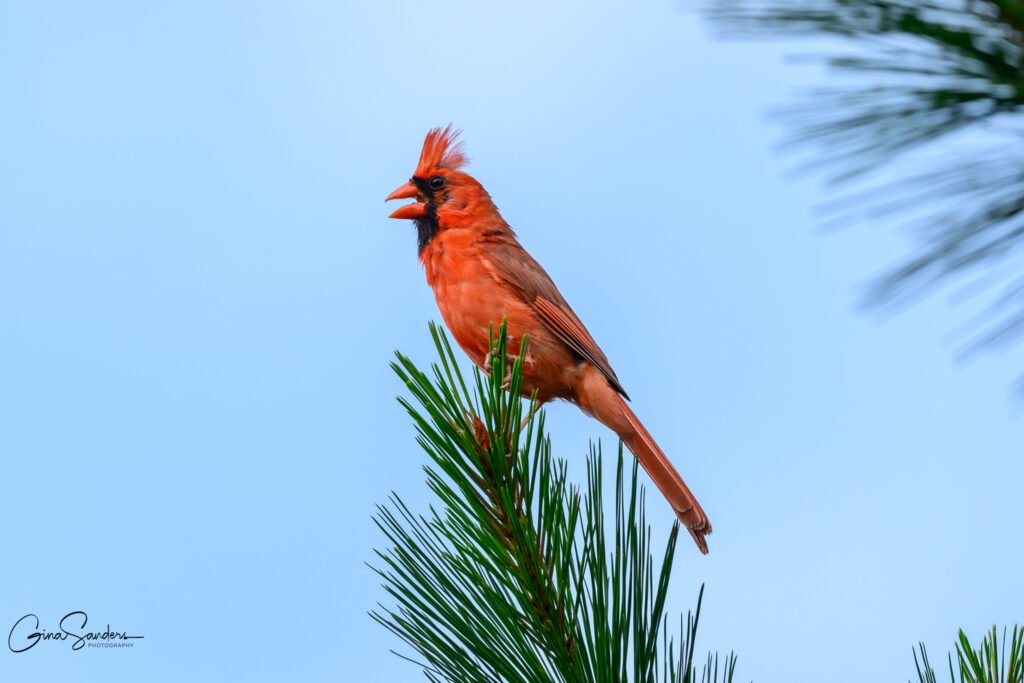
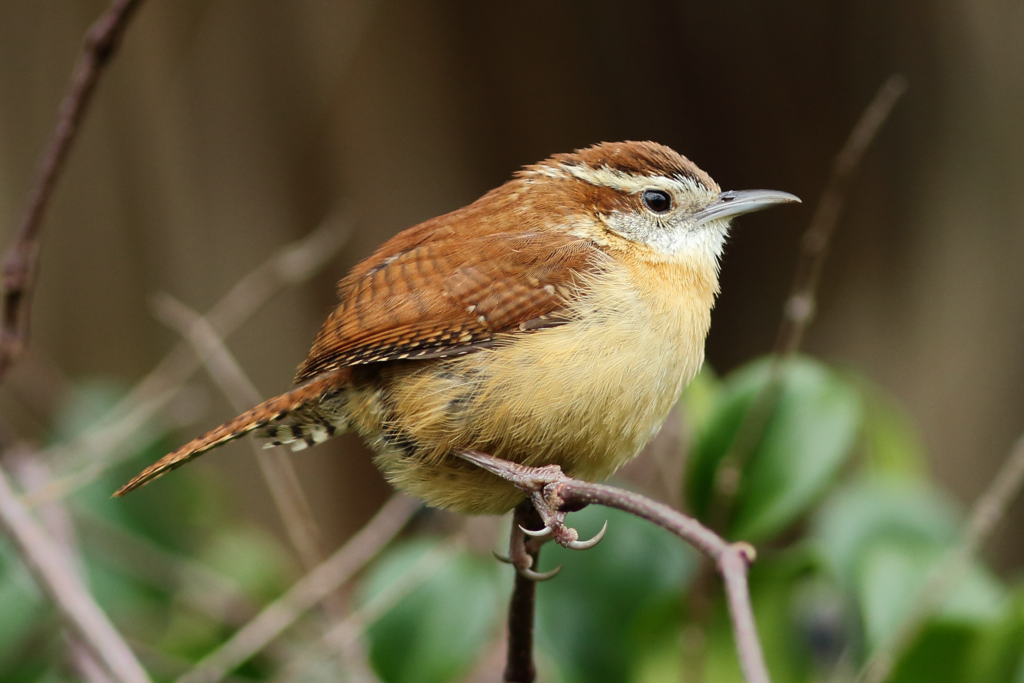
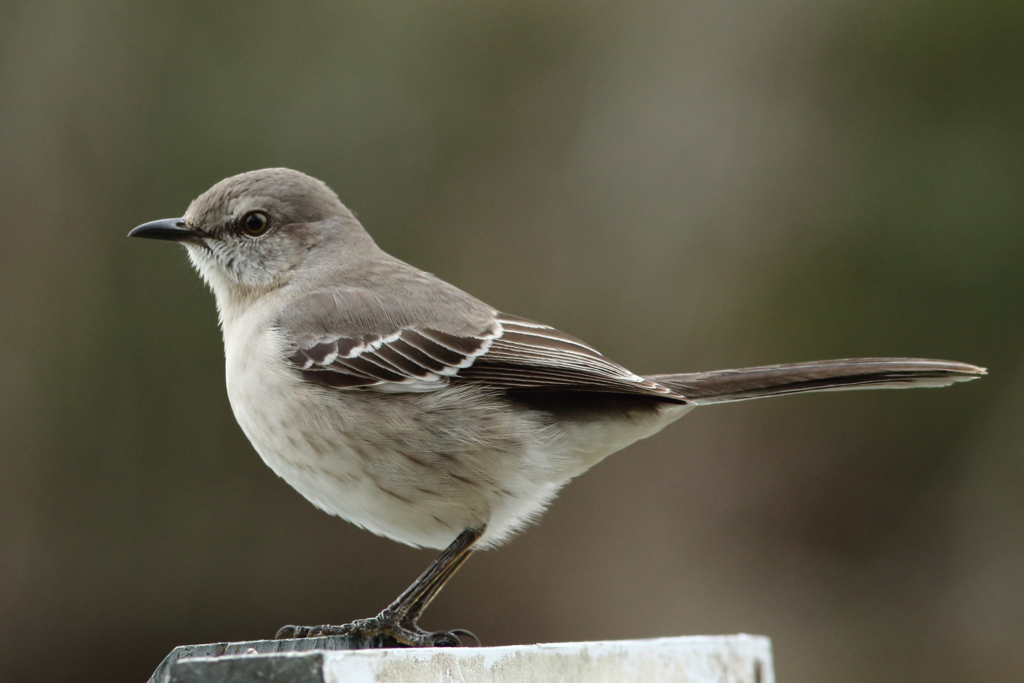
I have my doubts. I know the Northern Mockingbird will sing in the deep darkness of night. Here in Pennsylvania, the American Robin is very early and the Northern Cardinal is close behind. So, my guess will be Northern Mockingbird, Northern Cardinal, House Finch, Carolina Wren, and Eastern Bluebird as the earliest birds to sing.
If the readers of this blog would like to give the list of birds they first hear, it would be a fun thing to compare and share. If you have the Merlin app, go to the settings and click off the “Move repeated live matches to the top.” This will give you a chronological list of the birds you hear. Let us know!