

Black Skimmers were my “spark” bird, the bird that initially sparked my interest in birding. My husband and I had just purchased our property on Seabrook Island and were sitting out on the beach near Boardwalk 9. We saw a bird fly over the water and skim the surface with its beak. As many times as we’d been to the beach before, we’d never noticed this behavior. It prompted a Google search to identify and learn more about the bird, and the rest is history.
Black Skimmers spend their entire lives around coastal areas, mainly sandy beaches and islands. We’re fortunate to have them in abundant numbers on North Beach, and they’re often seen skimming Palmetto Lake and other lagoons as well.
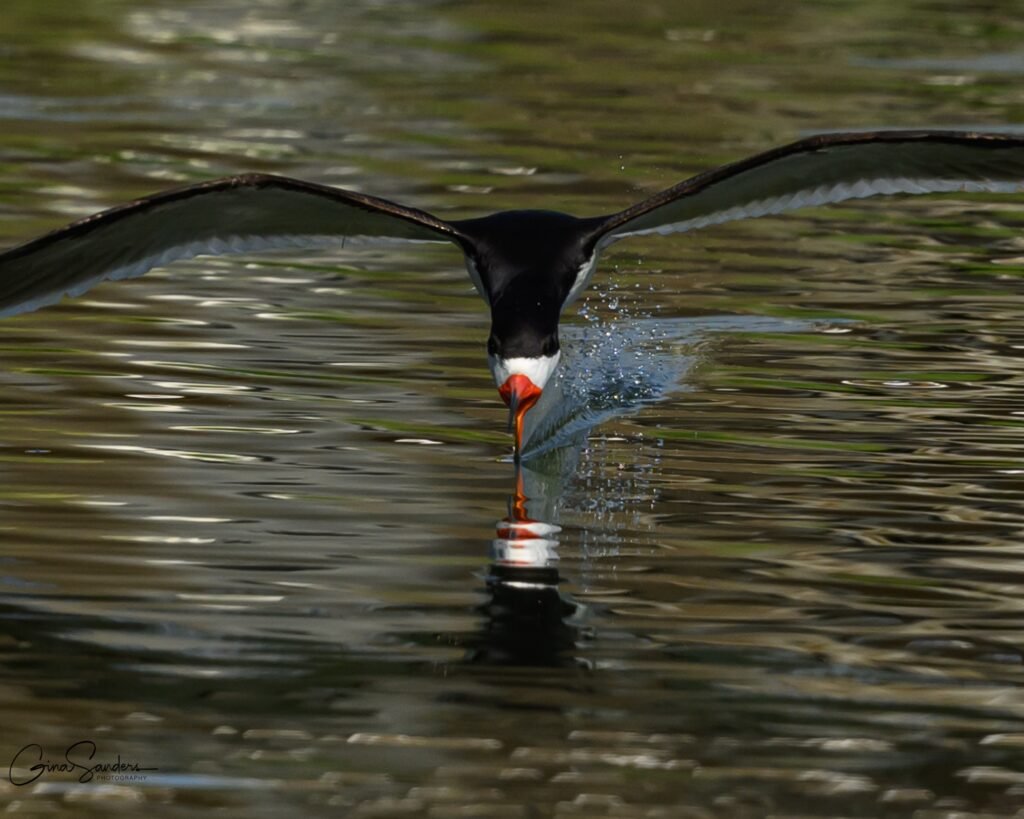
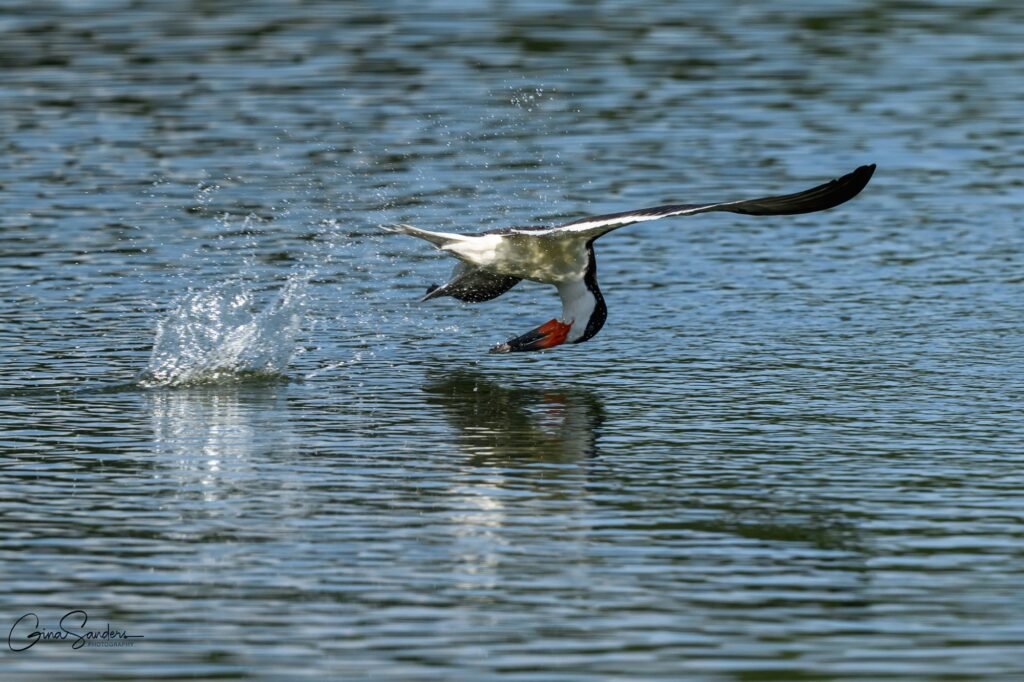
A long-winged bird with stark black-and-white plumage, the Black Skimmer has a unique grace as it forages in flight. Skimmers feed by opening their bill and dropping the long, narrow lower mandible into the water, skimming along until they feel a fish. Then they relax the neck, quickly closing their jaws and whipping the fish out of the water. Because they feed by touch, they can even forage at night. The world’s three species of skimmers are the only birds on earth that feed in this manner. Recognized more by sight than sound, you may wonder what their call sounds like, even though you’ve most likely heard it many times. Click here for a sound clip. Sound familiar?
Black Skimmers forage mostly when winds are light and waters calm. In tidal areas, they often forage in sync with the tides, most often just after low tide and just before high tide. They take many species of fish, mostly under 5 inches long, and a few crustaceans, such as shrimp or blue crab (when the crabs are molting).
Black Skimmers lay eggs directly on sandy, shelly, or stony ground, usually on islands or remote beaches that have at least a little vegetation. Some nest in the higher parts of saltmarshes. They often nest near or among tern colonies, which (despite numerous squabbles) can provide benefits, as terns aggressively attack gulls and mammals that prey on eggs and chicks.
Mates take turns scraping, using an exaggerated posture (with the neck, head, bill, and tail raised) to kick sand behind them with alternating foot strokes. They then rotate in their scrape to create a saucer-shaped depression, similar to the resting scrapes they use throughout the year. The depression takes only a few minutes to create, and the birds may make several scrapes before eggs are laid. Males do more scraping and make larger scrapes than females. The average scrape is 10 inches in diameter and 1 inch deep.
A clutch can have 1-5 eggs and they raise one brood per year. Once hatched, the chicks can soon stand and move around, but parents must feed them for 3-4 weeks after hatching.
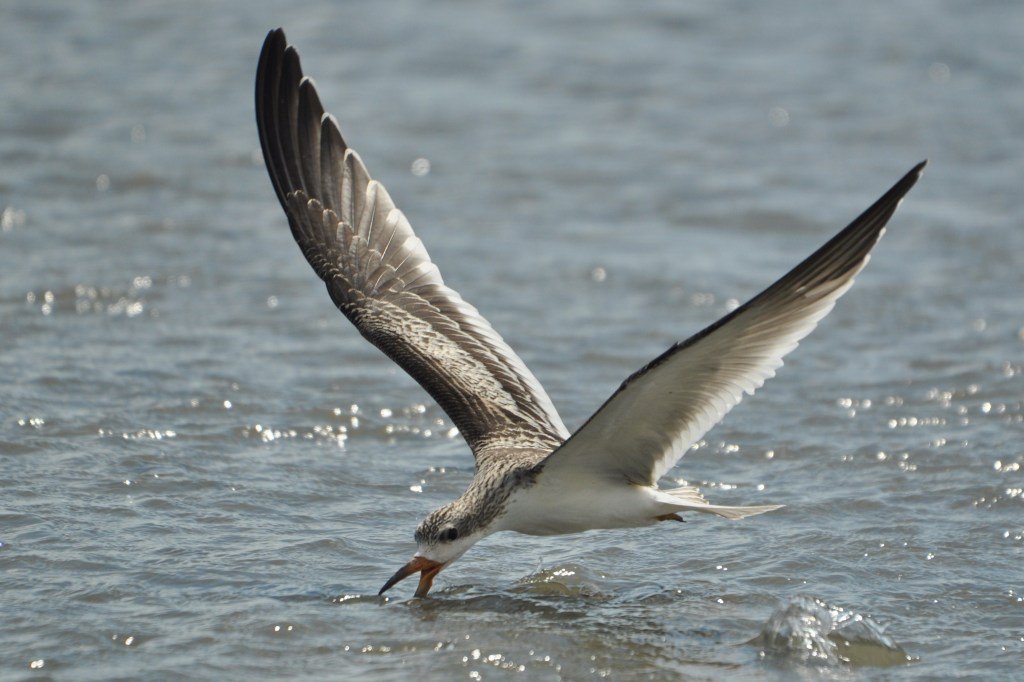


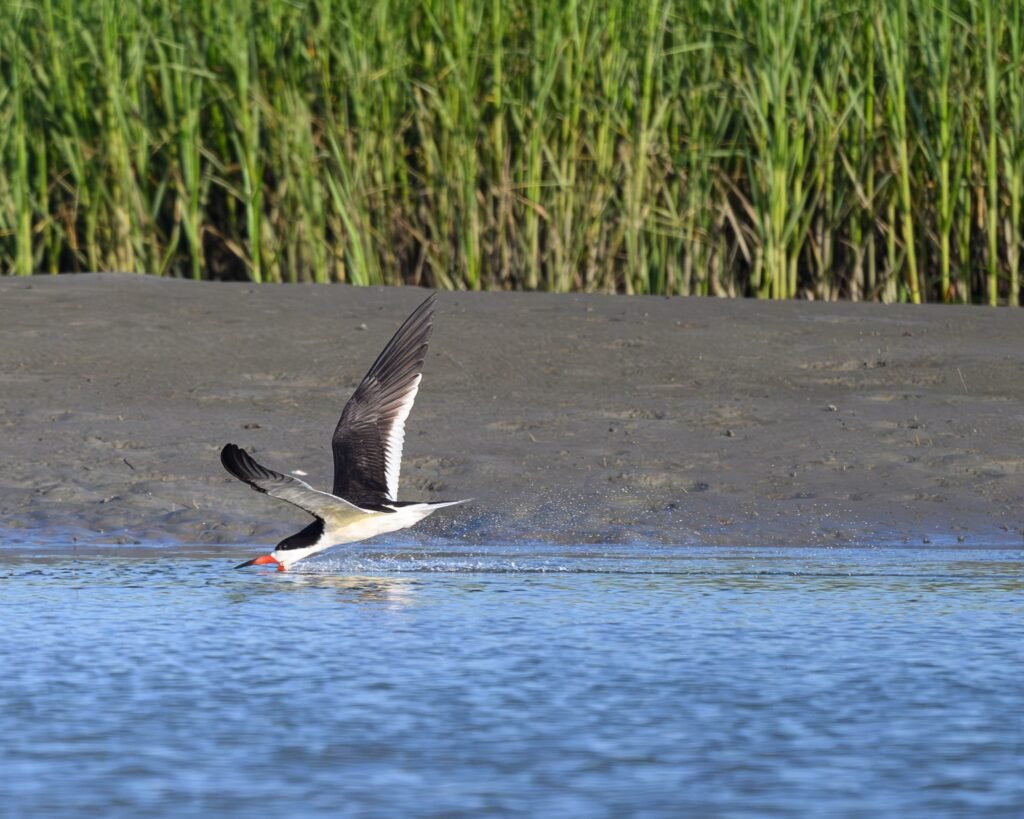

Black Skimmers are in decline. The North American Breeding Bird Survey estimates that populations declined 4% per year between 1966 and 2015, indicating a cumulative loss of 87% of their population over that period. The main threat to skimmers is development or other loss of their beach-nesting habitat, since they nest on the kinds of beaches that people like to vacation on. In addition to habitat loss, skimmer nests can be destroyed by roaming dogs and by vehicles that are allowed to drive on beaches. Storms and high tides can take their toll, overpowering eggs or nestlings.
Fun Fact: The oldest recorded Black Skimmer was at least 23 years, 1 month old when it was identified by its band in California in 2013. It had been banded in the same state in 1990.
Source: Cornell Lab All About Birds – Black Skimmer
To learn more: Audubon Field Guide – Black Skimmer
Photos by Gina Sanders and SIB Media Files