
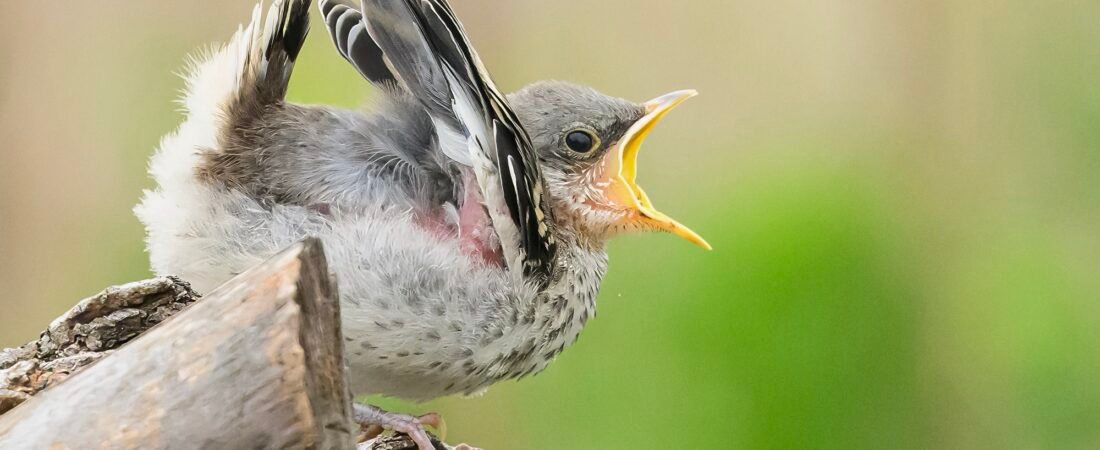
Nest types, feeding baby birds, keeping the nests clean have all been fun topics discussed in recent weeks. But life isn’t all fun for baby (or parent) birds. So unfortunately we end our series on nesting on a topic that isn’t as much fun.
Fledgling mortality is high. Mortality is high among baby birds, and unlike human parents, many bird parents will not do everything possible to protect their offspring – they have to take their own survival into account as well, and if the risk is too great they will abandon their nests and chicks. Feral cats, dirty bird feeders, natural disasters, food shortages and other hazards also threaten baby birds. Fledglings are at one of the most dangerous time in their lives, facing an average mortality rate of 42% over just a week or two. Most of that mortality happens early, just after the little guys have left the nest. New fledglings have almost no skills: they can’t feed themselves, can’t fly well (or, in many cases, at all) and can’t do anything to defend themselves if something terrifying like a weasel, snake, crow, or even chipmunk decides to eat them. Our North Beach American Oystercatcher chicks are just one example of high mortality….king tides, crows, and coyotes are all possible threats.
Baby birds often migrate alone. Migration is perilous, but many young birds who have never migrated do so successfully by relying on their instincts instead of any parental guidance. By the time they are ready to migrate and depending on the species, adult birds may have already left, and the babies find their way to a different part of their range hundreds or thousands of miles away completely on their own.
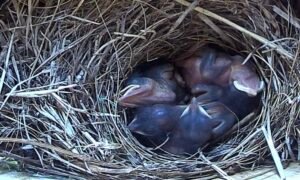
Not all young that hatch survive the nestling period. Aggression among nestlings is common and large chicks frequently kill their smaller siblings. This behavior, known as siblicide, is not uncommon among birds such as hawks, owls, and herons, and is often a result of poor breeding conditions in a given year. When an eagle pair has multiple young, it is not uncommon for the older eaglet to kill the smaller one. This is sometimes done simply by being aggressive in taking food from the parent, causing the smaller chick to starve. Should one chick decide to kill its sibling, neither parent will make the slightest effort to stop the fratricide. Owls and eagles are known to literally throw the weaker sibling off the side of the nest.
As the nesting season continues, let’s remember our little feathered friends and do what we can to make their lives easier.
- Keep your pets away from nests and food sources
- Provide good nest boxes (with baffles) where appropriate.
- Keep your food and water sources clean
Written by Judy Morr
Bluebird photo by Nancy Brown/Birdfy Nestbox Duo with camera
Northern Mockingbird photo by Gina Sanders