
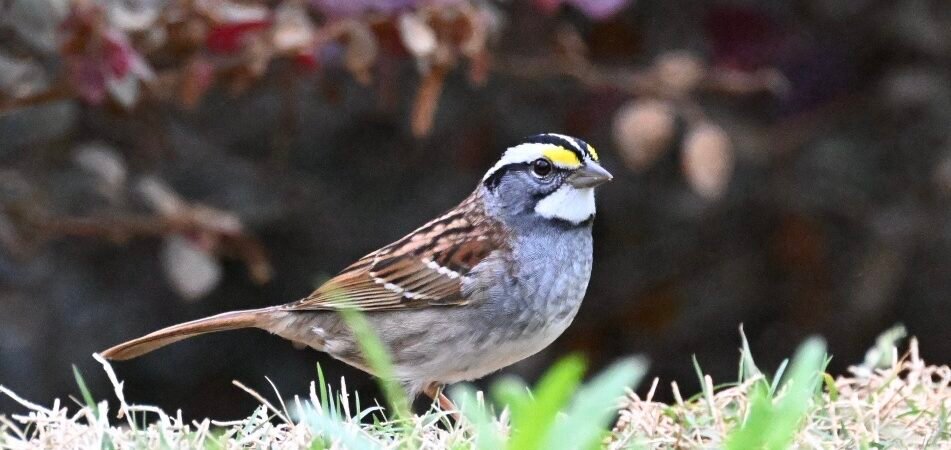
White-throated Sparrow Zonotrichia albicollis L: 6.3″-7.1″, WS: 7.9″-9.1″, WT: 0.8-1.1 oz.
One of the most common sparrows found on Seabrook Island in winter, and one you’re almost sure to see in your backyard. It’s a large, full-bodied sparrow with a fairly prominent bill, rounded head, long legs, and long, narrow tail.
According to Cornell Lab All About Birds: “Crisp facial markings make the White-throated Sparrow an attractive bird as well as a hopping, flying anatomy lesson. There’s the black eyestripe, the white crown and supercilium (eyebrow), the yellow lores, the white throat bordered by a black whisker, or malar stripe. They’re also a great entrée into the world of birdsong, with their pretty, wavering whistle of Oh-sweet-canada. These forest sparrows breed mostly across Canada, but they’re familiar winter birds across most of eastern and southern North America and California.”
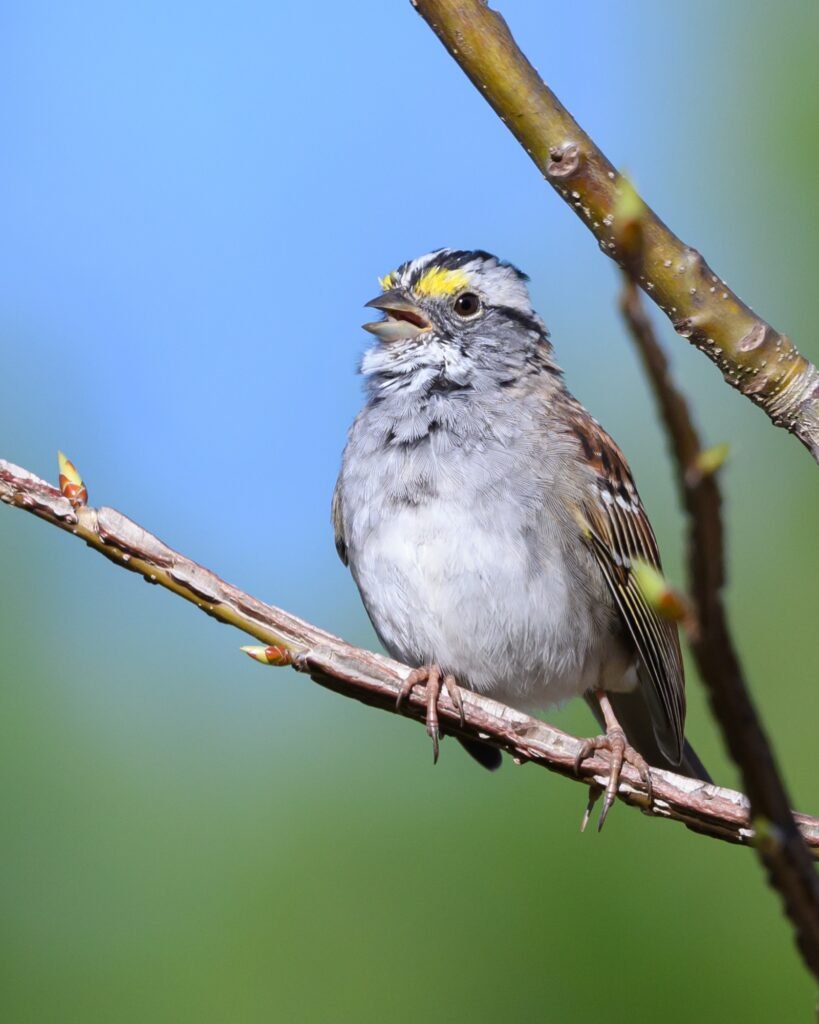
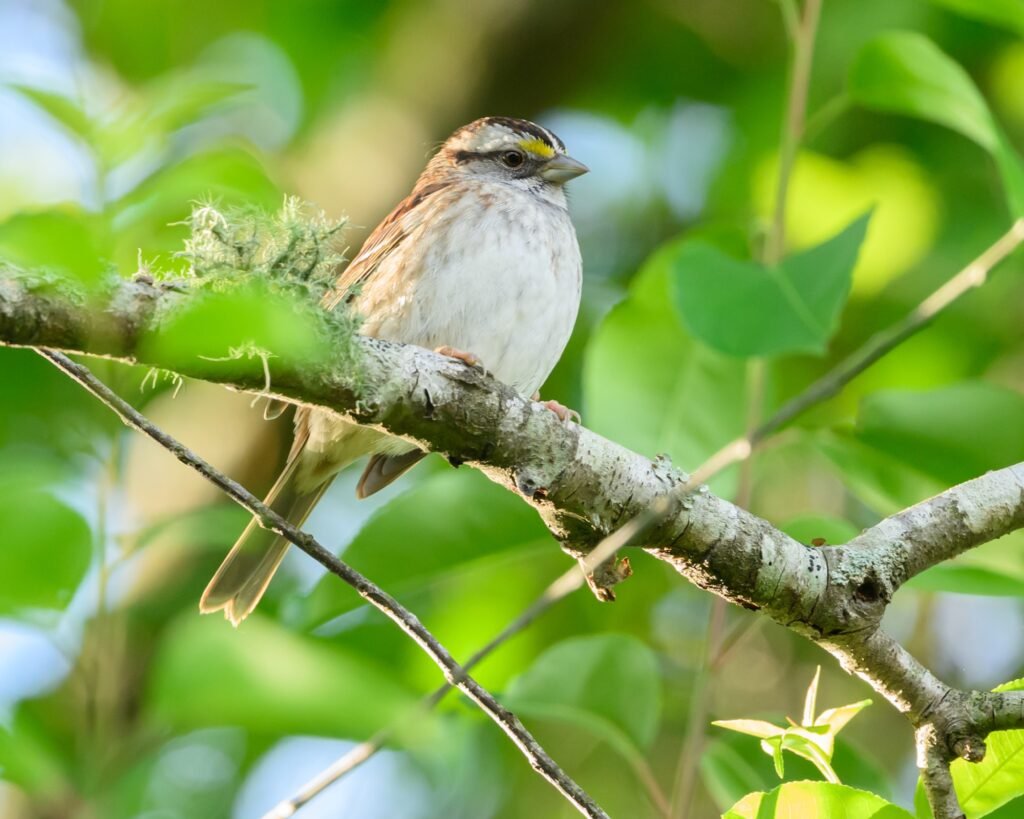
“White-throated Sparrows readily visit feeders or peck at fallen seeds beneath them. They feed on millet as well as sunflower seeds. If you make a brush pile in your yard it will give White-throated Sparrows a place to take cover in between trips out into your yard to feed.”
“The White-throated Sparrow comes in two color forms: white-striped and tan-striped. The two forms are genetically determined, and they persist because individuals almost always mate with a bird of the opposite morph. Males of both color types prefer females with white stripes, but both kinds of females prefer tan-striped males. White-striped birds are more aggressive than tan-striped ones, and white-striped females may be able to outcompete their tan-striped sisters for tan-striped males.”
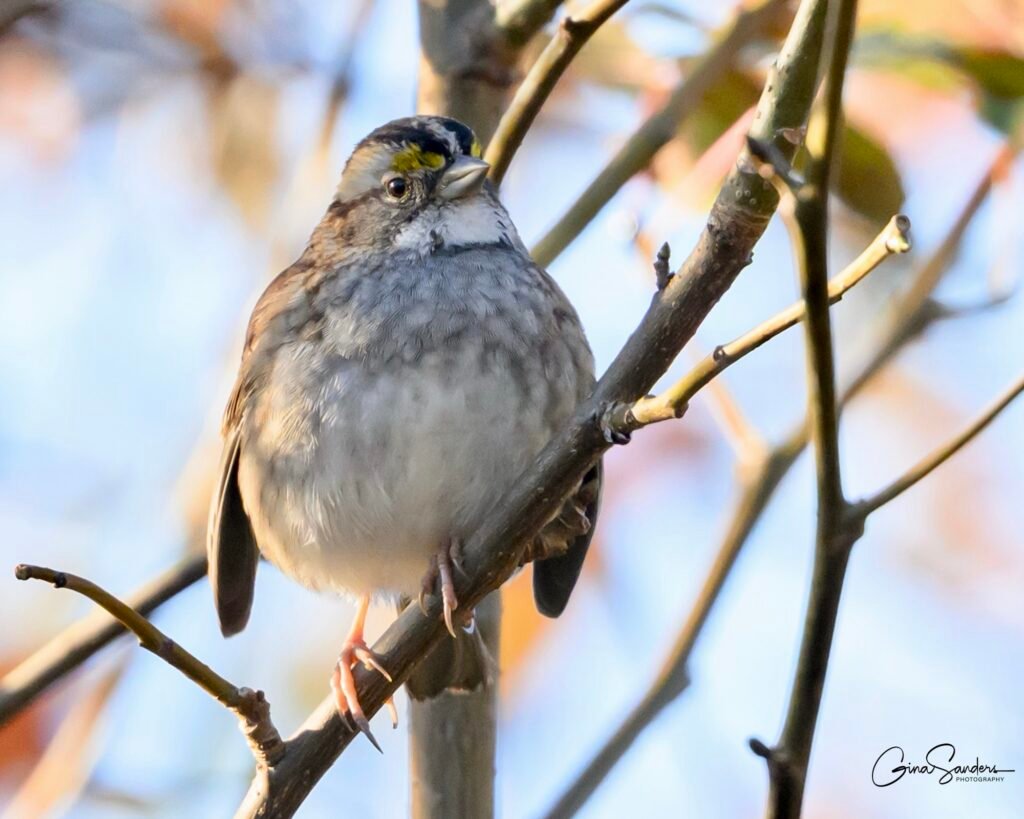
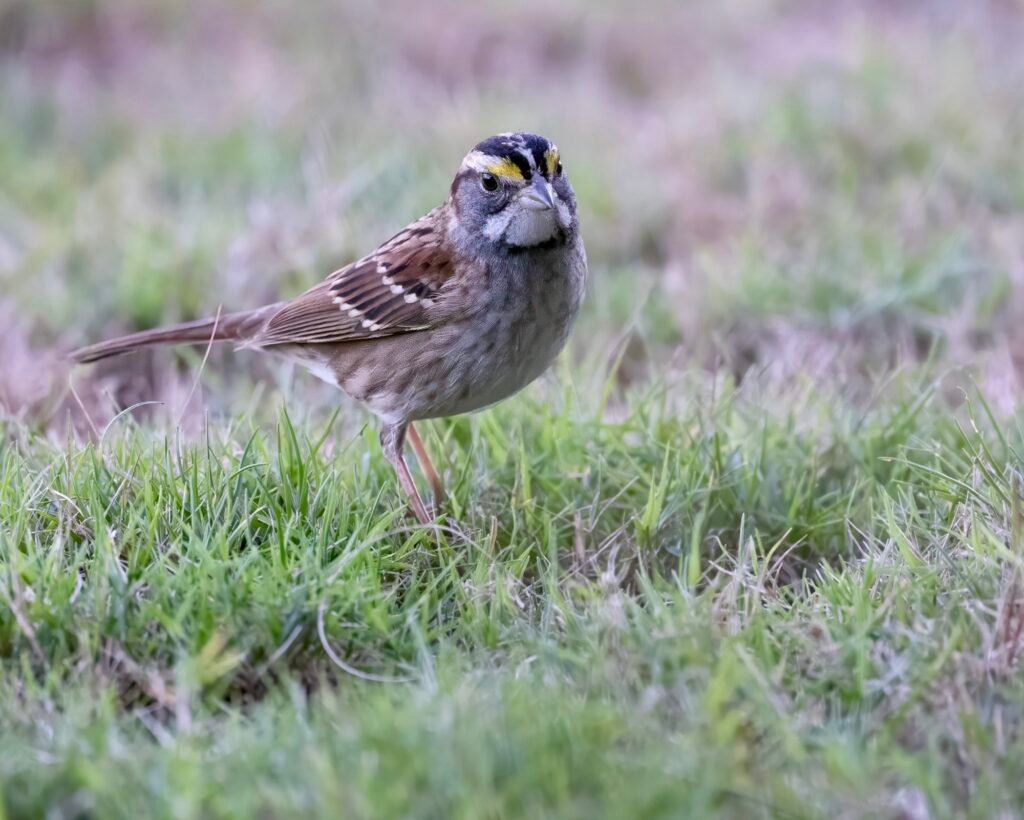
“White-throated Sparrows eat mainly the seeds of grasses and weeds, including ragweed and buckwheat, as well as fruits of sumac, grape, cranberry, mountain ash, rose, blueberry, blackberry, and dogwood. In summer they eat large numbers of insects that they catch on the forest floor or, occasionally on quick flights out from low vegetation. These include dragonflies, wasps, stinkbugs, beetles, flies, and caterpillars, as well as spiders, millipedes, centipedes, and snails. Parents feed their nestlings almost exclusively animal matter. During winter, White-throated Sparrows readily visit bird feeders for millet and black oil sunflower seeds. In spring they eat the tender buds, blossoms, and young seeds of oak, apple, maple, beech, and elm.”
“White-throated Sparrows hop when they’re on the ground rather than walking or running. They forage in the leaf litter, often using both feet at once to scratch backwards, then pounce forward at anything they’ve uncovered. They also toss leaves aside with flicks of the head. During the breeding season the males are aggressive, chasing each other off their territories.”
The next time you’re in your backyard, have a look around and see if White-throated Sparrows are there. Let us know if you see these little birds under your feeders this year.
If you would like to learn more about White-throated Sparrows, visit:
The Cornell Lab of Ornithology – All About Birds: White-throated Sparrow
Submitted by Gina Sanders
Photos by Gina Sanders