
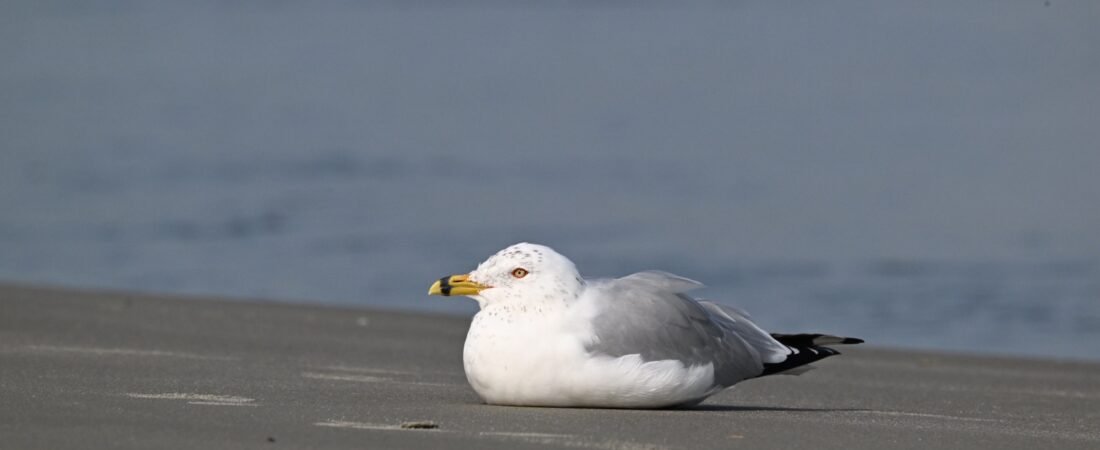
Ring-billed Gull:
Length: 16.9-23.1 inches; Weight: 10.6-24.7 oz.; Wingspan: 41.3 – 46.1 inches
Ring-billed Gulls are commonly seen on Seabrook Island in winter. But not just at the beach, they frequent parking lots, garbage dumps, lakes and fields, sometimes by the hundreds. These are the gulls you’re most likely to see far away from coastal areas—in fact, most Ring-billed Gulls nest in the interior of the continent, near freshwater. A black band encircling the yellow bill helps distinguish adults from other gulls—but look closely, as some other species have black or red spots on the bill.
The Ring-billed is a medium-sized gull with a fairly short, slim bill. When the gull perches, its long, slender wings extend well past its square-tipped tail. In flight, the birds move lightly on easy flaps of their fairly slender wings.
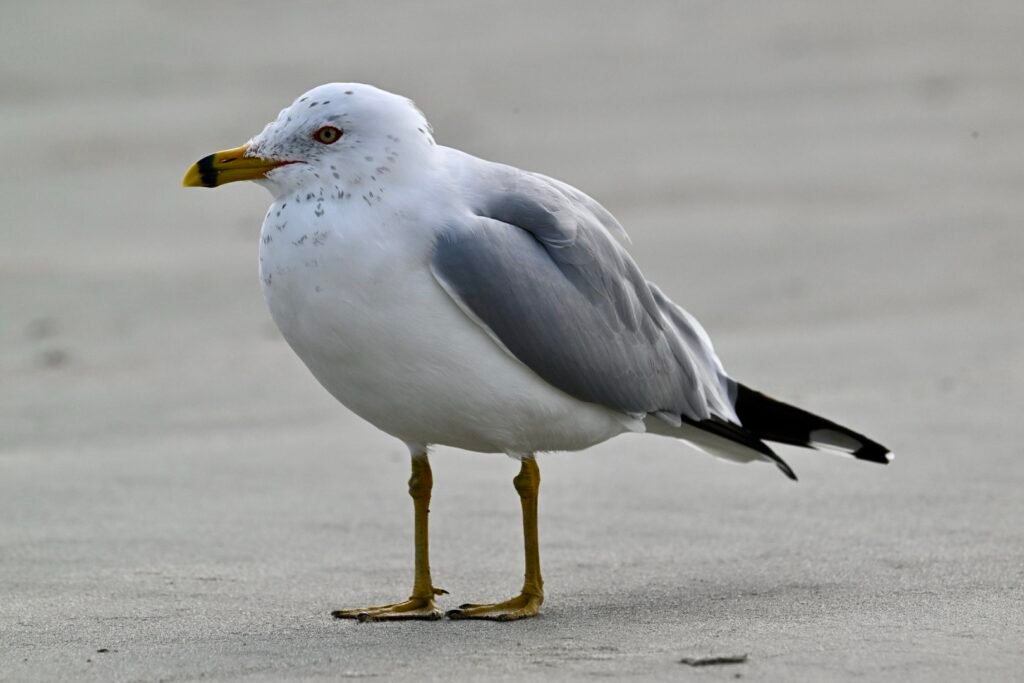
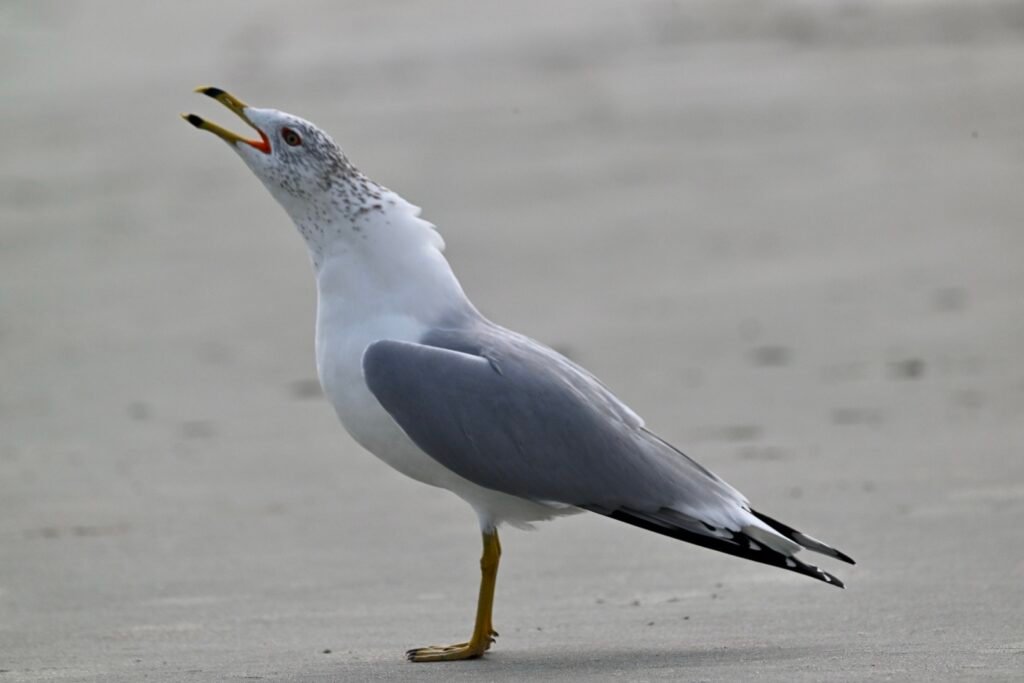
Adults are clean gray above, with a white head, body and tail; their black wingtips are spotted with white. They have yellow legs and a yellow bill with a black band around it. Nonbreeding adults have brown-streaked heads. During their first two years, Ring-billed Gulls are a motley brown and gray with a pink bill and legs.
These sociable gulls often fly overhead by the hundreds or feed together at a golf course, beach, or field. Strong, nimble flyers and opportunistic feeders, Ring-billed Gulls circle and hover acrobatically looking for food; they also forage afloat and on foot.
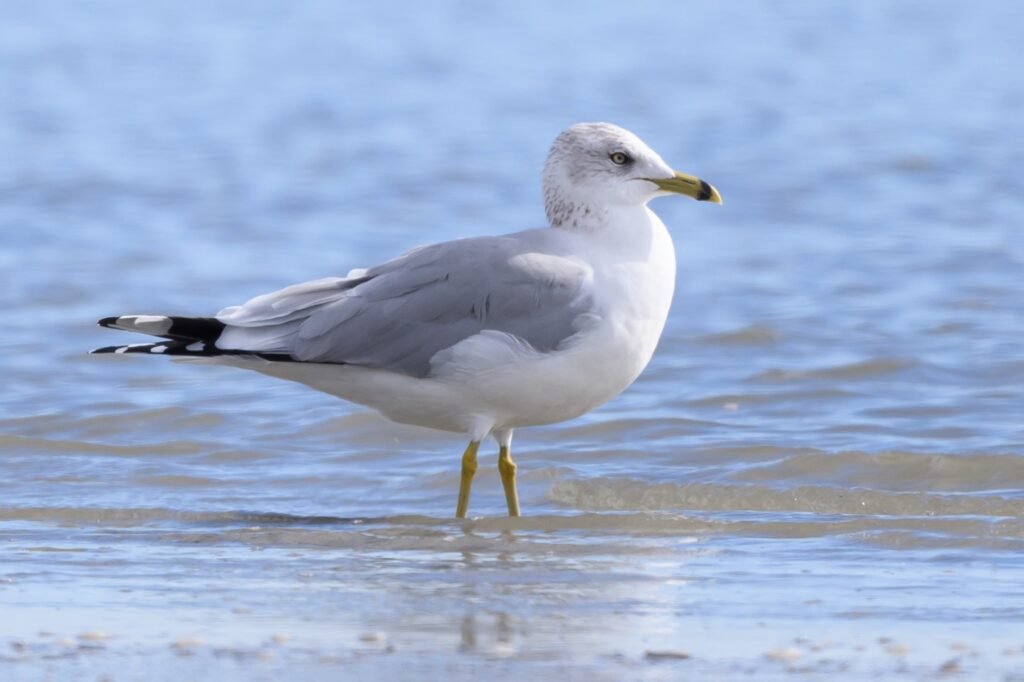
Able to thrive on almost any available source of nutrition, Ring-billed Gulls eat mostly fish, insects, earthworms, rodents, grain, and garbage. Common insect meals feature primarily beetles, flies, dragonflies, and bugs. In the western U.S., many Ring-billed Gull populations find most of their food on farm fields, forgoing fish altogether. In addition to their more common fare, Ring-billed Gulls have been known to eat dates, cherries, blueberries, and strawberries, as well as French fries and other food discarded—or left unguarded—by people.
Ring-billed gulls nest in colonies numbering from 20 to tens of thousands of pairs. They build their nests on the ground near freshwater, usually on low, sparsely vegetated terrain. They may nest on sandbars, rocky beaches, driftwood, bare rock, concrete, or soil. They often choose sites near or underneath low plants to hide them from aerial predators. Nest sites tend to be used for multiple seasons, by new or returning pairs.
Ring-billed Gulls are strong, graceful flyers. They can race along at more than 40 miles per hour, and they’re adept at snatching food from the air. You may see these birds hovering, soaring, or poised and stationary in the wind. Adults play by repeatedly dropping objects, then swooping to catch them—perhaps honing their hunting moves.
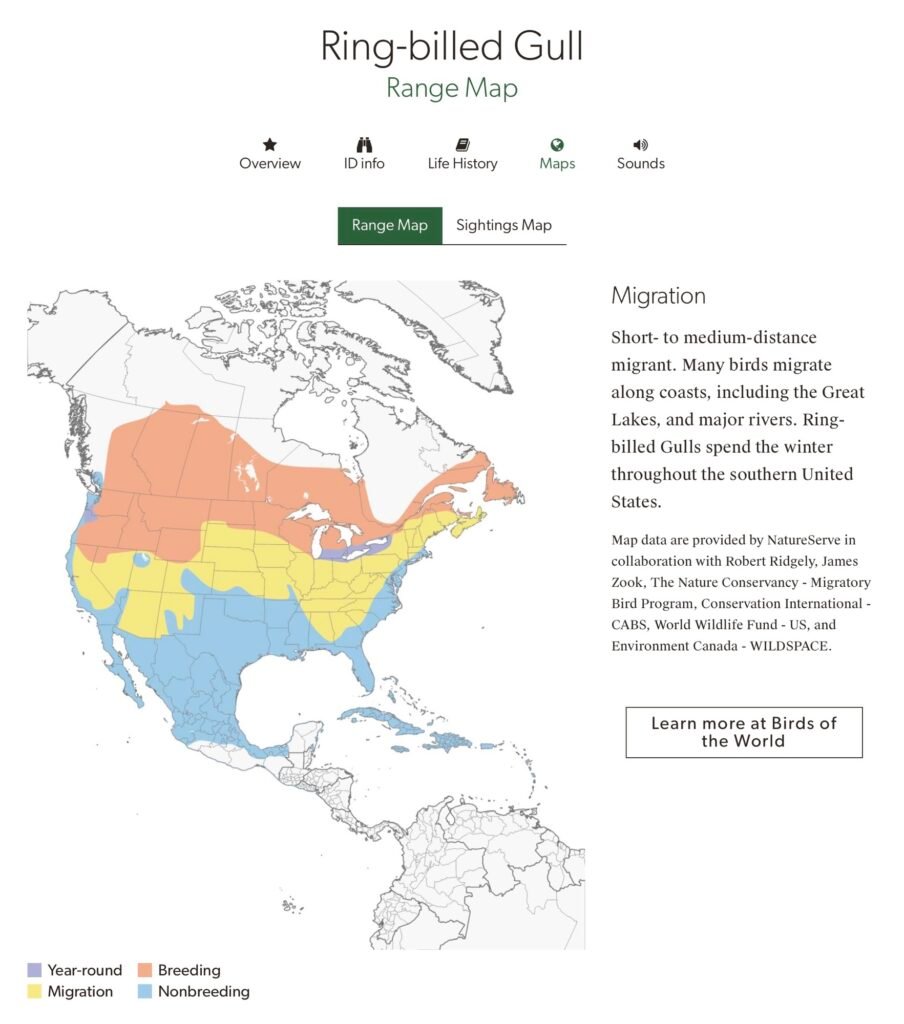
Source: Cornell Lab All About Birds – Ring-billed Gull
Submitted by Gina Sanders
Photos by Gina Sanders