
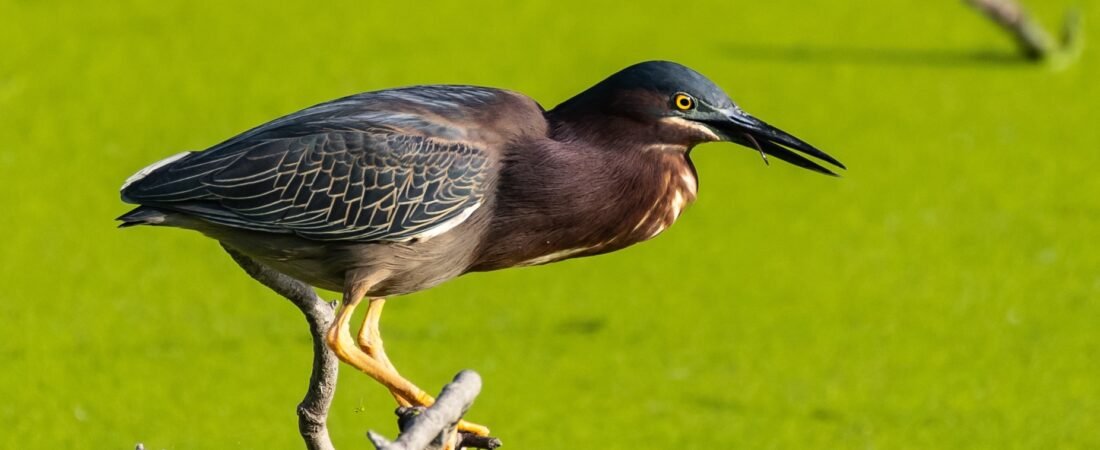
Look along the banks of ponds and lagoons between April and October and you’ll most likely find this dark colored heron tucked into the vegetation along the bank, intently focused on the shallow water. Green Herons usually forage day and night among thick vegetation in water that’s less than 4 inches deep, avoiding the deeper and more open areas frequented by longer-legged herons. They mainly eat small fish, amphibians, crustaceans and insects, and when their prey approaches within range, they quickly lunge and grab, or spear, the food with their heavy bill. They sometimes lure in fish by dropping small items such as twigs or insects on the water’s surface, as bait.
While technically a year round resident, according to species maps, Green Herons are seen much more often on Seabrook during their nesting season. Each breeding season, Green Herons pair up, performing courtship displays that include stretching their necks, snapping their bills, flying with exaggerated flaps, and calling loudly. The male selects a secluded site within his territory, usually in a large fork of a tree or bush, with overhanging branches to conceal the nest. Green Herons use many plant species as nest sites – pines, oaks, willows, box elder, cedar, honey locust, hickory, sassafrass, and mangroves. The nest is usually on or over the water, but may be up to a half-mile away. It may be anywhere from ground level to 30 feet off the ground (occasionally higher). For the last two seasons we’ve been fortunate to have a Green Heron nest in the trees leaning over the lagoon behind our house. We had front row seats to watch the juveniles as they grew and learned to perch on the branches. We hope to see them again this year!
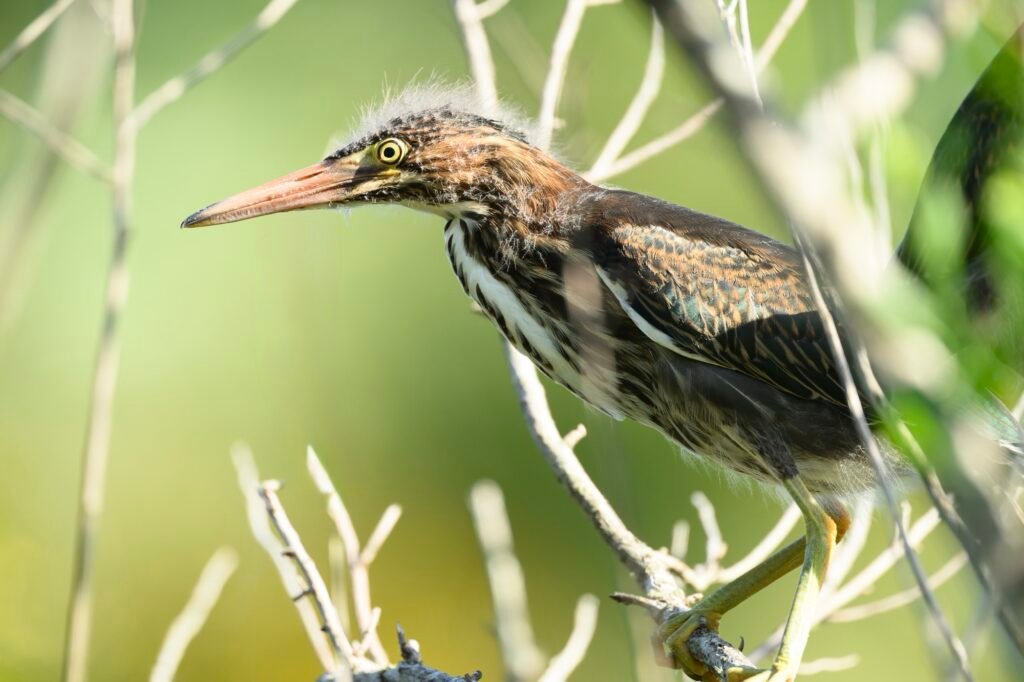
They often nest solitarily, although they may join colonies with other Green Herons or with other species. They defend breeding areas from each other and from birds like crows and grackles that prey on their nests. Other predators include snakes and raccoons. Both the male and female brood and feed the chicks, which may stay with their parents for more than a month after leaving the nest, as they learn to forage. Green Herons protect their feeding areas by driving away other species, such as American Coots, that approach too closely.
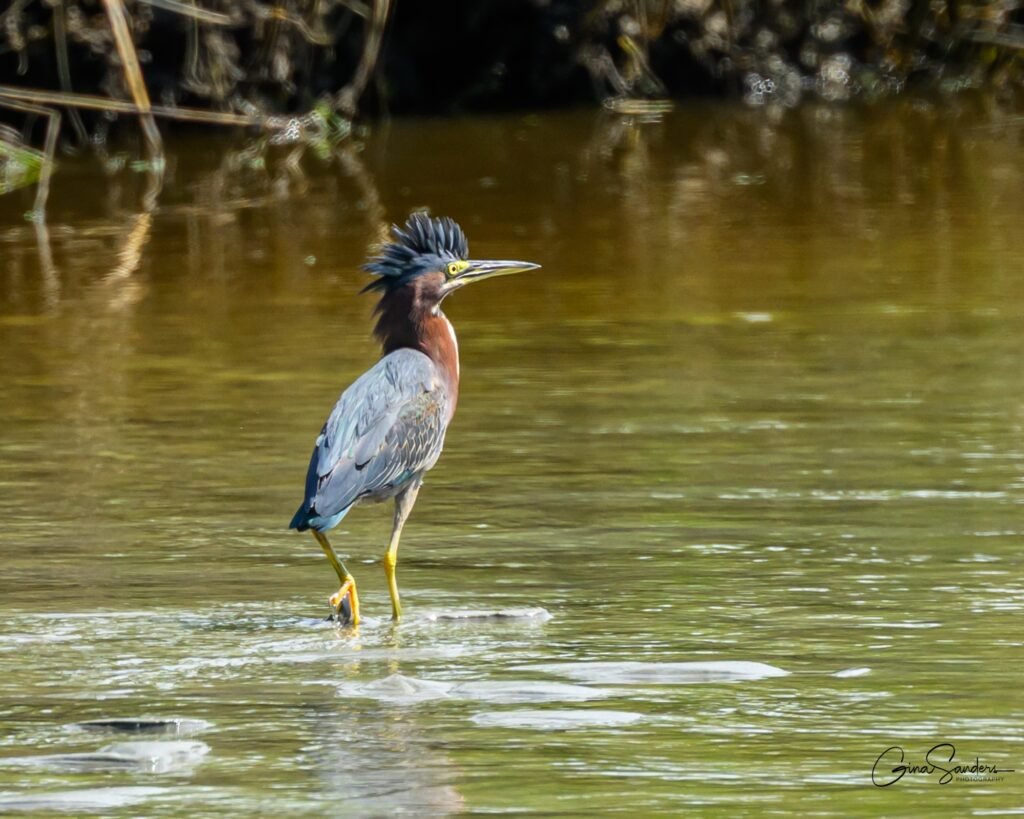
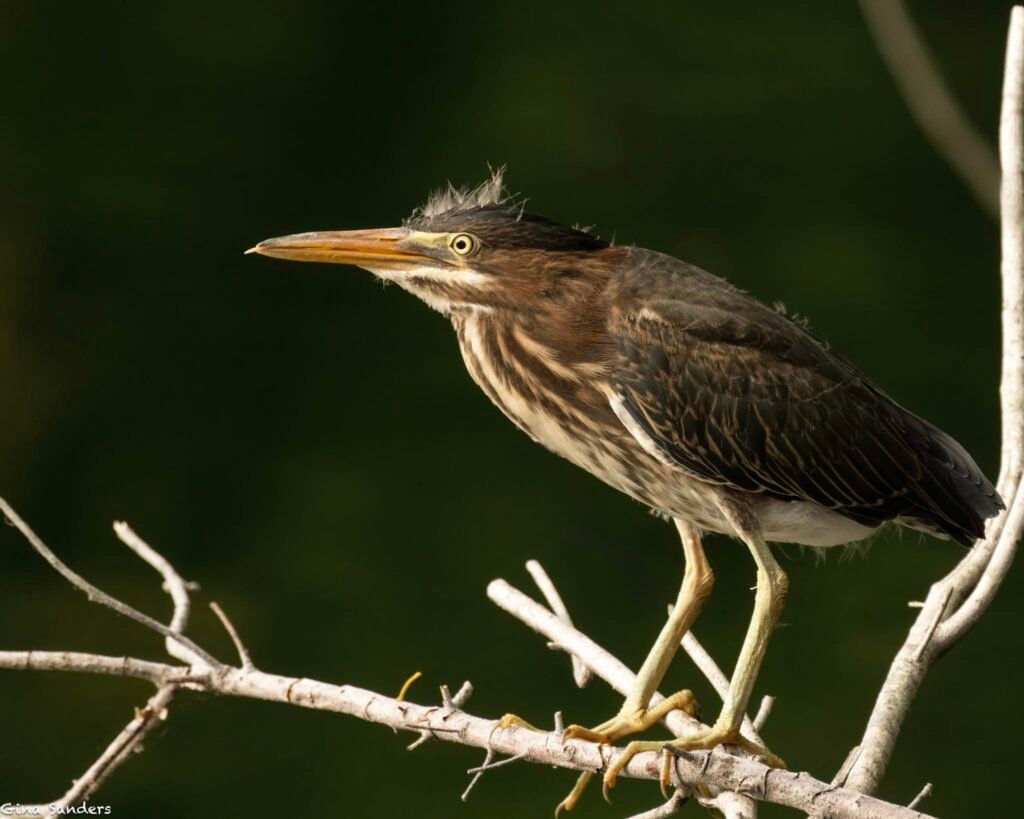
Interesting facts about Green Herons that you may not know: “The Green Heron is part of a complex of small herons that sometimes are considered one species. When lumped, they are called Green-backed Heron. When split, they are the Green Heron, the widespread Striated Heron, and the Galapagos Heron.”
And, “like many herons, the Green Heron tends to wander outside of its breeding range after the nesting season is over. Most of the wanderers stay nearby as they search for good feeding habitat, but some travel long distances. Individuals have turned up as far away as England and France!
For more information about Green Herons, click here.
Source: Cornell Lab All About Birds
Feature photo by Glen Cox
Other photos by Gina Sanders
Leave a Reply