
Every bird course I’ve taken tells you to look at the bird’s beak to help in the identification. After researching how birds eat large items, beak shape became more interesting….so a study in beaks….
The beak – also known as the bill – has two parts: the upper mandible and the lower mandible. The upper mandible is a fancy name for a bird’s upper beak or upper bill. The upper mandible grows out of the skull, just as your upper teeth grow out of your skull. The upper mandible doesn’t move independently from the skull. The lower mandible is the scientific name for a bird’s lower beak or bill. The lower mandible can move independently because it’s hinged. It can move up and down, just like your jaw. Unlike your teeth, beaks are covered with skin. This skin produces a substance called keratin – the same material feathers, hair, and fingernails are made of. The keratin produced by a bird’s beak will dry and condense to make the bill hard and durable. The dried keratin also gives the beak a glossy appearance. As the keratin wears down, it’s replaced so the beak will remain sharp.
Seed-eating Birds
Seed-eating birds have strong, conical beaks that can crack open hard seeds. Northern Cardinals, and House Finches visit my feeder and have a short, thick beak that is perfect for cracking open sunflower seeds. The Carolina Wren, Carolina Chickadee and Tufted Titmouse also visit my seed feeders but their beaks aren’t quite as strong which is why I see them pounding the seeds against the feeder or the ground to open.


Insect-eating birds


Insect-eating birds have long, thin beaks that are good for picking insects out of leaves and bark. For example, the warbler has a long, thin beak that is perfect for catching mosquitoes and other flying insects. Eastern Bluebirds’ beaks aren’t as pointed as that Prothonotary Warbler but still allows them to pick out those insects such as this grasshopper.

The Blue Jays are one of the most successful general feeders in the bird world. They will eat almost anything. They eat mostly berries and seeds but also worms, insects, snails and even baby birds of other species. It’s all purpose bill is long for plucking, sharp for tearing and powerful for cracking.
The information I found makes me ask…what about woodpeckers. Woodpeckers have strong beaks which taper to the tip, forming a chisel for pecking holes in trees for food or nests. Most feed on insects which live under the bark. The woodpecker’s long tongue has a barbed tip and is covered in sticky saliva. These features help the bird capture and extract insects from the holes the bird drills.


Picky eaters

Some birds are picky eaters. They use their specialized beaks to pick their food out of the air, off the ground, or even from under tree bark. Swallows, swifts, flycatchers, nighthawks, and whip-poor-wills have a taste for fast food. They like to eat on the fly, using their short beaks and wide, gaping mouths to capture insects in flight. Some of these birds also have bristles (specialized feathers) around their mouths. The bristles work together like a net to help the bird catch insects. These and other birds also have small bumps located on the roof of the mouth. These bumps point backwards and help the bird hang onto food and work it down its throat.
Fish eating birds


Fish eating birds have different shape beaks based upon how they fish. Anhingas use their razor sharp bills to spear the fish under the water, but then the fish is AROUND the bill, so they can’t open their mouth to eat it. Not to worry; the anhinga wriggled their head to move the fish toward the end of the bill, and then they can throw it into the air and catch it. A Belted Kingfisher also uses its beak to spear small fish and crustacean

Brown Pelicans are known for diving into the water to catch fish. However, American White Pelicans float on the surface and scoop up fish as they swim by. The pouch on the pelican’s lower bill is usually folded up, but it can get bigger when the bird is fishing. A pelican’s pouch can hold three gallons of water. During a typical fishing trip, the pelican will start by filling its expanded pouch. The pouch then contracts, and the water drains out. After the water drains out, the pelican swallows the fish left behind whole.

American Oystercatcher’s long orange bill is shaped like a knife. It uses its beak to pry open oysters and other bivalves for food, hence the name “oystercatcher”.
My favorite bird may be the Black Skimmer. The Black Skimmer’s most striking feature is its gaudy red-and-black, laterally compressed bill, which has a lower mandible that juts out farther than does the upper. The strange, uneven bill of the skimmer has a purpose: the bird flies low, with the long lower mandible plowing the water, snapping the bill shut when it contacts a fish.

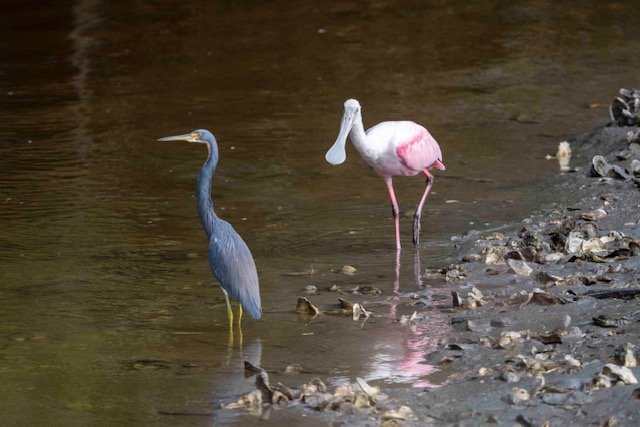
When thinking about beaks, one can’t overlook the lovely Roseate Spoonbill. Their large bill is rounded at the end (like a spoon), and the birds use it to probe along the bottom of muddy water, feeling for fish, amphibians, and other aquatic invertebrates to eat. The distinctively shaped bill allows spoonbills to strain small food items out of the water.
That picture also shows a heron. The heron and the egret find their long, broad, pointed beaks useful when hunting fish, frogs, crustaceans, and other small animals that live in and around water. Whether their prey is swimming, hopping, crawling, or skittering, herons and egrets use the same hunting method. First, the bird stalks its prey in shallow water, moving slowly and painstakingly, waiting for just the right opportunity. Then, when they spot something suitable to eat, they quickly strike at it.
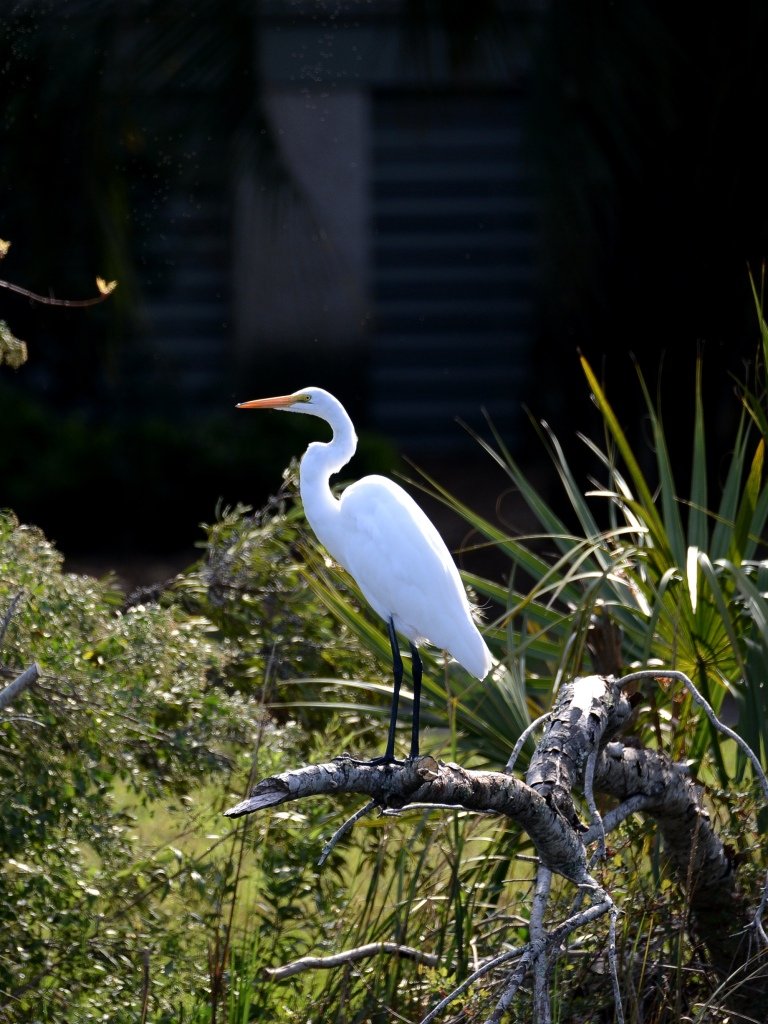


Some beaks look similar but are used for different purposes. For example, the heron and the egret have long, pointed beaks. So do birds such as the ibis, curlew, snipe, and godwits. But look closely and you’ll see that the beaks of the ibis, curlew, snipe, and godwit are more slender than the beaks of the heron and egret. These beaks are not made for hunting like the beaks of the heron and egret. Instead, these slimmer beaks are used to probe in mud and shallow water for worms, crustaceans, and insects.
Most ducks have broad, flat beaks. Maybe you’ve seen a duck dip its harmless-looking beak into the water. The water contains food that will fill the bill, and to get it, the duck fills its bill. A duck has tiny, comb-like structures around the edge of its beak. These structures look like little teeth, but they aren’t. They’re called lamellae and are formed from the mandible. Lamellae help the lucky duck (or other waterfowl) who has them to strain small animals, insects and plants out of the water and the mud.


Some ducks, like mergansers, have narrower beaks with sharper, saw-like ridges around the edges. The merganser can use these ridges like teeth to assist in catching and securing small fish, amphibians, and crustaceans.
Shredding birds


Raptors (birds of prey such as Northern Harriers, Bald Eagles, and Great Horned Owls) hunt larger prey. The things raptors eat can’t always be swallowed whole. Raptors have sharp, hooked beaks they use to pierce prey, pull off fur, tug away skin, pluck out feathers, and tear meat into bite-sized, easy-to-swallow chunks. In addition to the specialized shape of their beaks, raptors also have a unique “tooth” tucked inside their upper mandible. This “tooth” is shaped like a small triangle and is called a tomila. The tomila helps a bird kill its prey quickly by cutting the prey’s spinal cord. After the prey is dead, a raptor can fly away with it and eat in a safe place.

Turkey Vultures and Black Vultures are natures garbage cleaners and they usually don’t fly away to eat their lunch. Their long, hooked beaks are exceptionally strong and heavy for tearing hide, muscle, and even bone.
Nector-eating birds
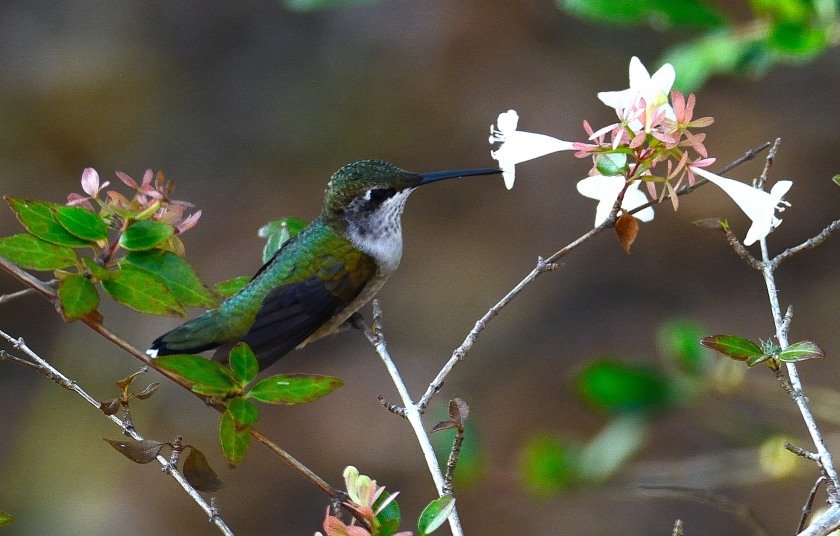
Nectar-eating birds have long, thin beaks that are good for reaching into flowers to drink nectar. For example, the hummingbird has a long, thin beak that is perfect for reaching into the nectar-rich flowers of hibiscus and other plants.
An interesting part of a beak is the egg tooth. Starting about a third of the way through the embryo’s growth in the egg, an “egg tooth” or “pipping tooth,” a small, hard, sharp protuberance of calcified keratin on the beak’s upper mandible, begins to develop. The egg tooth helps the chick to break through the eggshell. It falls off naturally a few days after hatching.
The shape of a bird’s beak is not only important for eating, but it can also be used for other purposes, such as building nests, grooming feathers, and defending themselves from predators. In addition to the food they eat, the shape of a bird’s beak can also be influenced by other factors, such as the climate they live in and the availability of food. For example, birds that live in cold climates often have shorter beaks than birds that live in warm climates. This is because shorter beaks lose less heat.
Sources:
https://projectbeak.org/adaptations/beaks.htm
https://www.audubon.org/field-guide
https://www.allaboutbirds.org/guide
Submitted by: Judy Morr