
Latest posts
-
SIB -BIRD OF THE WEEK -Tricolor Heron

The Tricolor Heron can range in size from 25-30″ (64-76 cm). W. 3’2 (97 cm). Dark blue upperparts contrast with white belly and white stripe up fore neck. Base of bill and bare face skin are yellowish at most seasons, bright blue in breeding season. Slender shape makes this species look even longer-billed and longer-necked
-
SIB Bird of the Week – Summer Tanager

If you’ve ever caught a glimpse of a flame-red bird flitting through the treetops in South Carolina’s warmer months, chances are you’ve seen the stunning Summer Tanager (Piranga rubra). This migratory songbird brings color and melody to the southeastern U.S. each spring and summer. Characteristics The male Summer Tanager is North America’s only entirely red
-
SIB “Bird of the Week” – Painted Bunting

Painted Bunting – Passerina cirisLength: 5.5″; Wingspan: 8.75″; Weight: 0.54 oz. Without a doubt, this bird is one of the most beautiful and colorful birds on Seabrook Island or anywhere else. Look for this small to medium sized multicolored finch at your bird feeder and around the edges of dense brush (such as wax myrtles) and thick
-
SIB – “Bird of the Week” – Marsh Wren

This little guy can be heard right now in all our marshes on Seabrook Island. They like to hang out in the tall grasses. This bird looks very much like a Carolina wren. (See the picture below to compare) They are an inch smaller than the Carolina Wren. They also have more black patterns on
-
SIB “Bird of the Week” – Northern Cardinal
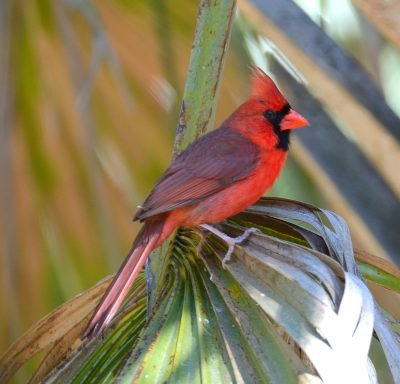
Northern Cardinal – Cardinalis cardinalisLength: 8.75″; Wingspan: 12″; Weight: 1.6 oz. We know many of our readers may be traveling and busy with family , so we thought when you have time you’d enjoy learning more about one of the favorite backyard visitors throughout eastern North America. Among other things, the Northern Cardinal is said to symbolize
-
“Bird of the Week” – Brown Pelican

Brown Pelican – Pelecanus occidentalisLength: 51″; Wingspan: 79″; Weight: 131.2 oz. Brown Pelicans are a very common site on Seabrook Island all year long. This large bird is commonly found on our island flying over the dunes and beaches in V-formations or single file, flapping and gliding in unison. Sometimes you even see them coasting just inches
-
SIB “Bird of the Week” – American Oystercatcher

American Oystercatcher – Haematopus palliatusLength: 17.5″; Wingspan: 32″; Weight: 22.4 oz. The American Oystercatcher is a large, boldly patterned bird we see at our beach and in salt marshes. It doesn’t appear in large groups, but is often seen in solitary pairs. As indicated by it’s name, it feeds on oysters, clams, mussels and uses it
-
SIB – “Bird of the Week” – Marsh Wren
This little guy can be heard right now in all our marshes on Seabrook Island. They like to hang out in the tall grasses. This bird looks very much like a Carolina wren. (See the picture below to compare) They are an inch smaller than the Carolina Wren. They also have more black patterns on
-
SIB “Bird of the Week” – Clapper Rail
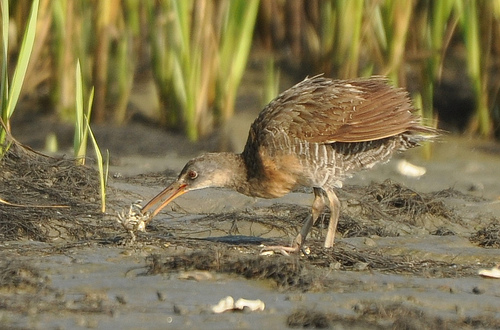
Clapper Rail – Rallus longirostrisLength: 14.5″; Wingspan: 19″; Weight: 10 oz. You may not be aware that hidden in dense cover in our salt marshes lurk a bird called Clapper Rail. This slinking, secretive bird is a year-round resident on our island and often we only hear the loud clattering call as our clue that a Clapper Rail
-
SIB “Bird of the Week” – Brown Thrasher
Brown Thrasher –Toxostoma rufum L 11.5” WS 13” WT 2.4 oz In the family of Mimidae, they are related to other frequent visitors to Seabrook, the Northern Mockingbird and Gray Catbird. Brown Thrashers are fairly large, slender songbirds with long proportions—the legs are long and sturdy, and the bill is long and slightly downcurved. The