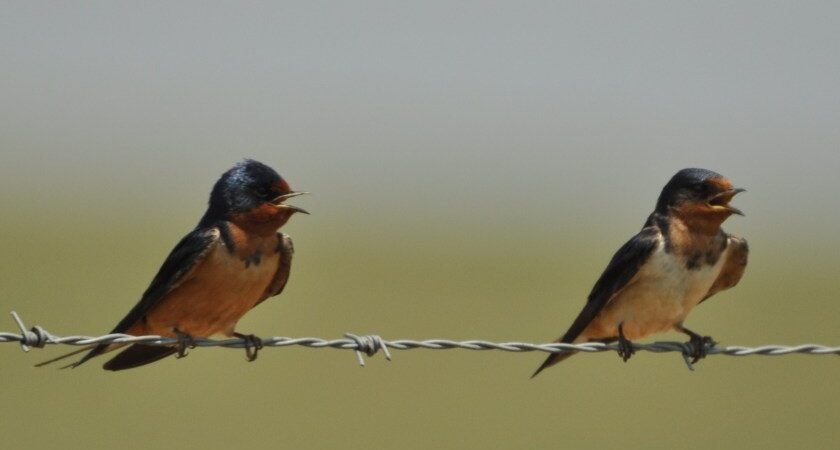
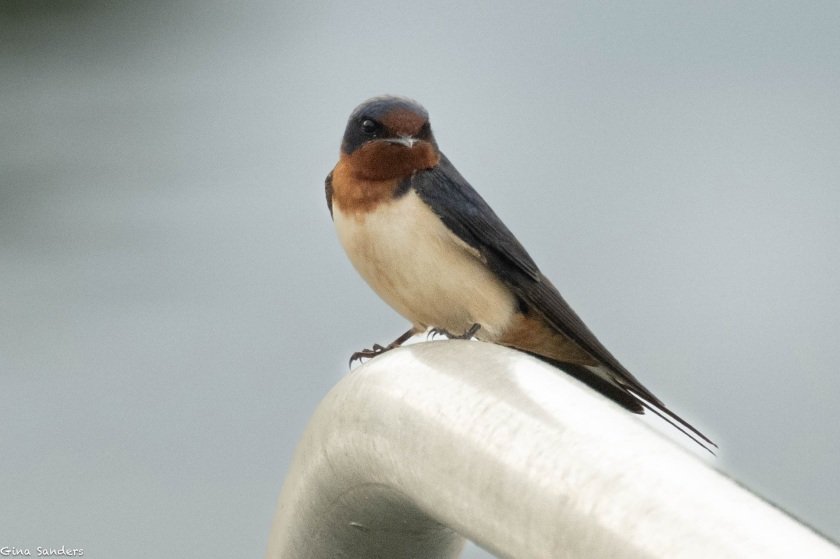
The most widespread and abundant swallow in the world. Barn Swallows dart gracefully over fields, barnyards, and open water in search of flying insect prey, often cruising low, just a few inches above the ground or water. Blue above, tawny below, with a deeply forked tail that streams out behind this agile flyer and sets it apart from all other North American swallows.
True to their name, they build their cup-shaped mud nests almost exclusively on human-made structures. Both male and female build the nest cup using mud collected in their bills and often mix it with grass stems to make pellets. A good location to spot Barn Swallows on Seabrook Island is at the Crab Dock. At low tide you may see them collecting mud from the banks to build their nests under the dock.
They feed almost exclusively in flight, catching flies, beetles, bees, wasps, ants, butterflies, moths, and other flying insects. Barn Swallows also drink and even bathe on the wing, dipping down to take a mouthful of water or touch their belly to the surface for a quick rinse.
Both male and female Barn Swallows sing a “twitter-warble” song during courtship and egg-laying, with a long series of continuous warbling sounds followed by up to a dozen rapid, mechanical-sounding whirrs. The song can last 4–20 seconds and is often introduced and followed by a chirp. To hear an example of their songs and calls, click here.
Barn Swallows have a mutually beneficial relationship with ospreys. Ospreys offer protection while barn swallows alert them to predators. And here’s a little trivia you may not know. According to legend, the Barn Swallow got its forked tail because it stole fire from the gods to bring to people. An angry deity hurled a firebrand at the swallow, singeing away its middle tail feathers.
To learn more about Barn Swallows, click here.
Source: Cornell Lab All About Birds
Leave a Reply