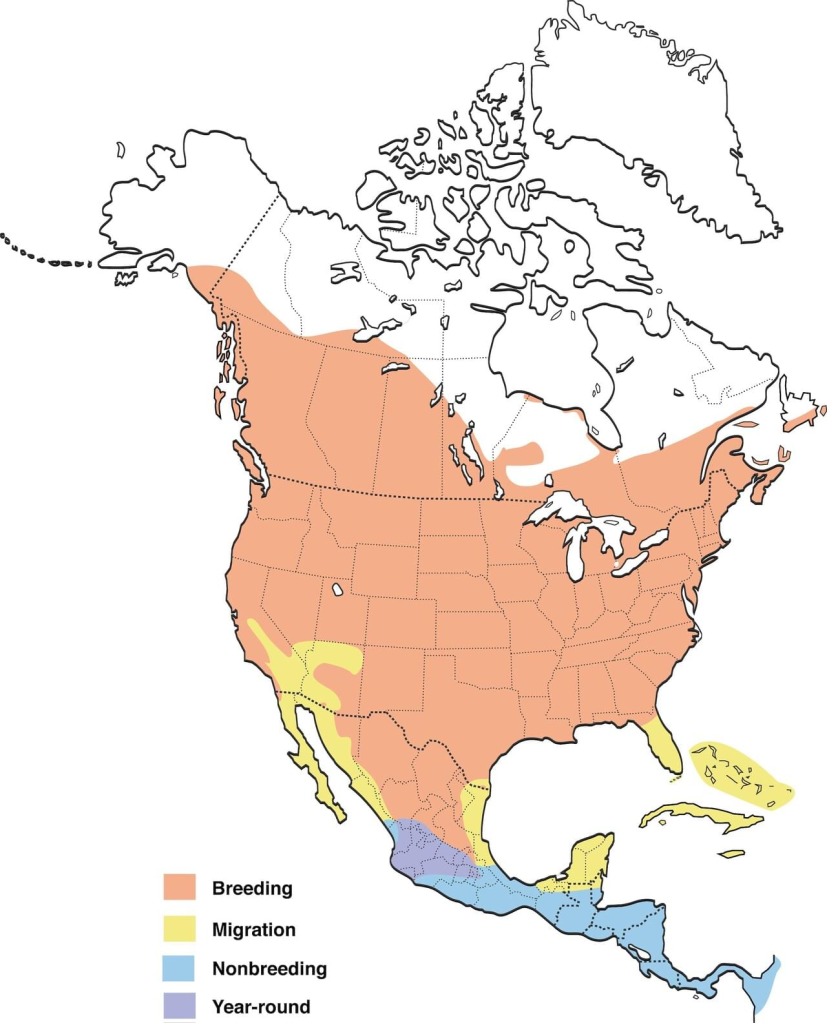
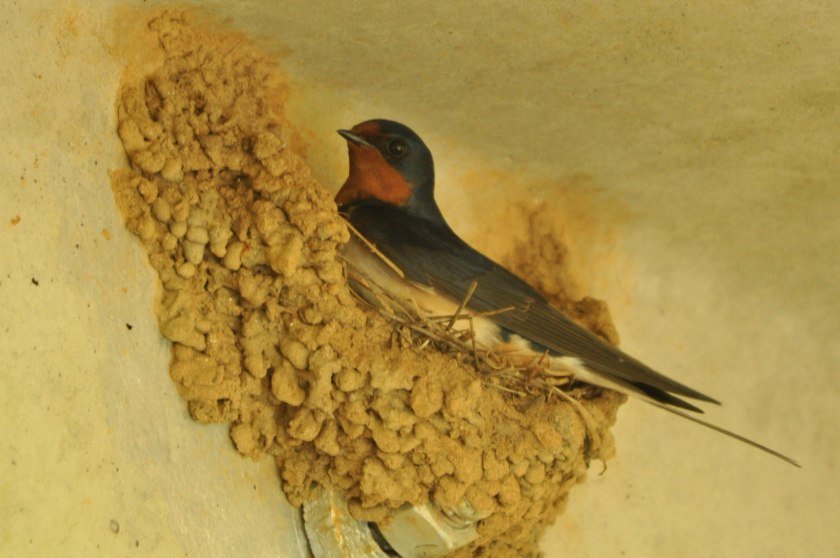
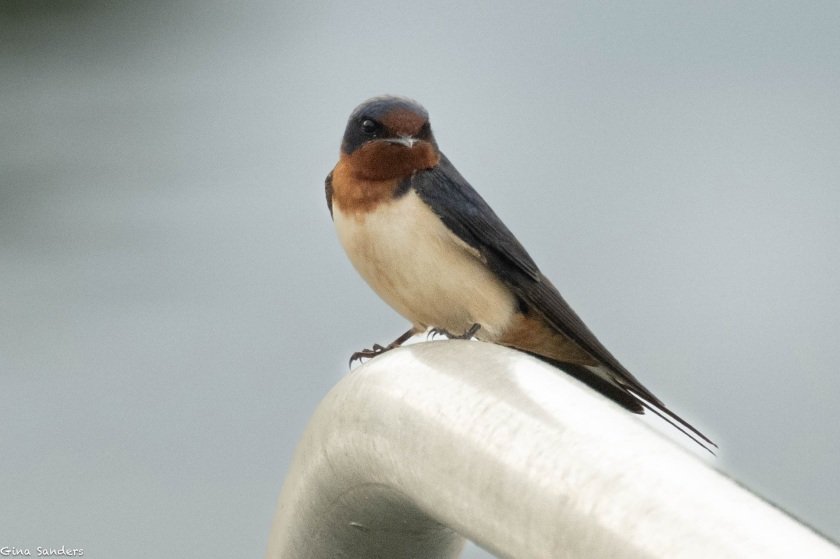
The Barn Swallow is blue above and tawny below, Barn Swallows dart gracefully over fields, barnyards, and open water in search of flying insect prey. Look for the long, deeply forked tail that streams out behind this agile flyer and sets it apart from all other North American swallows. Barn Swallows often cruise low, flying just a few inches above the ground or water. True to their name, they build their cup-shaped mud nests almost exclusively on human-made structures. They will often fly in flocks of 100 or more. Their song is very light and squeeky.
Flies of all types make up the majority of the Barn Swallow’s diet, along with beetles, bees, wasps, ants, butterflies, moths, and other flying insects.
Barn Swallow pairs explore a number of potential nesting spots, flying up and hovering to investigate a location, then moving to another site before narrowing their choice. Preferred sites include eaves, rafters, and cross beams of barns, sheds and stables, as well as the undersides of bridges, wharfs, and culverts. Look for them at our Crab Dock on Seabrook Island.
| Clutch Size: | 3-7 eggs |
| Number of Broods: | 1-2 broods |
| Egg Length: | 0.6-0.8 in (1.6-2.1 cm) |
| Egg Width: | 0.5-0.6 in (1.2-1.5 cm) |
| Incubation Period: | 12-17 days |
| Nestling Period: | 15-27 days |
| Egg Description: | Creamy or pinkish white, spotted with brown, lavender, and gray. |
| Condition at Hatching: | Eyes closed, naked except for sparse tufts of pale gray down. |
Barn Swallows have a mutually beneficial relationship with ospreys. Ospreys offer protection while barn swallows alert them to predators. The barn swallow is the national bird of Austria.
Barn Swallow populations declined by close to 0.6% per year from 1966 to 2019, resulting in an estimated cumulative decline of 25%, according to the North American Breeding Bird Survey. Partners in Flight estimates a global breeding population of 190 million and rates them 8 out of 20 on the Continental Concern Score.
Submitted by Melanie Jerome
Photos provided by Ed Konrad and Gina Sanders
This blog post is part of a series SIB will publish on a regular basis to feature birds seen in the area, both migratory and permanent residents. When possible we will use photographs taken by our members. Please let us know if you have any special requests of birds you would like to learn more about.
If you would like to read more about the Barn Swallow, research all about Birds.