
Hello Red Knot Trackers,
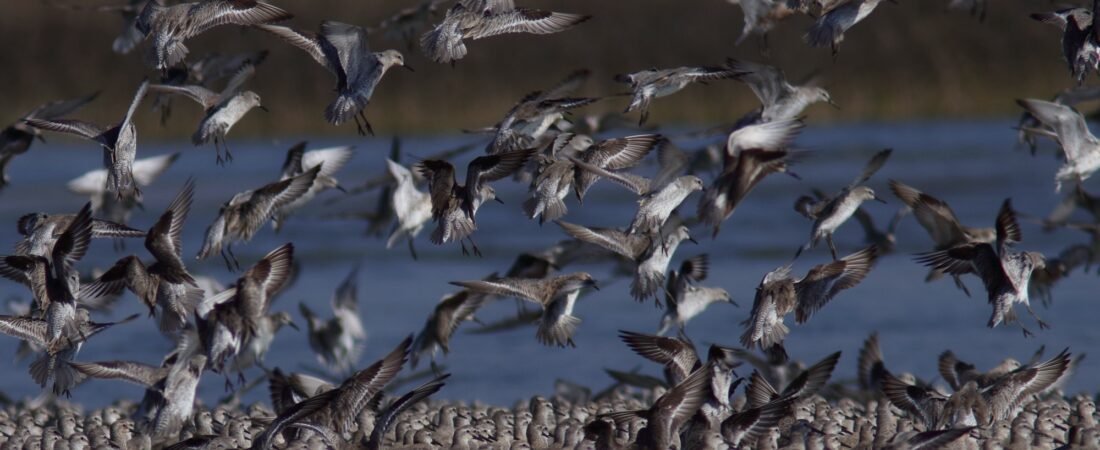
Migration is once again upon us! Red Knots are on the move, and significant numbers have returned to stopover sites along the southeast US coast. We’ll soon share exciting news about our 2026 tracking project, but first, let’s look back at last year’s Red Knot tracking efforts.
Here’s a recap of our 2025 satellite tagging efforts:
- 27 birds outfitted with Lotek Sunbird satellite tags
- 14 from Kiawah Island SC (March 31)
- 13 from Cape Romain National Wildlife Refuge SC (May 18)
- 22 northern migration routes documented
- 16 breeding sites identified
- 14 southern migration routes documented
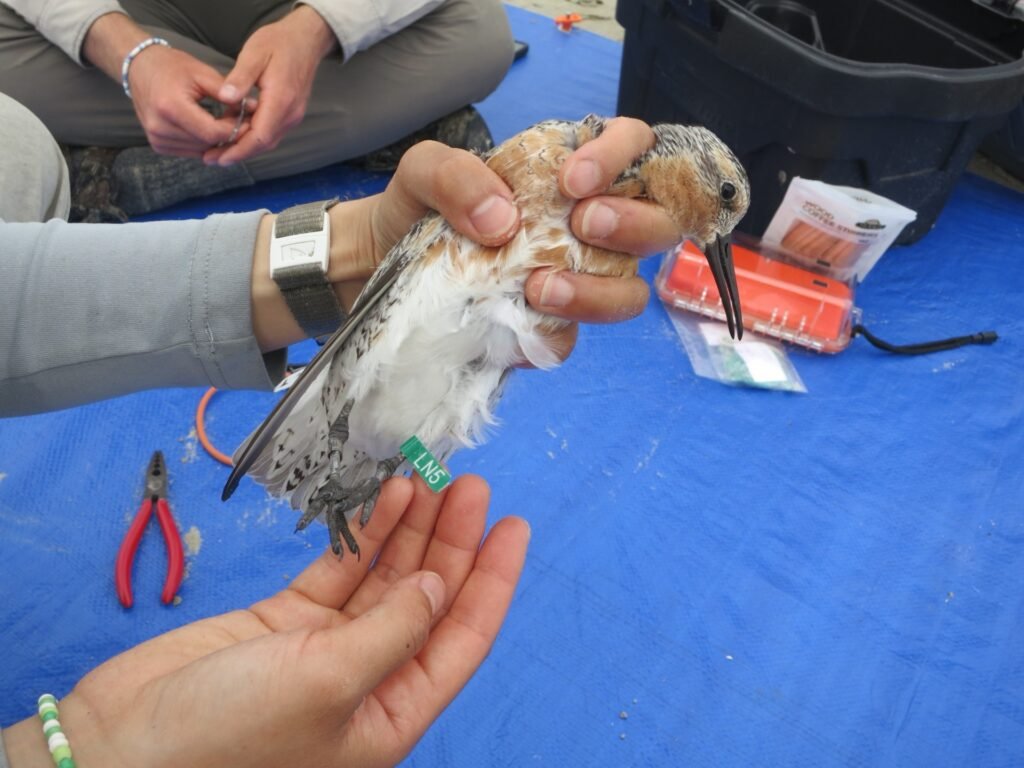
Since our last update, the most exciting development has come from Red Knot LN5.
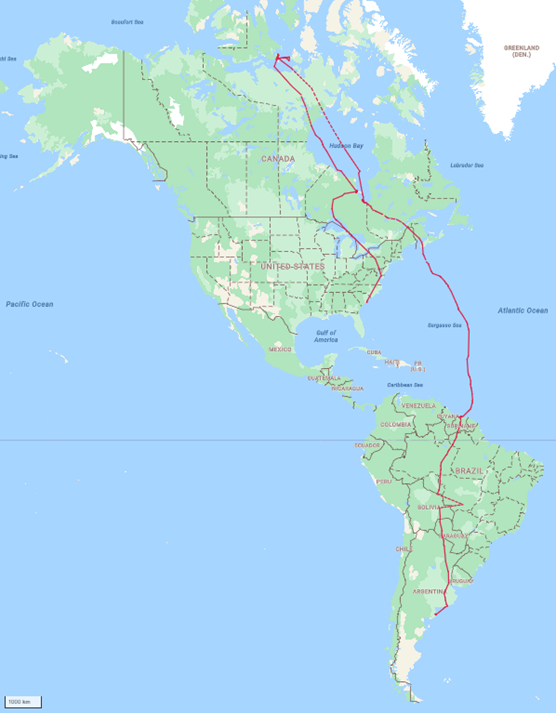
You may remember LN5 as the bird that made a multi-day flight down the Atlantic Ocean, even flying through Hurricane Erin in early August 2025, before landing in coastal Suriname. After a 24-day stopover at the WHSRN site Coppenamemonding, LN5 embarked on a 100+ hour nonstop flight over Suriname, Brazil, Bolivia, and Paraguay before landing…on the southeast coast of Argentina!
While this migration path is expected for the species, it is remarkable to document this journey in such detail. Since being tagged in South Carolina on May 18th, 2025, LN5 traveled more than 12,000 miles before its tag stopped transmitting on September 20, 2025. Its journey showcases the incredible endurance of these world migrants.
We reached out to Dr. Patricia González, a renowned Red Knot biologist from Argentina and pioneer in shorebird conservation. You may know her as the scientist who banded the legendary Red Knot nicknamed “Moonbird”, sporting an orange flag with code B95. Moonbird was documented for almost 20 years at key stopover and wintering sites between 1995 and 2014. Although this bird has not been documented since 2014, during its lifetime it has traveled the equivalent of the distance from the earth to the moon and halfway back.
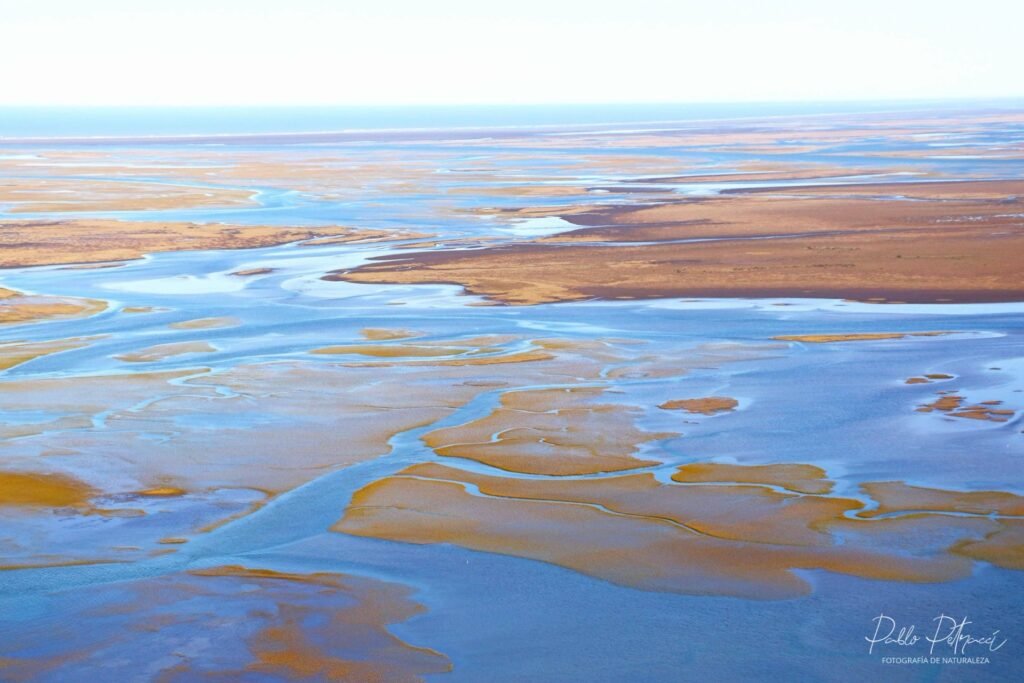
Patricia connected us with local biologists in the region where LN5 was last active. Pablo Petracci confirmed that LN5’s most recent location, in Bahia Anegada, Argentina, is known to host large numbers of Red Knots during the austral summer (our boreal winter). He also shared these stunning aerial survey photos that capture the environment where LN5 might have spent the winter. Could LN5 be the new Moonbird?! Time will tell!
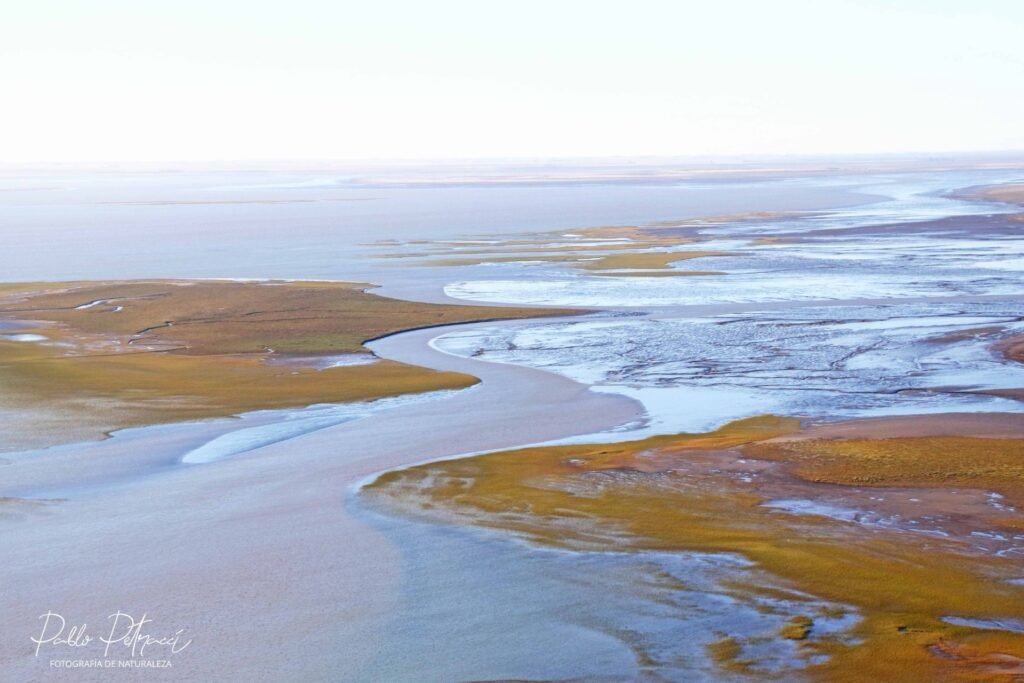
Although all the 2025 satellite tags have now fallen off, as they were meant to, we can still document returning knots through our resighting surveys in South Carolina and Georgia. Plastic leg flags with unique codes can be resighted using high-powered cameras or spotting scopes.
We are very happy to share that, so far during this 2026 field season, our team has resighted these 19 “ex” satellite birds from last year’s tracking efforts:
| LL3 | LK1 | LM7 | LN4 | LP8 | LC8 | 4U* |
| LL5 | LK4 | LA0 | LN6 | LC1 | LH2 | |
| LL9 | LK8 | LA3 | LP7 | LC5 | PHP |
After carrying a tracking device for at least part of their migration, it is very encouraging to see these birds once again along the South Carolina-Georgia coast, behaving normally and successfully completing a full annual migration.
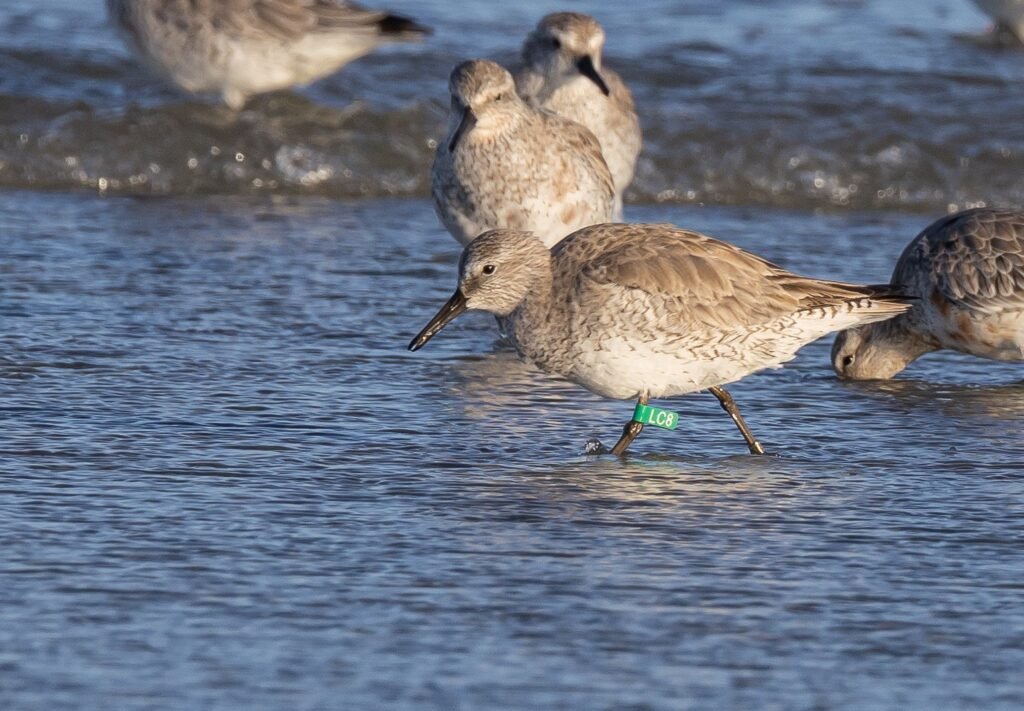
Here’s a look at LC8, who’s satellite transmitter fell off on its breeding grounds in the far reaches of the Canadian Arctic. LC8 has been resighted on Kiawah Island multiple times throughout the last couple of weeks.
We have some exciting developments on the tracking front for 2026, so stay tuned for the next update to meet this year’s tracking cohort!
As a reminder, this project is a collaboration between the South Carolina Department of Natural Resources, Georgia Department of Natural Resources, Manomet Conservation Sciences, U.S. Fish and Wildlife Service, South Carolina Cooperative Fish and Wildlife Research Unit, and Clemson University.
Special thanks to Wildlife Restoration Partnerships for collaboration on the 2025 tagging project.
You can read more about our project and read past updates here.
Thank you for following the knots!
Written by Cami Duquet, SCDNR
Images supplied by SCDNR
Reprinted with permission
Feature photo by Bob Mercer