
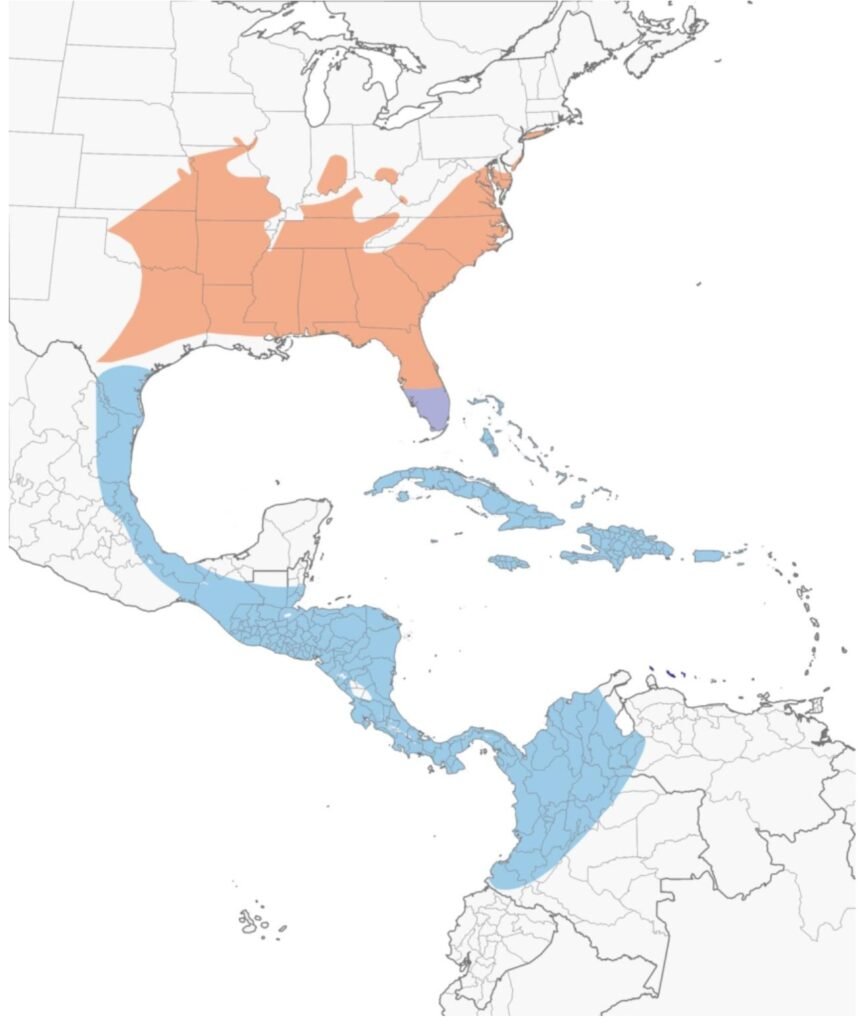
If you’re looking for a Chuck-will’s widow, go outside after dark this spring and simply listen. If you hear birdsong that sounds like the name “Chuck-will’s Widow” repeating itself, with short pauses in between, you have most likely found our bird of the week. At least by sound. Sometimes mistaken for the similar sounding Eastern Whip-poor-will, the two can be distinguished easily by the cadence of their songs. The Whip-poor-will repeats itself more frequently, almost a constant, rolling “whip-poor-a-will, whip-poor-a-will, whip-poor-a-will”, over and over while Chuck-will’s widow gives a few seconds in between each call. On Seabrook Island you’re far more likely to see or hear the Chuck-will’s widow as they spend their nesting season in our area. Eastern Whip-poor-wills do migrate through our part of the state but are typically found a bit further north. Listen to these sound clips and see if you can tell the difference.
Chuck-will’s widow song
Eastern Whip-poor-will song
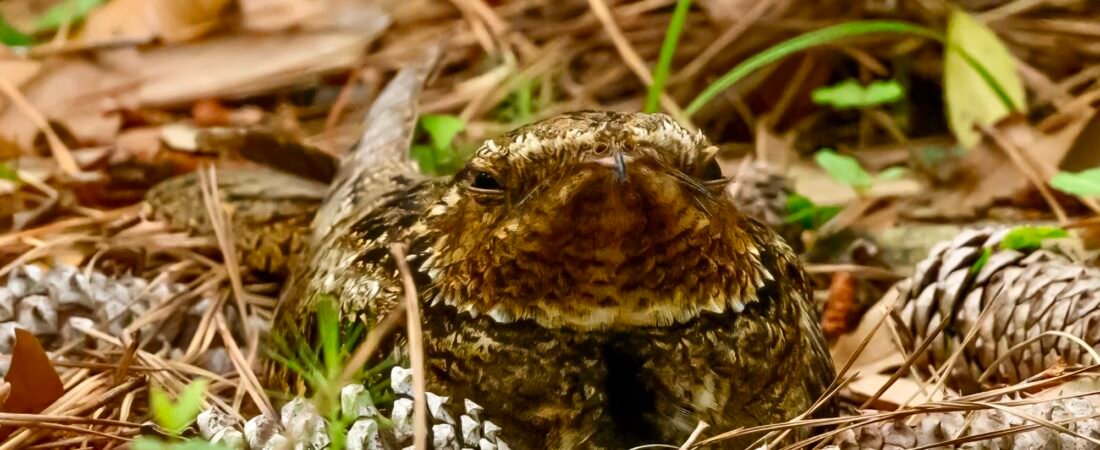
The Chuck-will’s widow is much easier to locate by its song, rather than by sight, as it blends in beautifully with its surroundings. It has mottled brown plumage with a buff throat, reddish-brown feathers lined with black, and its head and chest display brown and white patterning. Males have distinctive white patches on their outer tail feathers. This bird has a short bill and a long tail, typical of nightjars, and is also the largest of the nightjar family.
Chuck-will’s-widows catch flying insects at night. They eat mainly moths, beetles and dragonflies. Very occasionally, they have been seen eating birds such as Hooded, Palm, Yellow, and Cape May Warblers, Common Yellowthroat, Swamp Sparrow, Carolina Wren, Cuban Emerald (a hummingbird), as well as bats.
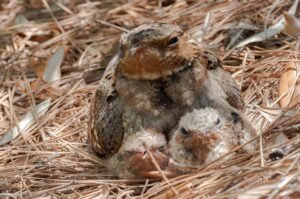
Chuck-will’s-widows don’t build nests; they simply lay their eggs on the ground among dead leaves, pine needles, or bare dirt, and it takes a keen eye to spot them. Incubating adults are incredibly well camouflaged and virtually invisible unless you nearly step on them. In the picture above, this chucks-will’s widow is sitting on a nest. She was found a couple of years ago on Seabrook Island Road at a private residence. I wonder if she’ll be back this year?
Chuck-will’s widow has a low conservation concern.
Feature Photo: Gina Sanders