
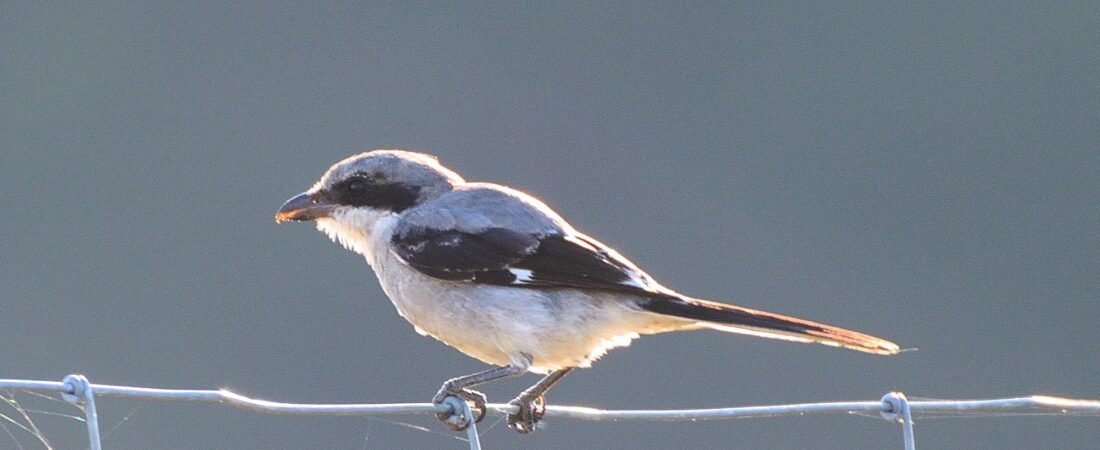
Loggerhead Shrikes are relatively small birds, about 8-9″ long, look like a songbird, but act like a raptor. Shrikes don’t come to feeders for seeds, instead they catch insects, small amphibians and even small birds, and use their hooked bill to pierce and kill them. Next, they impale their prey on a thorn or barbed wire, or wedge it in a crack or crevice, to hold it in place and make it easier to eat. These caches of prey, also called “larders” or “pantries,” provide food stores during winter when prey is scarce, or in breeding season when energy demands are high. A well-provisioned larder may also help a male shrike attract a mate. No wonder they have the nickname of “butcher bird.”
Loggerhead Shrikes can be found all across the southern half of the United States year-round, and nest in summer in the northern portion of the US and parts of Canada. While challenging to locate, they tend to frequent their favorite hunting grounds, making it easier to spot them if you know where they hang out. For SIB members we can usually count on seeing one on the garden fence at Kiawah River, with that being a highlight of our birding day. They can also be spotted in the Clemson experimental area from the West Ashley Greenway.
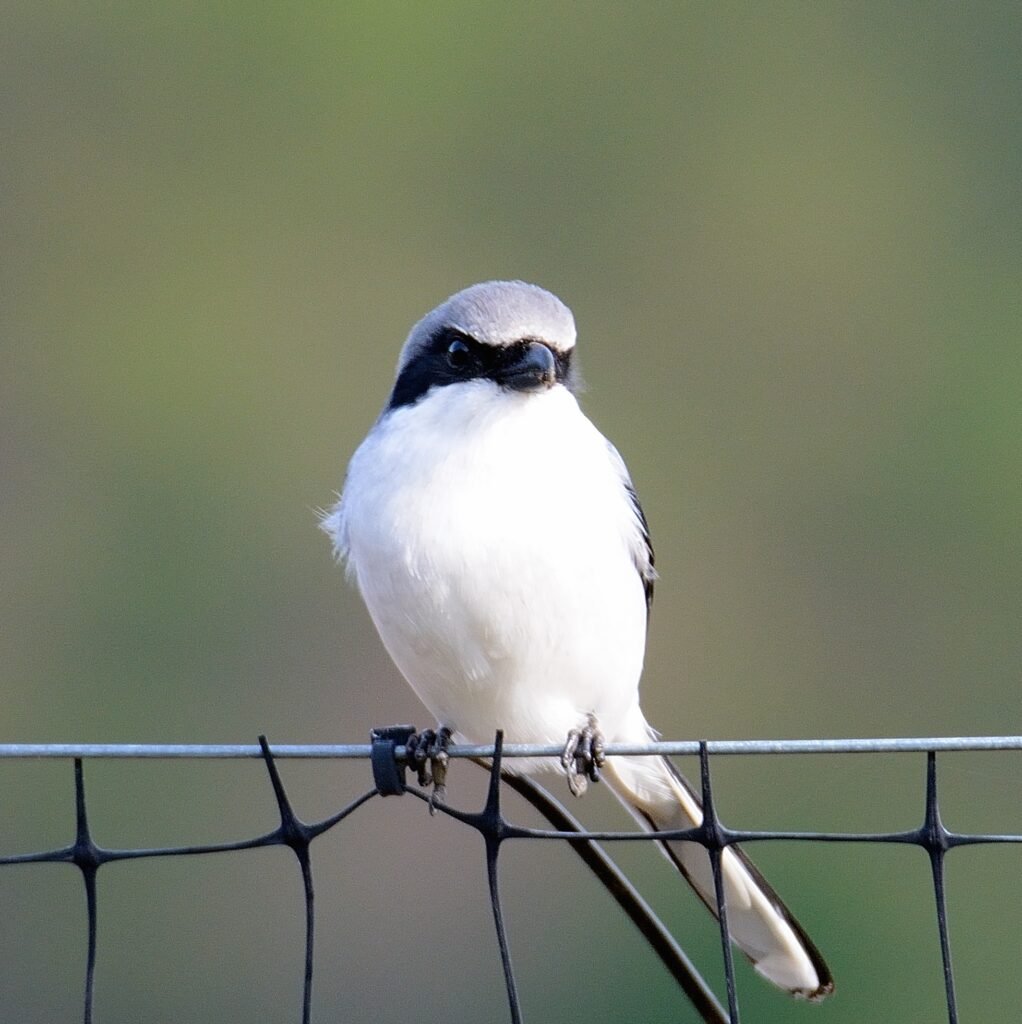
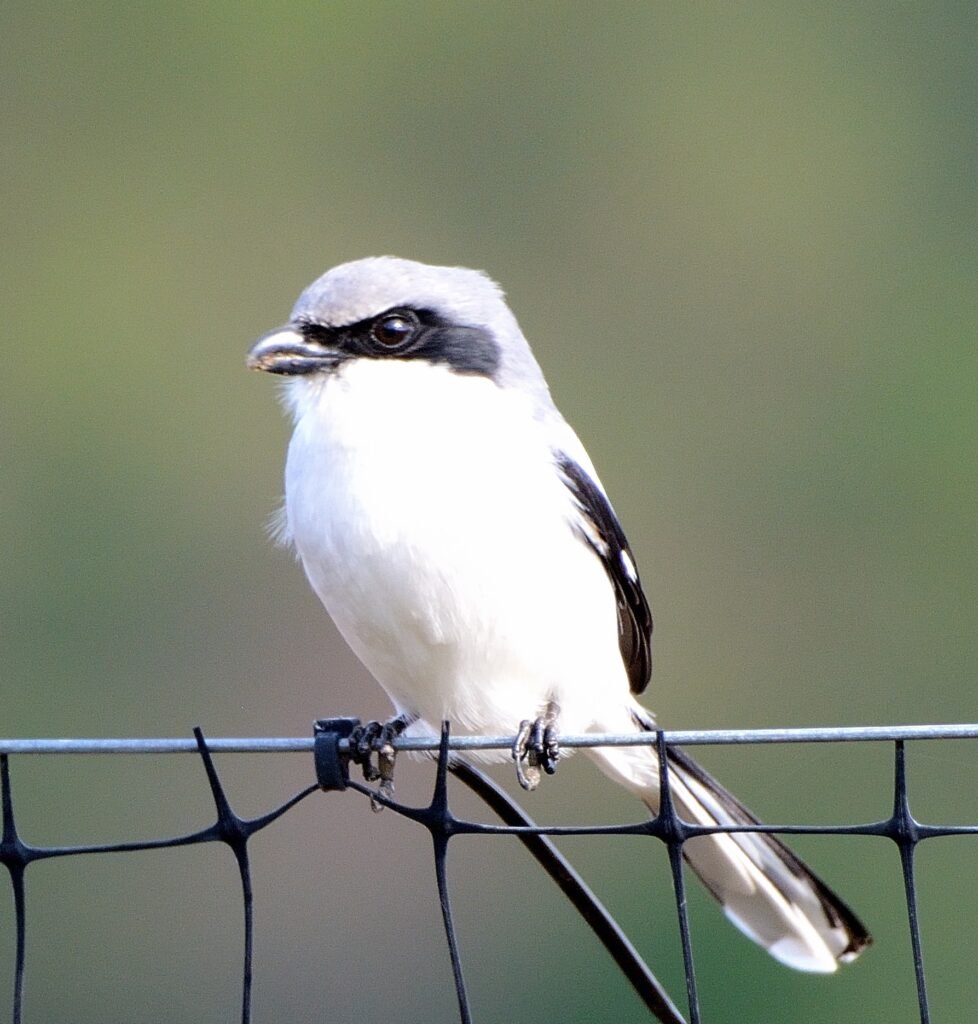
Their preferred habitat is open country with short vegetation, shrubs or trees. Particularly ones with thorns. They hunt by scanning the ground from elevated perches, then dive onto prey. Loggerhead Shrikes sometimes hunt from the ground, flashing their wing patches in a manner similar to the Northern Mockingbird, to startle prey out of hiding.
Their primary diet is insects, but they can kill and carry a small mammal the same size as themselves. Large prey are carried by the feet, insects and smaller prey by the beak. The upper cutting edge of the Loggerhead Shrike’s hooked bill features a pair of built-in pointy projections, almost like teeth. Like a falcon, the shrike tackles vertebrate prey with a precise attack to the nape, probably using these “teeth” to paralyze the animal with a jab to the spinal cord.
Interestingly, a Loggerhead Shrike will impale noxious prey such as monarch butterflies and eastern narrow-mouthed toads — then wait for up to three days to eat them, which allows time for the poisons to break down. Shrikes also eat the heads and abdomens of toxic lubber grasshoppers, while discarding the insect’s poisonous thorax. They’ll often go hunting on cold mornings while insects are still immobilized by low temperatures.
In spring, both sexes help find the nest site, inspecting many locations before choosing. Loggerhead Shrikes often build their nests in thorny vegetation, which may help keep predators away. In the absence of trees or shrubs, they sometimes nest in brush piles or tumbleweeds. Average height of nests above the ground ranges from about 2.5 – 4 feet. Both male and female look for nesting material, but the female usually constructs the nest on her own. The bulky, well-insulated open cup is neatly woven of rootlets, twigs, and bark strips, and lined inside with soft material such as flowers, lichen, grass, moss, feathers, fur, string, or cloth. The nest is about 6 inches in diameter on the outside, with an interior diameter of about 4 inches; the cup is about 3 inches deep. Their clutch size is 5-6 eggs. They incubate for 15-17 days, remain in the nest as nestlings for 16-20 days, and the adults raise 1-2 broods each season. They’re mostly monogamous, although females occasionally raise one brood with one male and then take up with another mate for a second brood the same season.
The oldest Loggerhead Shrike on record, a male, was at least 11 years, 9 months old when it was caught and released in 2010 by researchers in California.
Source: Cornell Lab All About Birds: Loggerhead Shrike
To learn more about Loggerhead Shrikes and their conservation, please enjoy this video from Wild Side TV.
Submitted by Gina Sanders
Photos by Dean Morr