
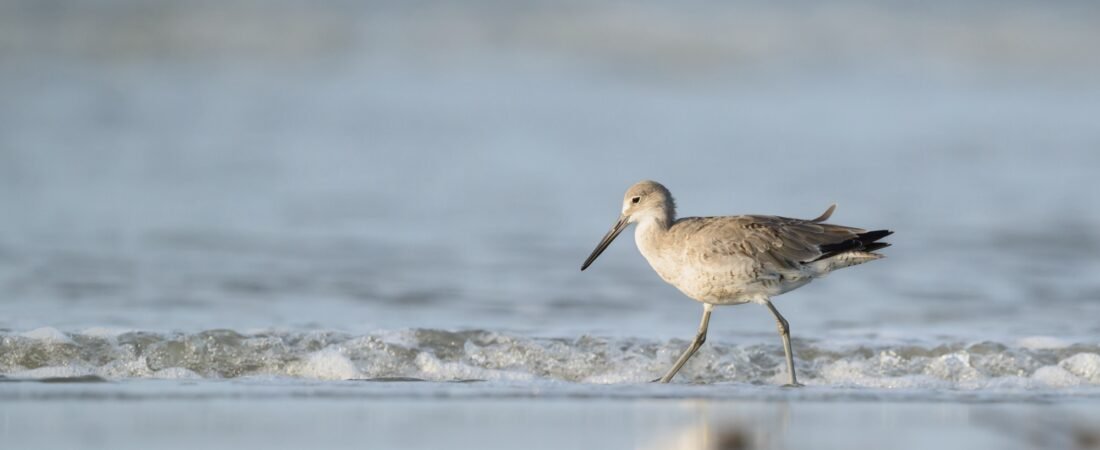
The Willet is a large shorebird that is a member of the sandpiper family. It is the largest and most heavily built bird in the sandpiper family. In winter, Willets are easy to spot feeding along the water’s edge. They have a somewhat bland plumage in the winter and a darker mottled brown plumage during breeding season. Walk along our beaches and you will often see them. To be absolutely sure, look for distinctive black-and-white markings when they take flight.
Two distinct populations inhabit North America, one nesting in prairie marshes, the other in salt marshes along the Atlantic and Gulf Coasts. In favorable areas in the middle Atlantic states, Willets are abundant, nesting in colonies, their ringing calls echoing across the tidelands on spring mornings.
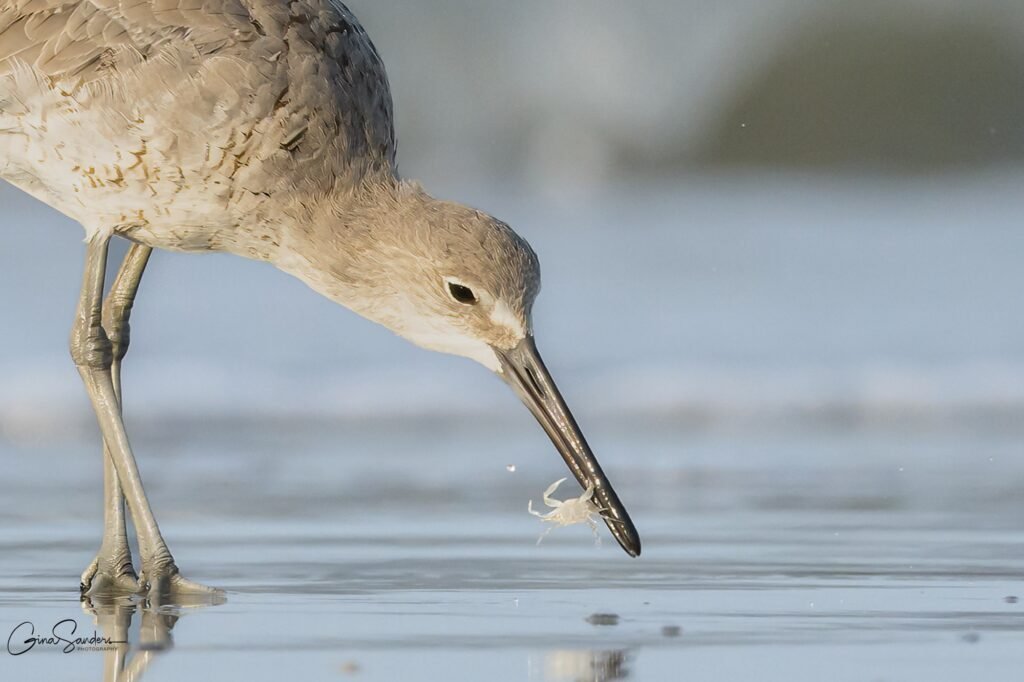
Diet includes insects, crustaceans and marine worms. Willets have a long straight bill that is very sensitive. That way they can feed day or night. They nest in colonies, usually in dense short grasses. They will also display a fake broken wing when danger is near their nest, just like the killdeer. They can lay 4 eggs, and both mom and dad will help with the nesting work but only the male will stay on the nest at night. The oldest known Willet in North America was a female and banded in Oregon. She was at least 10 years, 3 months old when she was found in California.
There are no conservation issues for the Willet. Next time you are birding on the beach, listen for their distinct call. It sounds like it is saying its name!
If you would like to learn more about this bird:
The Cornell Lab of Ornithology – All About Birders: Willet
Written by Melanie Jerome.
Photos by Gina Sanders.
Leave a Reply