
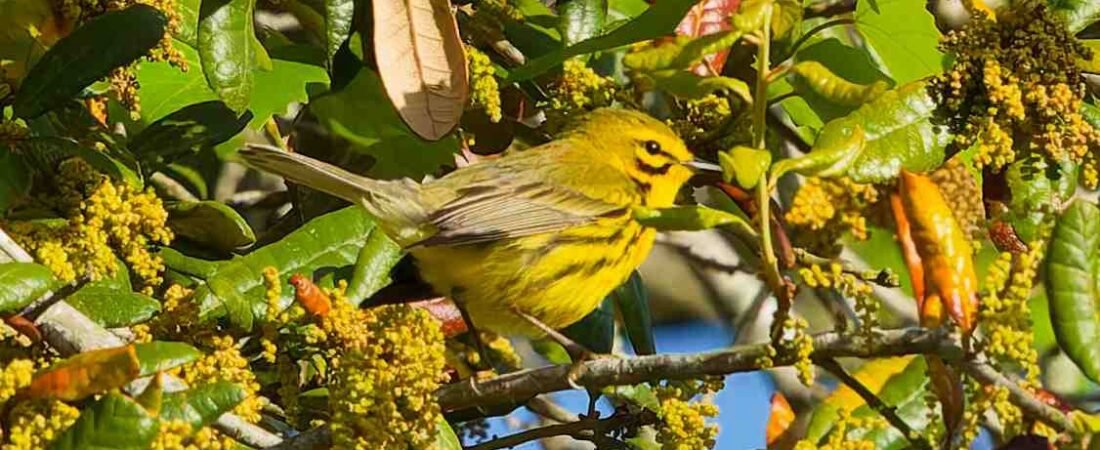
Prairie Warblers are found in scrubby second-growth forests, young pines, and overgrown pastures, not prairies! So how did the Prairie Warbler get its name? According to Wikipedia, the Prairie Warbler was named by Scottish-American ornithologist Alexander Wilson. In 1810, he found the bird in a scrubby area of southwestern Kentucky known locally as “the barrens”. Because people at that time used the word “prairie” for open or brushy clearings, Wilson gave it that common name, though the label is technically misleading.
Prairie Warblers on Seabrook Island can often be seen around Palmetto Lake, the Marsh to Breakers Trail, Crooked Oaks golf course, and like the images below, at nearby Mingo Point. While they breed in the southeast, Cornell Lab’s Merlin app suggests the best time to see them on Seabrook Island is from August to late October.
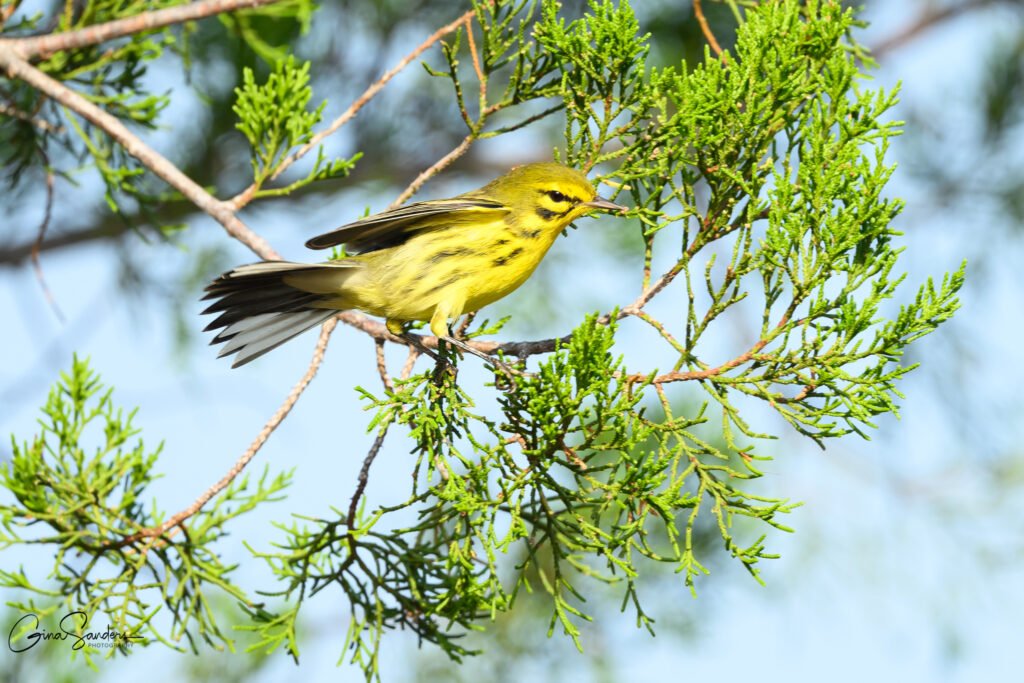
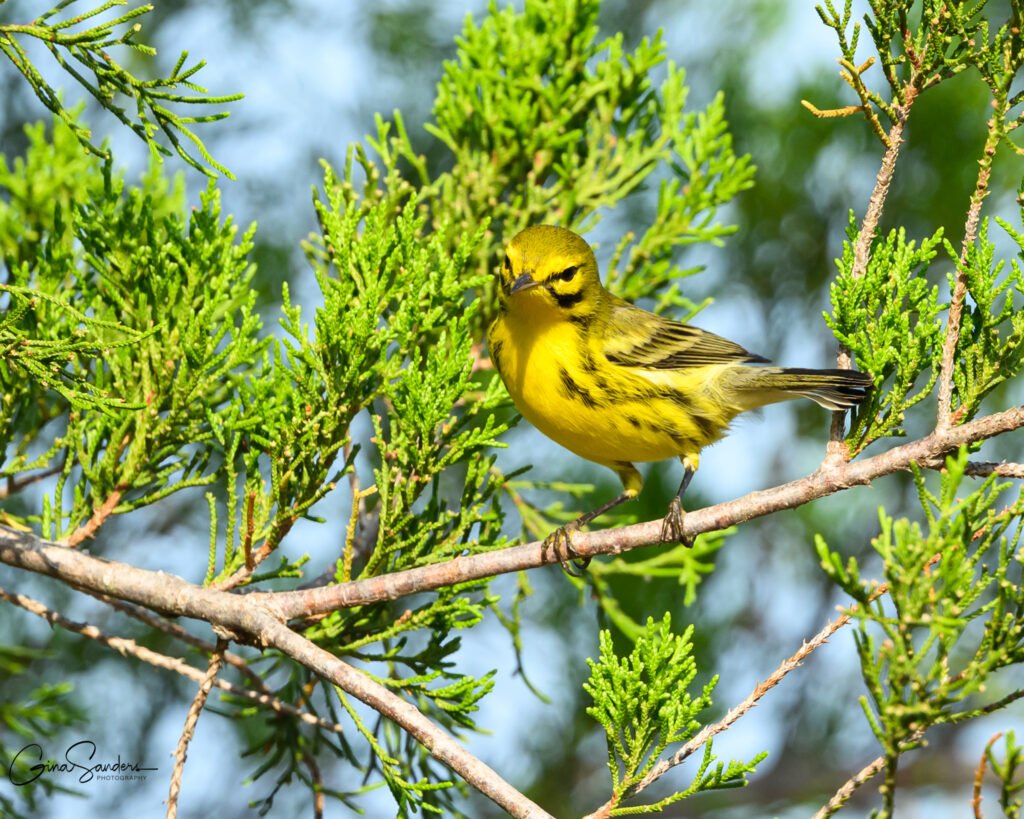
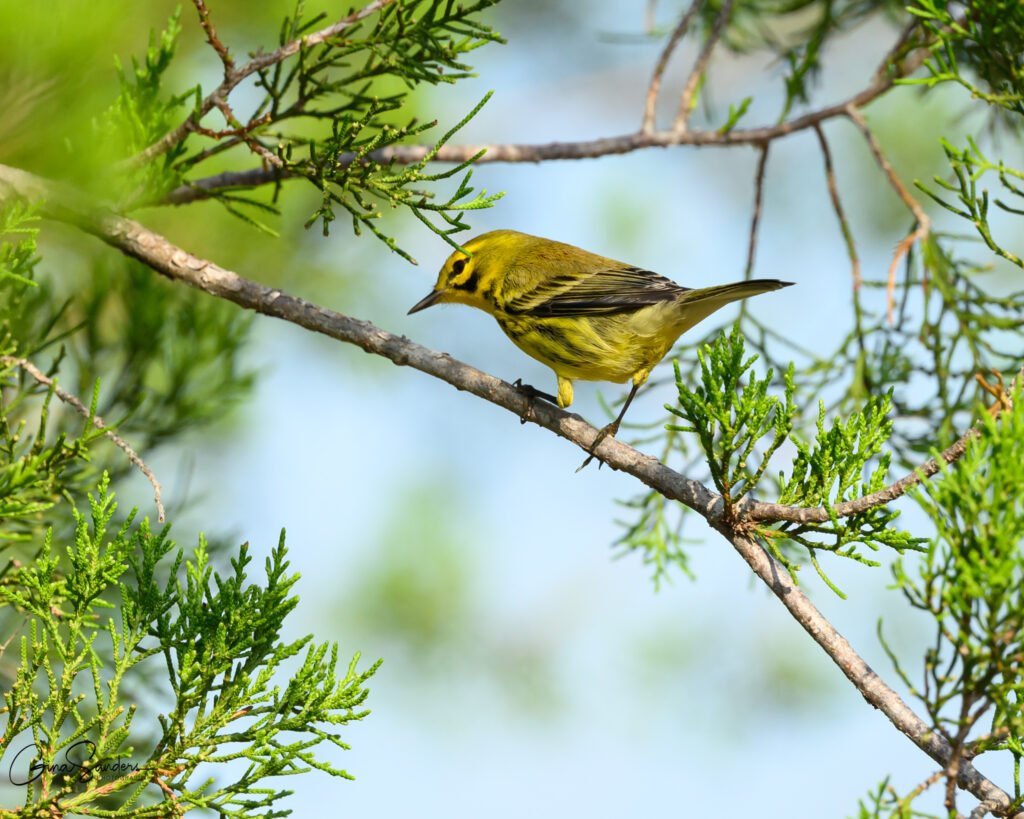
Prairie Warblers eat small insects, spiders, snails, and occasionally fruit. The Prairie Warbler seen in these photos were foraging for insects among the branches.
The Prairie Warbler sings two songs, one directed at females for courtship and another directed at males for establishment and maintenance of territorial boundaries. To hear their zee-zee-zee-zee-zee song, click here.
They nest in tangled limbs and shrubs, about 3-7 feet off the ground. A clutch size is 3-5 eggs and they have 1-2 broods per season.
The 2025 State of the Birds report lists Prairie Warbler as a Yellow Alert Tipping Point species, meaning that it has lost more than 50% of its population in the past 50 years but has relatively stable recent trends. Since colonial times, deforestation has created a great deal of habitat for Prairie Warblers, but much of this is now being lost as towns expand and Eastern forests regrow.
Interesting Fact: The oldest recorded Prairie Warbler was a male, just shy of 8 years old, when he was recaptured and rereleased at a banding operation in Connecticut.
To learn more about Prairie Warblers, you may enjoy this article in the Audubon Field Guide.
Blog source: Cornell Lab All About Birds
Feature/Cover image by Susan Markham.