
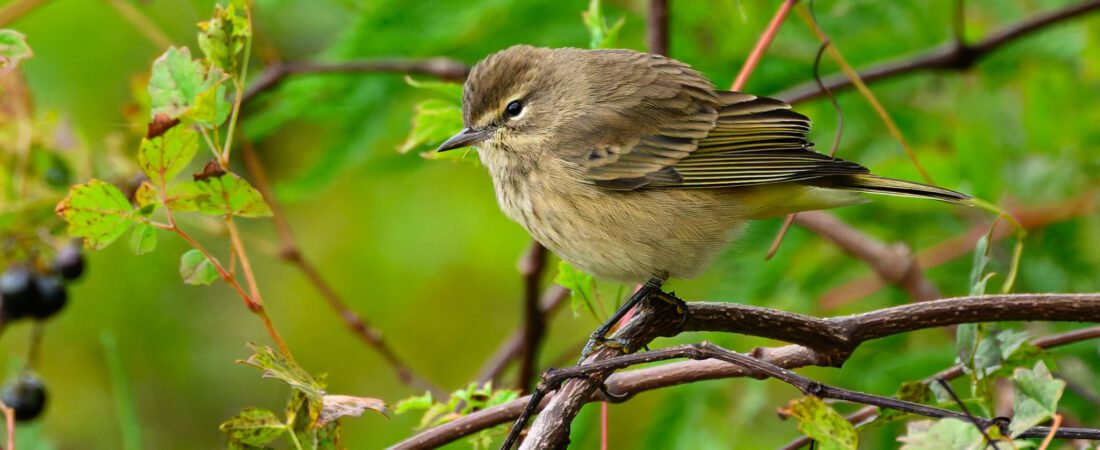
Palm Warbler – Setophaga palmarum
Length: 5.5″; Wingspan 8″; Weight: 0.36 oz.
The Palm Warbler is one of the wood warblers commonly seen on Seabrook Island in the fall and winter months. The most obvious field mark is its tail-wagging habit. Although it is a rather dull olive on its back, as it wags, it shows its brighter yellow underparts. You also might pick up the soft striping on its breast and sides. The male sports a rusty-colored cap in its breeding plumage although we would be less likely to see that here because it does not breed here.


Palm Warblers breed in Canada’s boreal forest, but are more often seen during migration or in our area during the winter months, foraging out in the open. Walk around the Lake House and Palmetto Lake in fall/winter and you’re sure to see a few. You can also create a welcoming backyard environment for them by planting native plants. Palm Warblers are often spotted with sparrows and Yellow-rumped Warblers, so watch for their characteristic tail-wagging to help identify them.
This warbler primarily eats insects from the ground and low shrubs, but they’ll also grab them in midair. In winter they’ll eat some seeds and fruits but insects are still the preferred food.
The Palm Warbler has a weak trill like that of the Chipping Sparrow, but slower. It is primarily on one note but increases slightly in intensity as it progresses. To hear a Palm Warbler, click here.
Although its name would seem to indicate that this bird is found mostly in palm trees, in fact it can be seen in a variety of habitats: open woodlands, low in thickets of shrubs, on the ground, and in open fields.
If you would like to learn more about this bird visit: The Cornell Lab of Ornithology – All About Birders: Palm Warbler
Article written by Marcia Hider in 2017, republished by SIB Communications Team
Photographs provided by: Ed Konrad, Glen Bartley, and Gina Sanders
Leave a Reply