
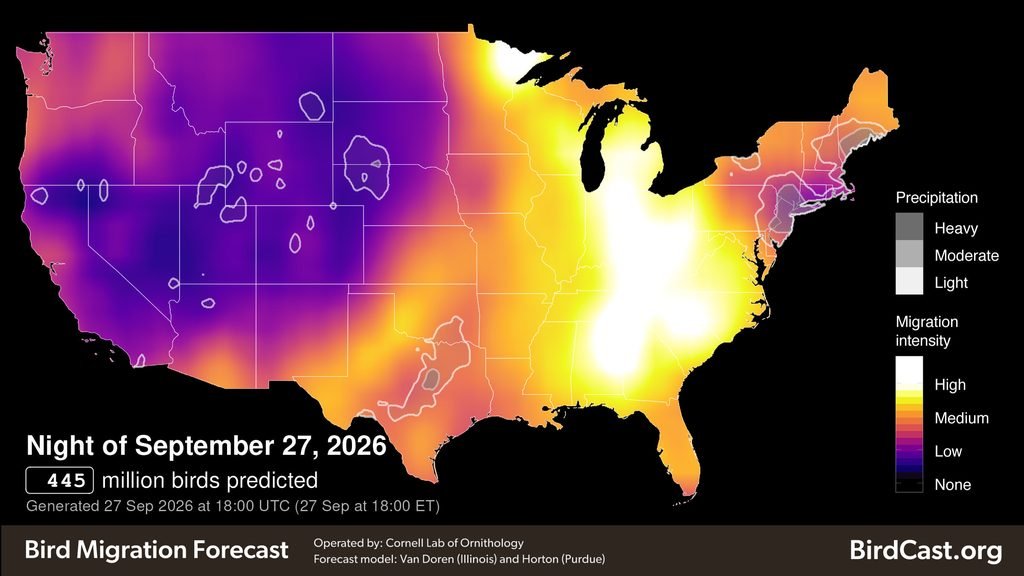
Over the last several days a large number of birds have been migrating through our area at night. Cornell Lab’s BirdCast map has been brightly lit, highlighting the southbound passage of millions of birds. On Seabrook Island, several species of warblers have arrived, with large numbers seen around Palmetto Lake each day.
Four of the warblers we saw the most last week were American Redstart, Northern Yellow Warbler, Black-throated Blue Warbler, and Prairie Warbler. In August we spotlighted both the American Redstart and the Prairie Warbler. If you missed those blogs, you can catch them again here. This week we’ll turn our attention to Black-throated Blue and Northern Yellow Warblers. Both of these migrants are insect eaters, so you won’t see them at your feeders.
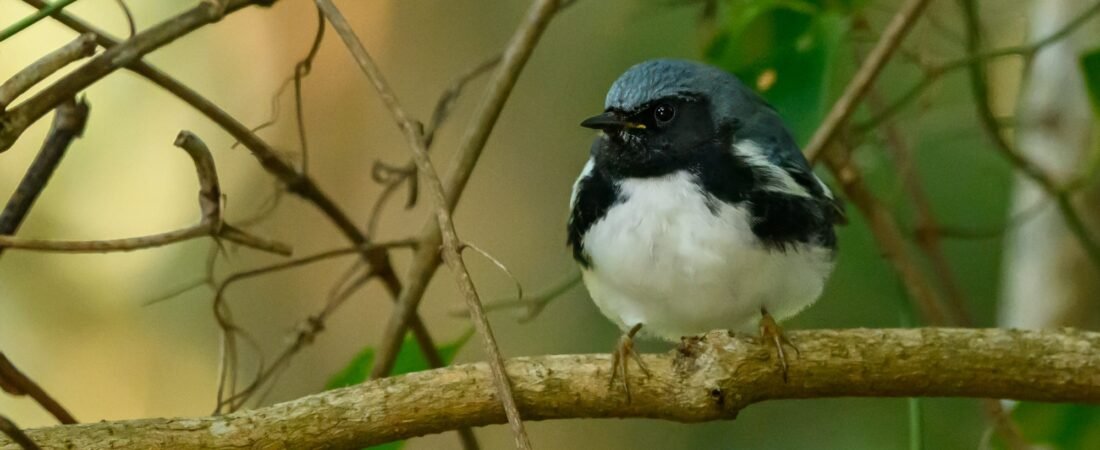
Black-throated Blue Warblers are one of those species we look forward to seeing. Maybe it’s their unique coloring, and maybe it’s because we don’t see them often, but it’s always on our “hopeful” list and it’s very exciting to find one! On a recent walk around Palmetto Lake we saw four!
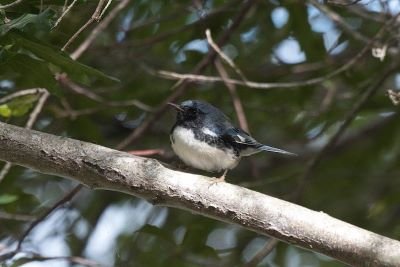

Cornell Lab All About Birds has this to say about the Black-throated Blue Warbler. “This warbler doesn’t spend much time in the treetops, so looking for this bird won’t give you a case of warbler neck; look for them in the shrubby understory and lower canopy in larger tracts of forest during the breeding season. During migration, they forage in all types of woodlands, parks, and gardens, still keeping to lower levels compared to some warblers. Unlike other warblers that molt into “confusing fall plumage,” male Black-throated Blue Warblers keep their distinctive black-and-blue plumage year-round.”
Males and females are so distinctive that they were originally described as two different species. Males have a blue head and back, with a black throat, white underneath and a white spot on their wings. Females, on the other hand, are a plain grayish-olive. Some have a blue tint on their wings and tail, and they also have the white spot on their wings, which is an excellent field mark.
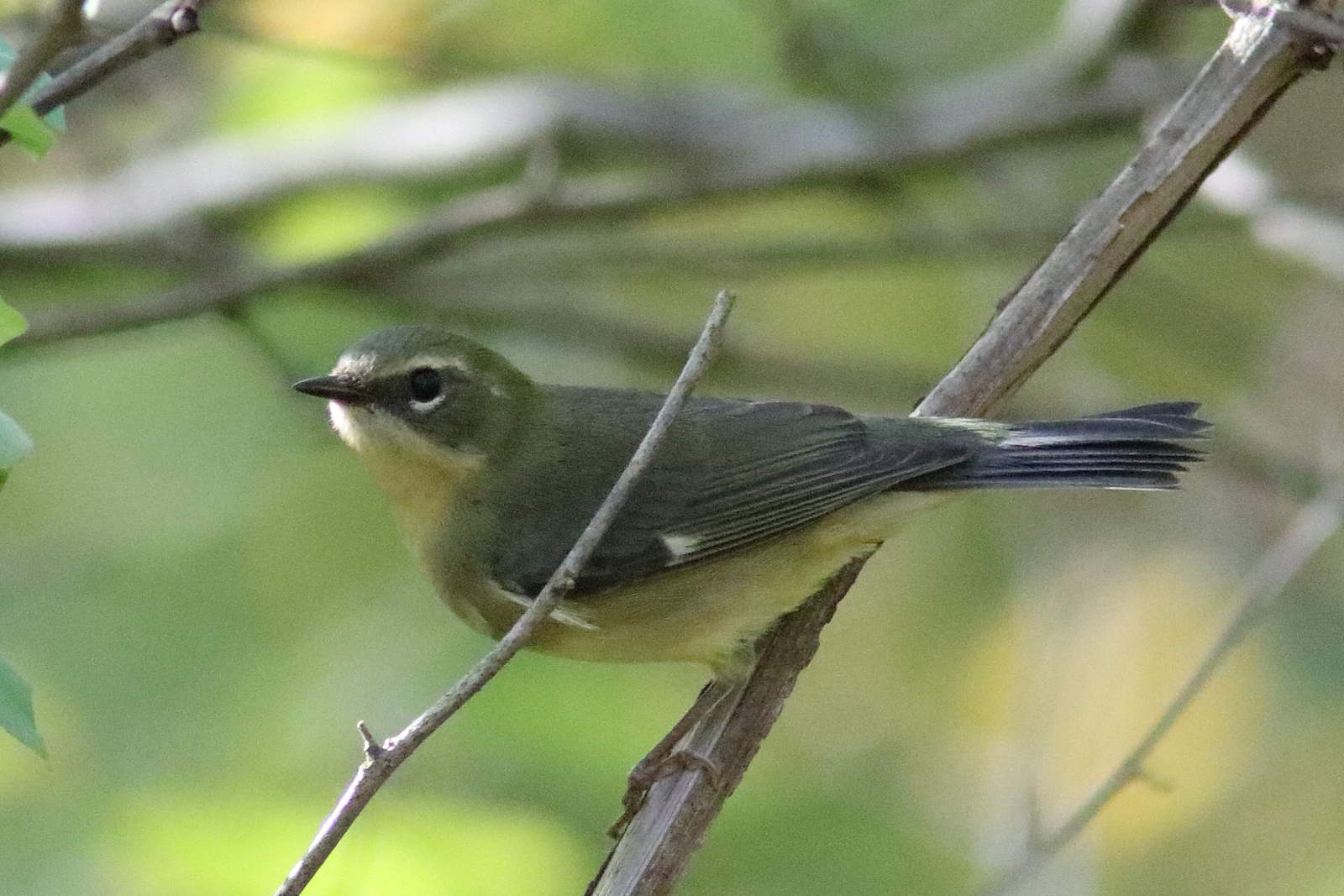
They tend to forage in shrubs and lower tree canopies, with spiders, flies and caterpillars a favorite in the Black-throated Blue’s diet. They breed in the northeast and their breeding range also reaches down into the Appalachian mountains. An average nesting season consists of 2-5 eggs and 1-3 broods per season.
The second warbler of this series is the Northern Yellow Warbler. Known as the Yellow Warbler up until 2025 when ornithologists split it into two species: the migratory Northern Yellow Warbler and the nonmigratory Mangrove Yellow Warbler. Northern Yellow Warbler breeds across most of Canada and the U.S., as well as parts of Mexico, and has a non-breeding range that extends from southern California to northwestern Brazil. Mangrove Yellow Warblers live year-round in coastal mangroves in the Caribbean, the Galapagos, and along sections of the Pacific and Caribbean coasts.

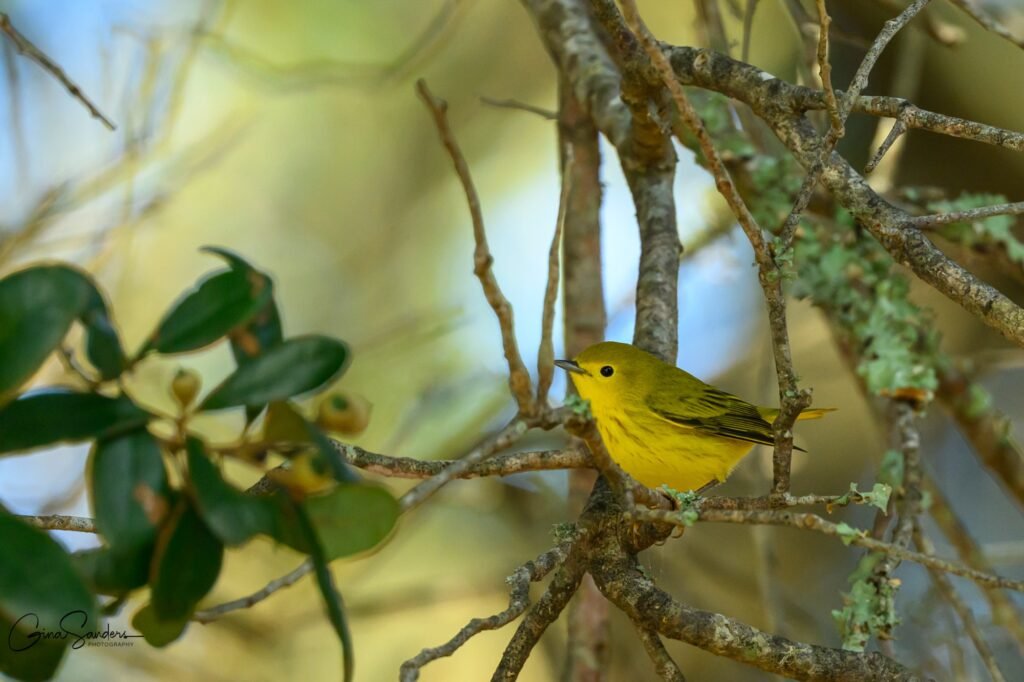
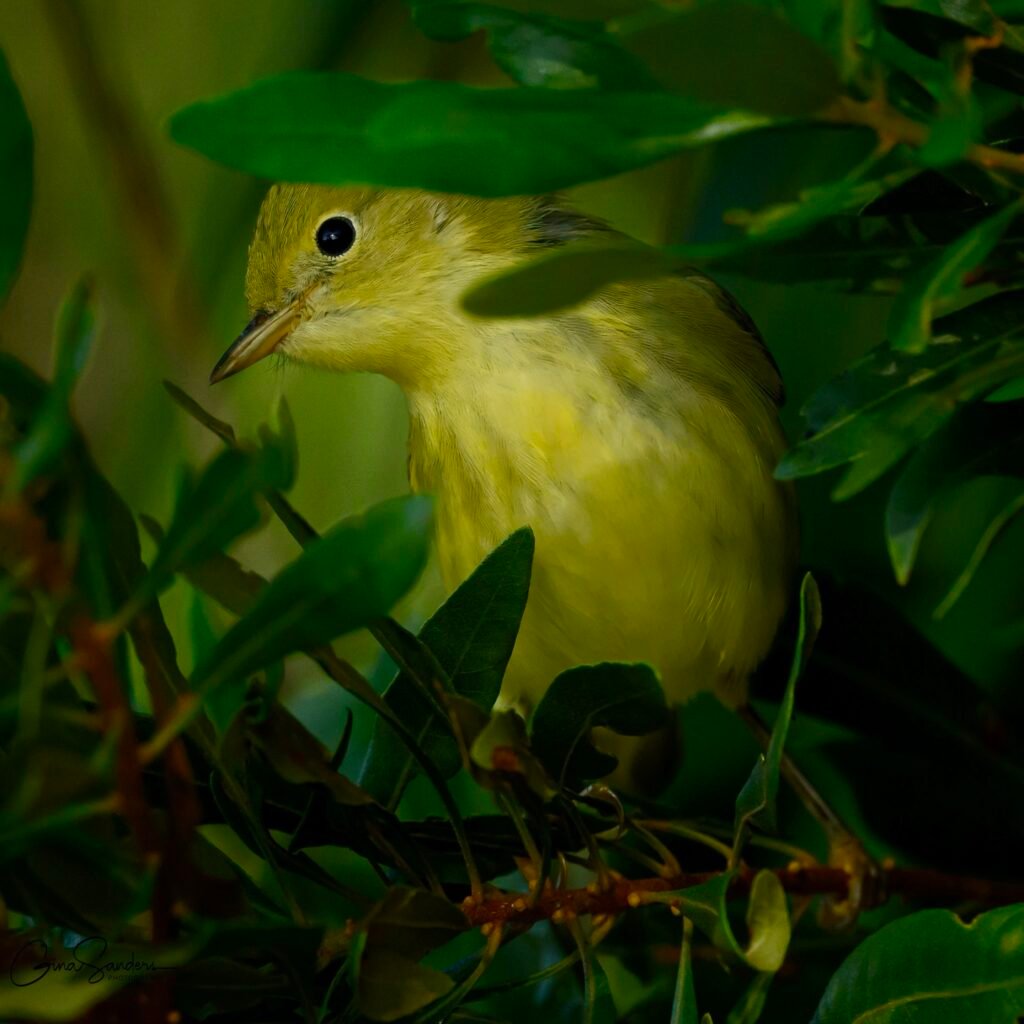
Here on Seabrook Island we see Northern Yellow Warblers during both spring and fall migration, however fall brings us the greatest numbers, with the months of September and October having the highest number of migrants.
They forage along slender branches of shrubs and small trees, picking off insect prey as they go, or briefly hovering to get at prey on leaves. Their diet includes caterpillars, beetles, leafhoppers and other bugs, and wasps.
Northern Yellow Warblers are considered to be long distance migrants. They breed across central and northern North America and spend winters in Central America and northern South America. They migrate earlier than most other warblers in both spring and fall. Like many other migrating songbirds, Northern Yellow Warblers from eastern North America fly across the Gulf of Mexico in a single nonstop journey; some Northern Yellow Warblers in fall take an overland route around the Gulf.
During nesting season, it’s the female who builds the nest and she constructs it over a period of about four days. She lays anywhere from 1-7 eggs, and has 1-2 broods per season. If a Cowbird lays its eggs in her nest, she often builds a new nest directly over the old one, abandoning both her eggs and the Cowbird’s.
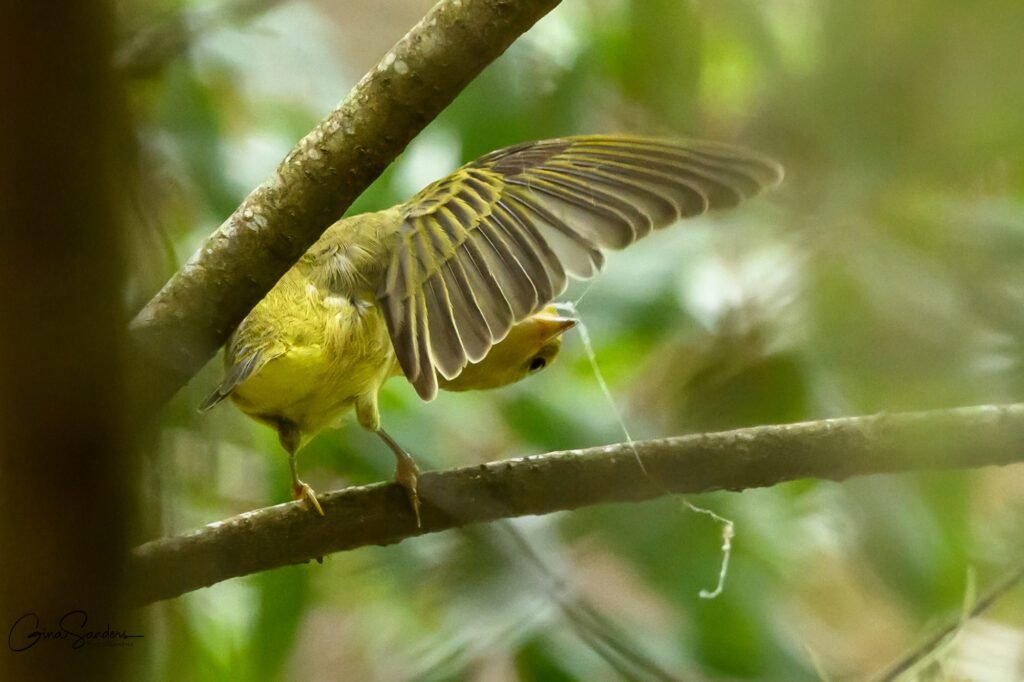
While they often use spiderwebs in the construction of their nest, the webs can also be dangerous for these small birds. Northern Yellow Warblers have occasionally been found caught in the strands of an orb weaver spider’s web. On a recent outing with other members of Seabrook Island Birders, we saw a Northern Yellow Warbler taking several minutes to preen and remove spiderwebs from its wings and feet. Fortunately it was able to clear them and fly away safely.
If you’re curious about the birds passing through our area right now, you may find Birdcast.org to be an interesting website. Using weather radar data to help track movements of migrating birds, Birdcast can accurately forecast the number of birds expected to cross a region on a given night. For instance, last night’s nocturnal forecast was for 445 million birds to cross the US. This radar image shows where the concentration was highest.
After you read this, we challenge you to go out in your backyard or take a walk around Palmetto Lake. Watch the trees and shrubs along the track and pay particular attention to the water’s edge. Perhaps you’ll noticed a Black-throated Blue or a Northern Yellow Warbler, or one of the many other species, hopping around the branches looking for insects. Give some thought to how far they’ve traveled overnight. It’s another reason to admire and respect these little birds.
For more information, go to Cornell Lab All About Birds.
Leave a Reply