Piping Plover – Charadrius melodus
Length: 7.25″; Wingspan: 19″; Weight: 1.9 oz.

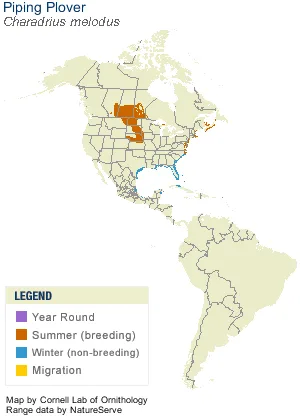
The Piping Plover is a small shorebird that has gotten a lot of attention at Seabrook. It doesn’t nest here, but Seabrook Island is an important fall/winter stopover point for it to feed. It’s feeding habitat has seriously declined since many coastal beaches have been lost to commercial, residential and recreational activities. This is one of the main reasons that the end of North Beach is protected from dogs. On our beach, it feeds on insects, spiders, crustaceans and mollusks. If you watch it carefully for a while, you will see it do a funny tapping with its foot as it looks for food. This is an interesting feeding ploy…tapping it’s foot against the sand to get prey to come to the surface so it is easier to see and capture. The Northern Great Plains and Atlantic Coast Piping Plovers are both considered threatened by USFWS. The Great Lakes Piping Plovers are endangered.
The Piping Plover is a small, stocky (6-7″ long) shorebird that nests and feeds along coastal sand and gravel beaches in North America. It is named for it’s melodic mating call. It is pale, sand colored on it’s upper parts, with white underparts and a black or brown band around it’s neck. It’s legs are yellowish orange and in breeding, the adults have a black forehead, black breast band and orange bill. The female lays 4 eggs in a nest lined with pebbles and broken shells. Both male and female care for the eggs, and chicks can run around and feed themselves in hours. These birds never nest on Seabrook Island.
When you see Piping Plovers on North Beach, they are usually in small numbers, often mixed in with Sanderlings.
If you would like to learn more about this bird visit:


Article submitted by: Aija Konrad
Photographs provided by: Ed Konrad
Resubmitted by Seabrook Island Birders
Leave a Reply