
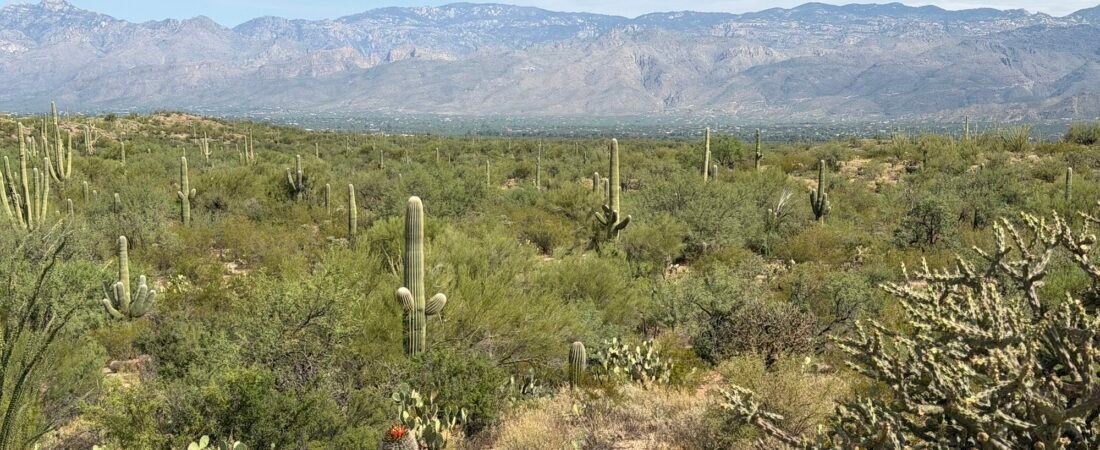
Who goes on vacation in Arizona at the end of August? People who love hummingbirds, that’s who! All across the United States hummingbirds start to make their way south at the end of August. Ruby-throated Hummingbirds in the east gradually work their way south to the gulf states, with many gathering at feeders to fuel up one last time before embarking on their 500 mile migration across the gulf. Some hummingbird species stay in the western states all year, like Anna’s and Costa’s. But others do migrate south and work their way down through Arizona, and from there into Mexico and beyond. It was this gathering of hummingbirds that we hoped to see, and we knew we had about a two-week window to catch the peak migration. We were aware we were going at the end of the monsoon season, and a time with hot temps, but with most of our birding taking place in the Sky Island mountain region of Arizona, we knew the elevations would lead to cooler temperatures.
Our journey started in Tucson. Tucson is a vibrant desert city, with a population of 550,000. It’s home to the University of Arizona Wildcats and the Davis-Monthan Air Force Base. We started our adventure bright and early the first morning with a stop at Saguaro National Park East. Saguaro National Park is actually divided into two parks, east and west, with the city of Tucson sitting right in the middle. Since we plotted our trip to go in a clockwise direction, we started on the east side. Fellow SIB members, Jackie and Walter Brooks, had visited the area previously and said to be on the lookout for Cactus Wrens at the park.
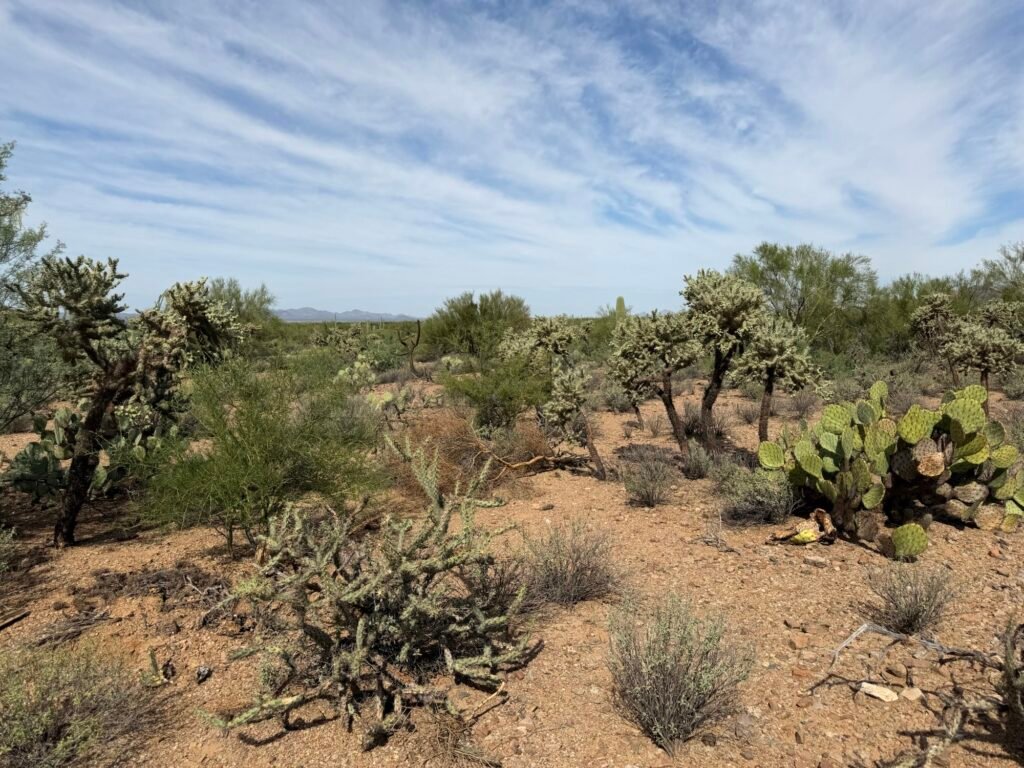
After a short stop in the visitor’s center (and the obligatory hat purchase at the gift shop) we set out on Cactus Forest Drive, an 8 mile loop road through the park. This was perfect as it gave us multiple places to pull over to take photos and search for birds. The scenery was beautiful, with desert vistas showcasing several species of cactus. It was here that we spotted our first seven life birds, including the Cactus Wren and a Greater Roadrunner. We also spotted Verdin, Rufous-winged Sparrow, Black-throated Sparrow, Gila (pronounced hee-luh) Woodpecker, and Curve-billed Thrasher. Starting early in the morning was key, we were able to beat some of the heat but by lunchtime it was already 105 degrees. Needless to say we drank a lot of water.
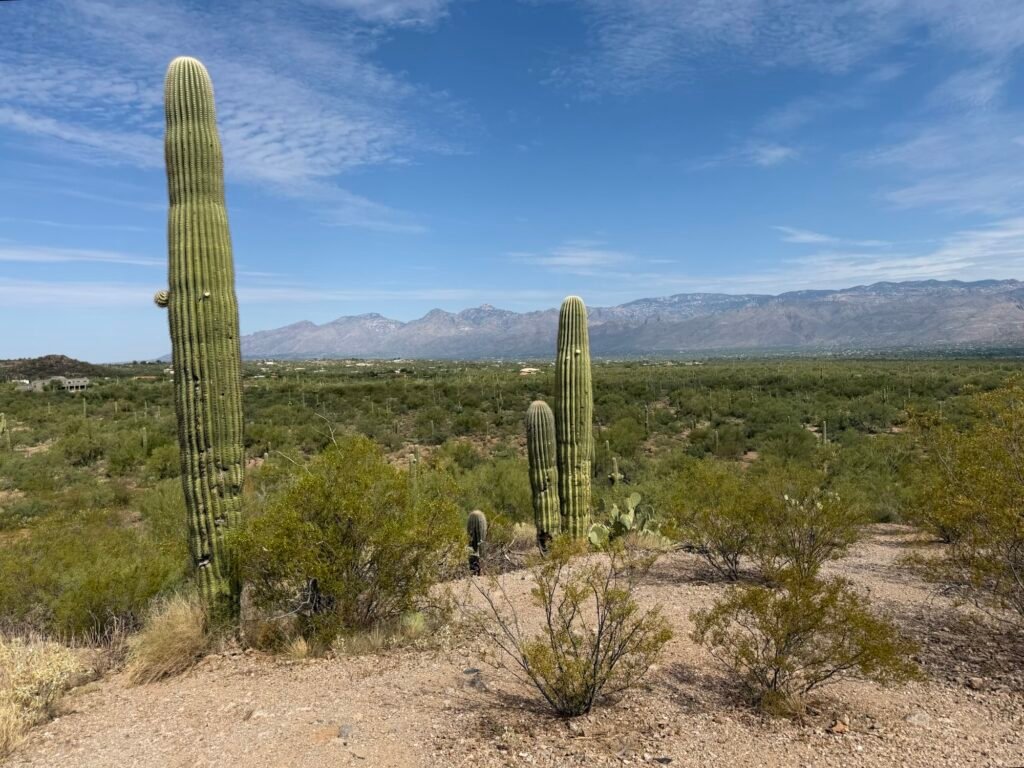
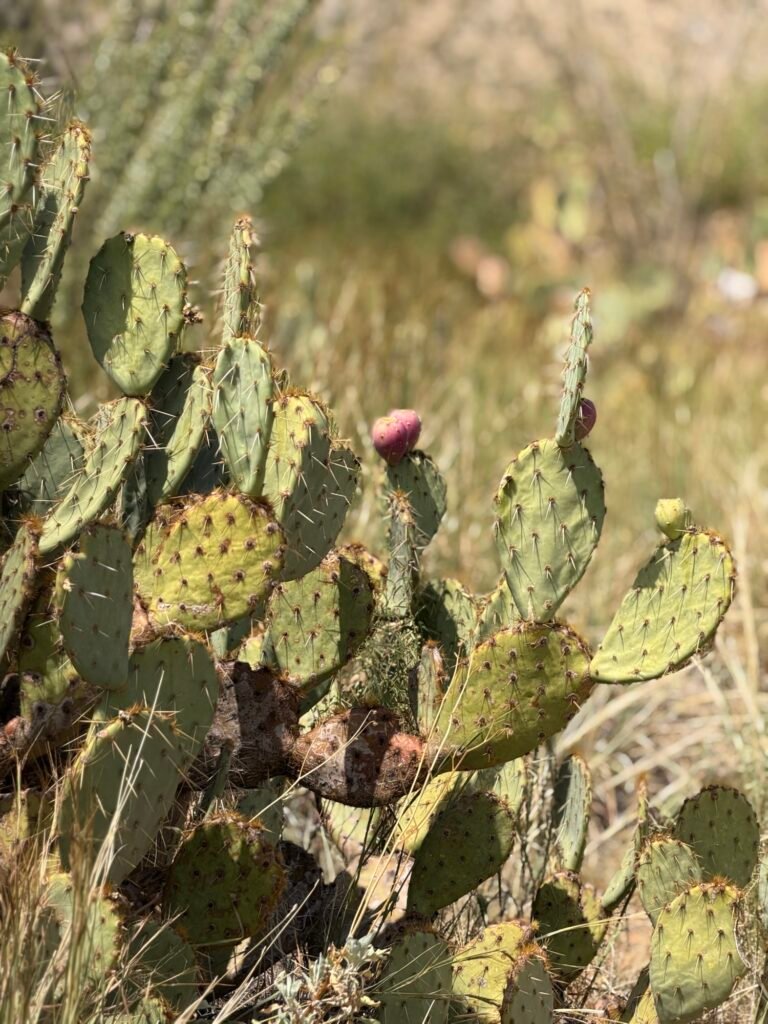
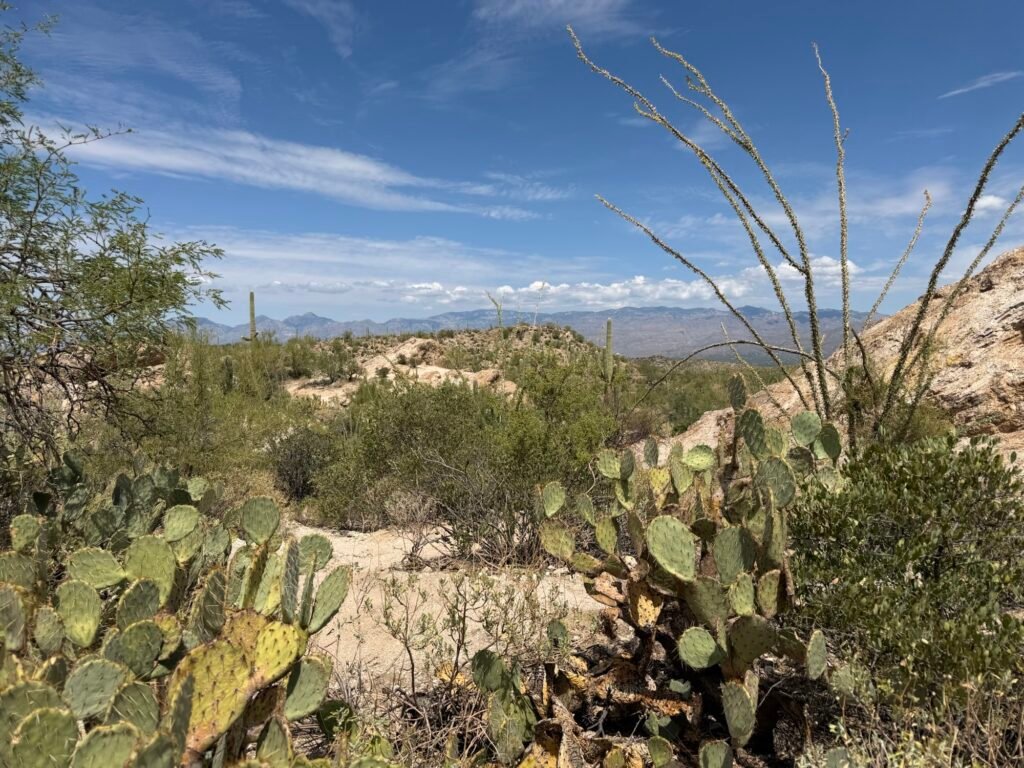
After we left the park we found a grocery store and stocked up. Buying a cheap styrofoam cooler was my husband’s bright idea, and it definitely came in handy. Our stay for the next three nights would be in an area aptly described as a “food desert,” where the closest grocery store was 30 miles away, and our bed and breakfast had no meal service other than, well, breakfast. We did, however, have a full kitchen.
When planning this trip I sought advice from Bob Mercer, as he and Eileen had been there and knew the area well. Bob’s idea to set up camp in one area for a few days, then move over to another location for a few more days, was the right way to go. We started in Hereford, Arizona and stayed in a wonderful Bed & Breakfast called Casa de San Pedro.
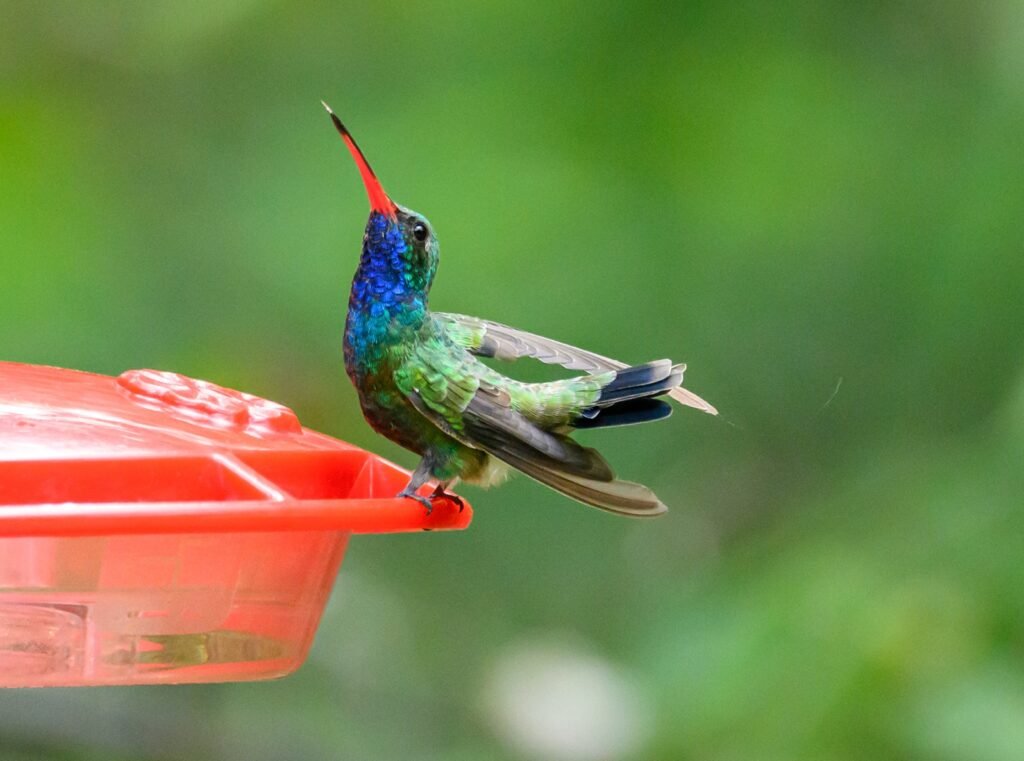
Casa de San Pedro is a birder’s paradise. In fact, it caters to birders, naturalists and photographers, and we didn’t meet anyone who wasn’t a birder! They have numerous bird feeders set up around the property and several hummingbird feeders in the courtyard. It was such a peaceful setting, listening to the water fountains while enjoying the multitude of hummingbirds around the feeders at every hour of the day. Hummingbirds are such a big part of their environment that they even hold hummingbird banding sessions every Friday, throughout the spring and summer. Our timing was off and we missed the banding, but we perfectly timed the migration of hummingbirds! Every hummingbird feeder was full, from daybreak until the last sliver of light. We were fortunate to see Black-chinned, Anna’s, Rufous, and Broad-billed Hummingbirds each day!
The B&B sits on 10 beautiful acres of land, but the jewel is the 57,000 acres of the San Pedro Riparian National Conservation Area right next door. Just steps from the back gate and we were out on some of the most beautiful property of the whole trip. The area protects a rare desert riparian (riverbank) ecosystem that is home to hundreds of species of birds, mammals, reptiles, and amphibians, and protects roughly 40 miles of the San Pedro River. Needless to say, the birding was excellent.
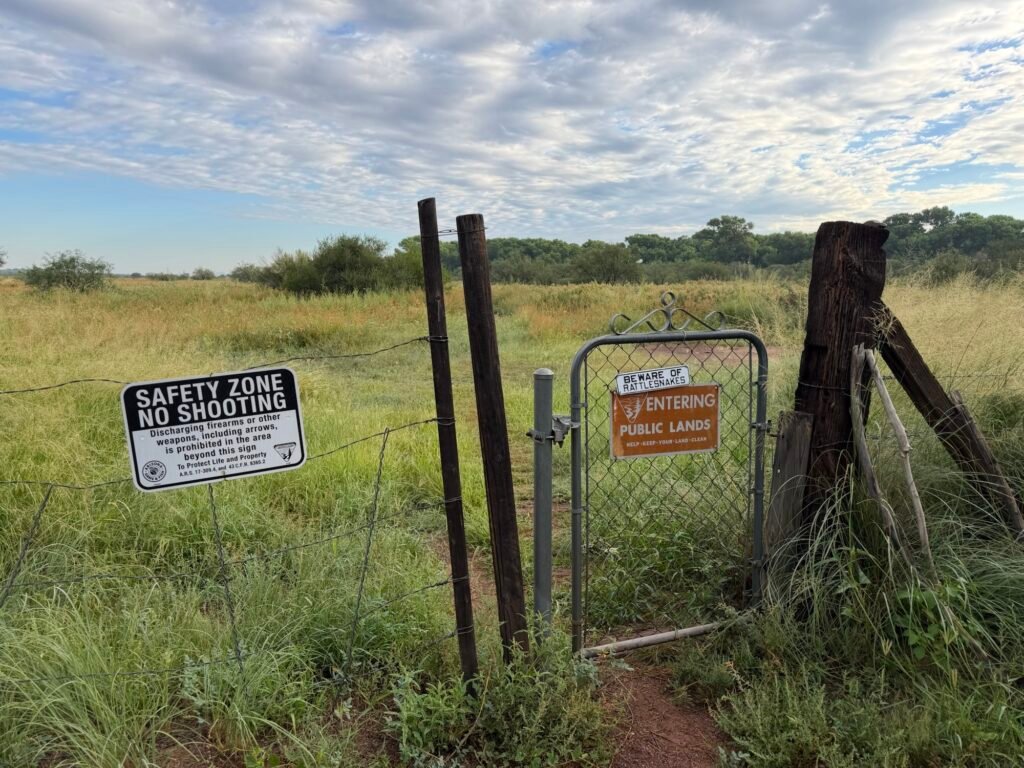
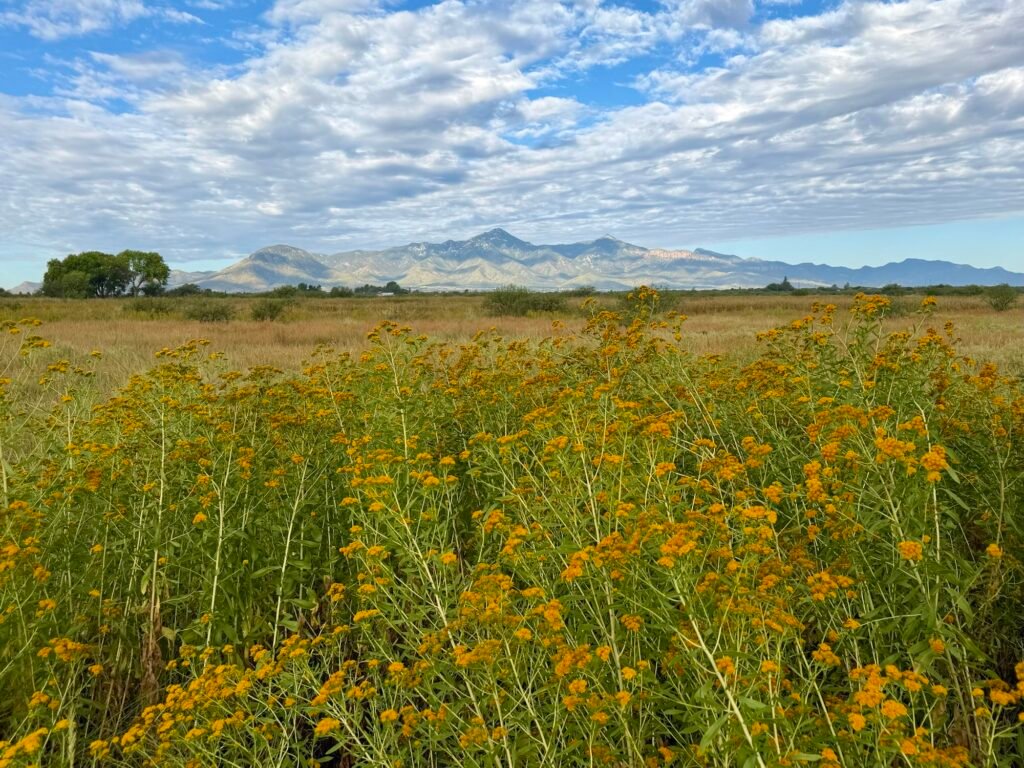
We decided to hire a birding guide for a half day (7 hours) and we’re very glad we did. Without the guide we may have missed a few flycatchers and sparrows, and they knew the best places to go! We walked the public land next door, hiked a trail in Ramsey Canyon, and visited Ash Canyon Hummingbird Sanctuary. It was a busy day and netted several life birds, including a Lucifer Hummingbird at Ash Canyon.
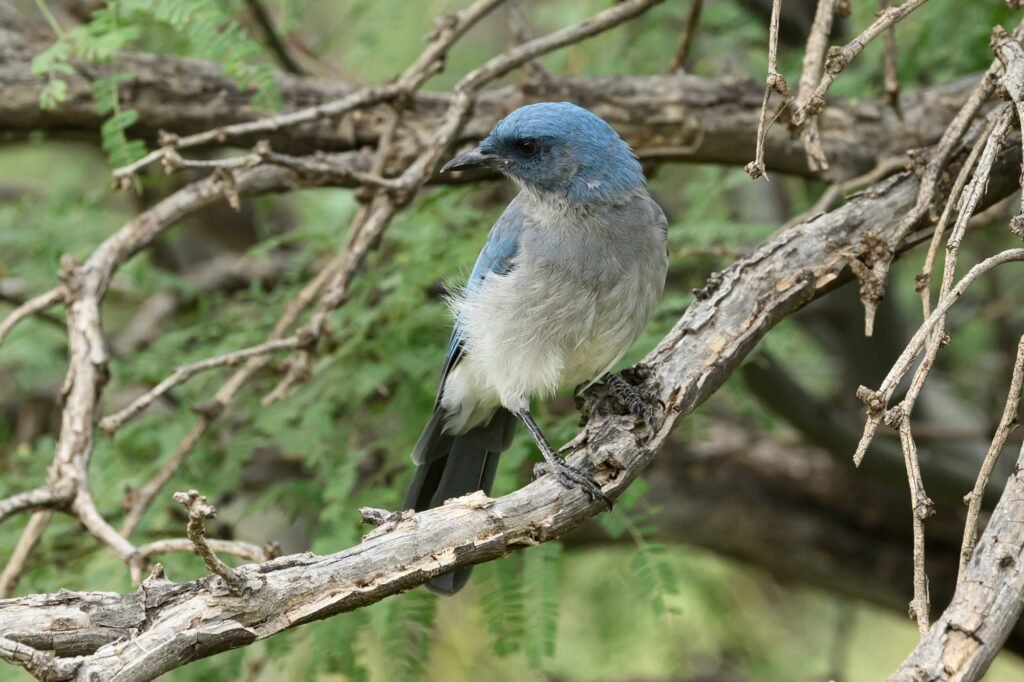
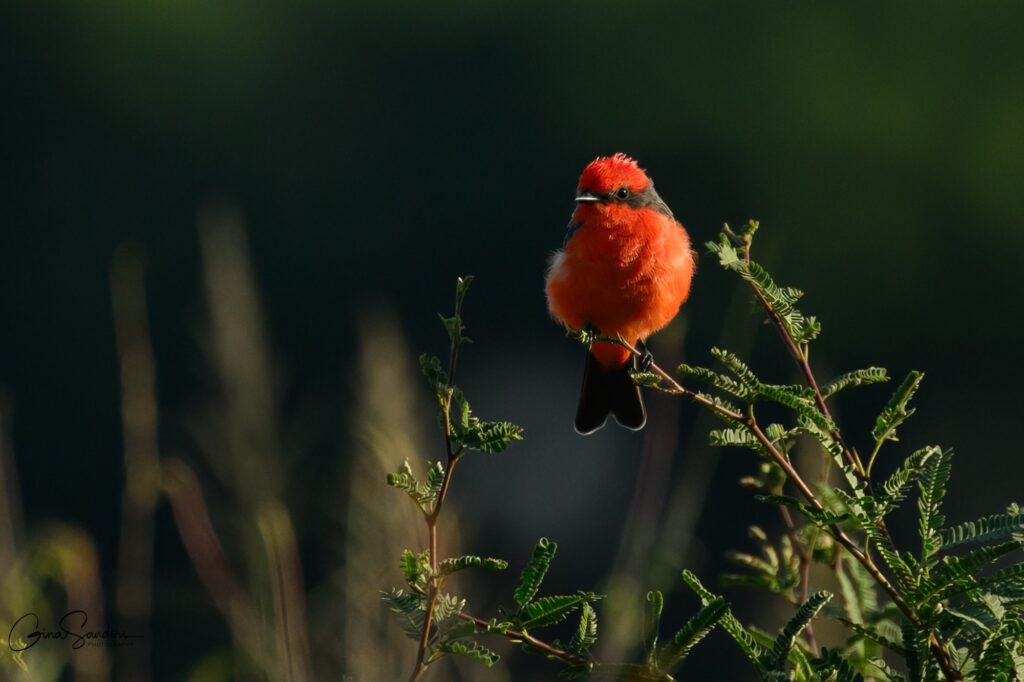
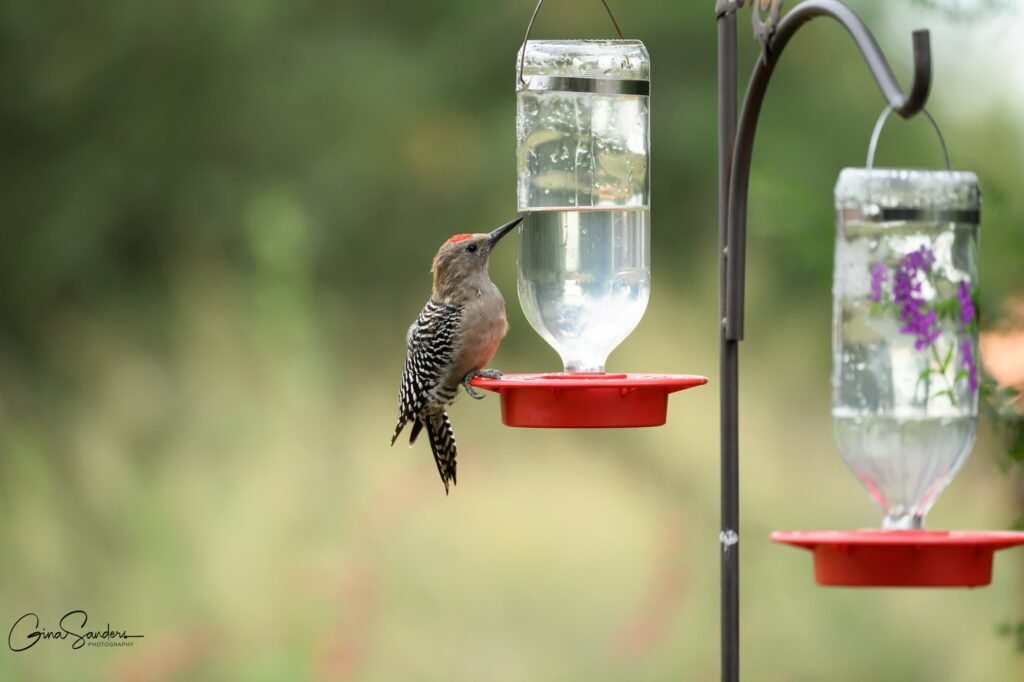
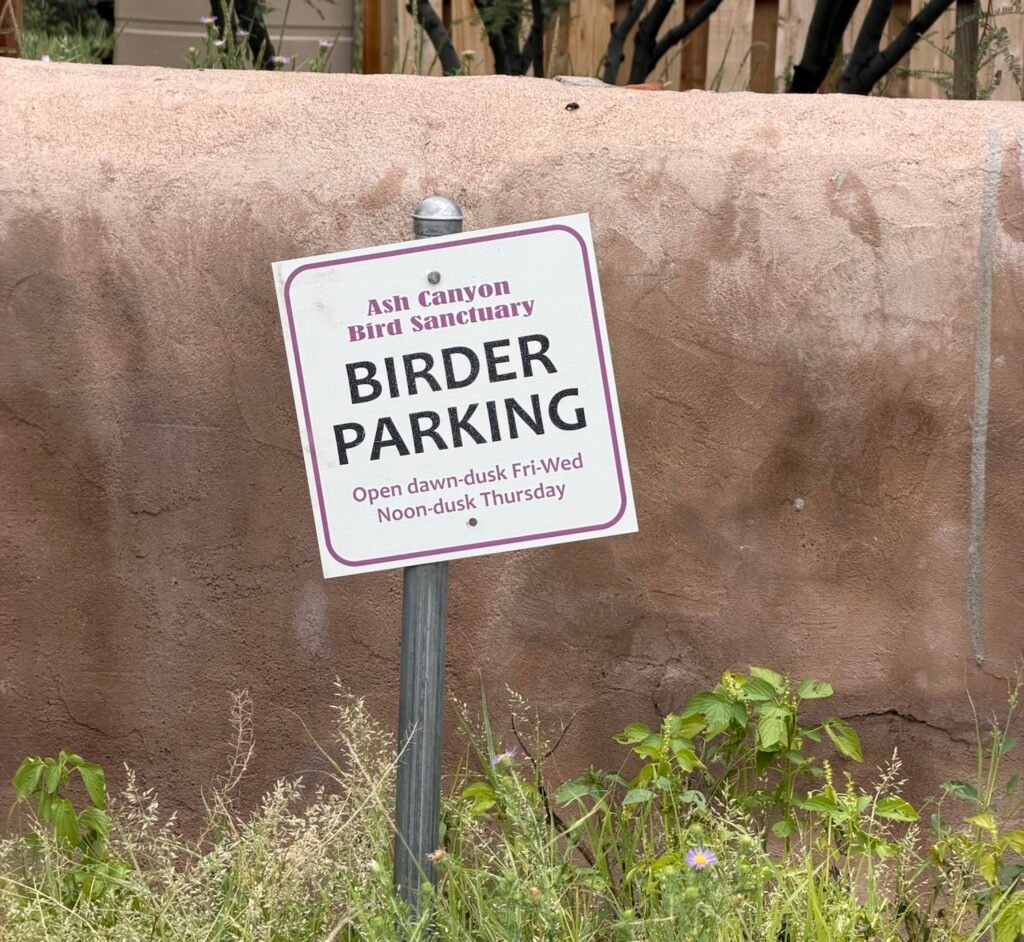
If you’d like more information about accommodation at Casa de San Pedro, birding in the local area, as well as local guides, you can find all this information on their website. We worked with Arizona Borderlands Master Naturalists, Gordon and Lori Lam, of Hereford Birder. They were terrific guides and we can’t thank them enough for making our day so memorable!
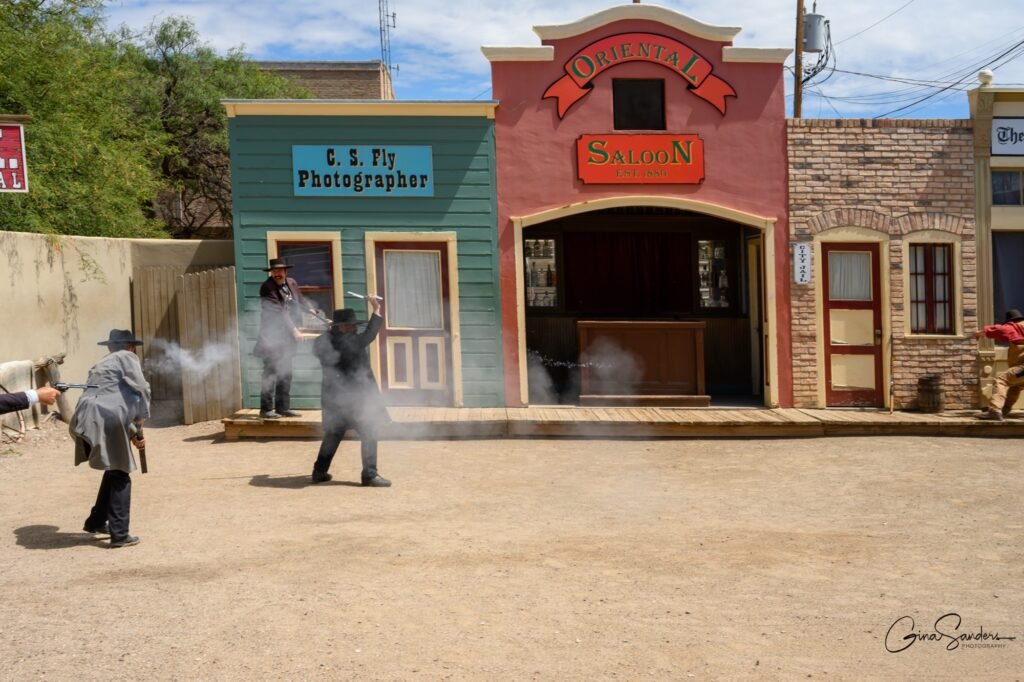
We took a day off from birding to do some sightseeing in the area and decided to head to Tombstone. We spent time in the Courthouse Museum and even caught the gunfight reenactment of the shootout at the O.K. Corral. Your gunfight ticket also includes a unique souvenir – a reprint of the “Tombstone Epitaph” newspaper with the original 1881 gunfight reports.
Our next destination was Tubac, AZ. Since my husband is technically “not a birder,” we decided to stay at the Tubac Golf Resort and Spa. If you saw the movie “Tin Cup,” starring Kevin Costner, Cheech Marin, and Don Johnson, then you’re already familiar with this resort. Two of the iconic scenes from the movie were filmed here, and they’ve put markers and signs on the golf course to point out the locations. Jeff enjoyed playing the course, and I enjoyed going along for the ride.
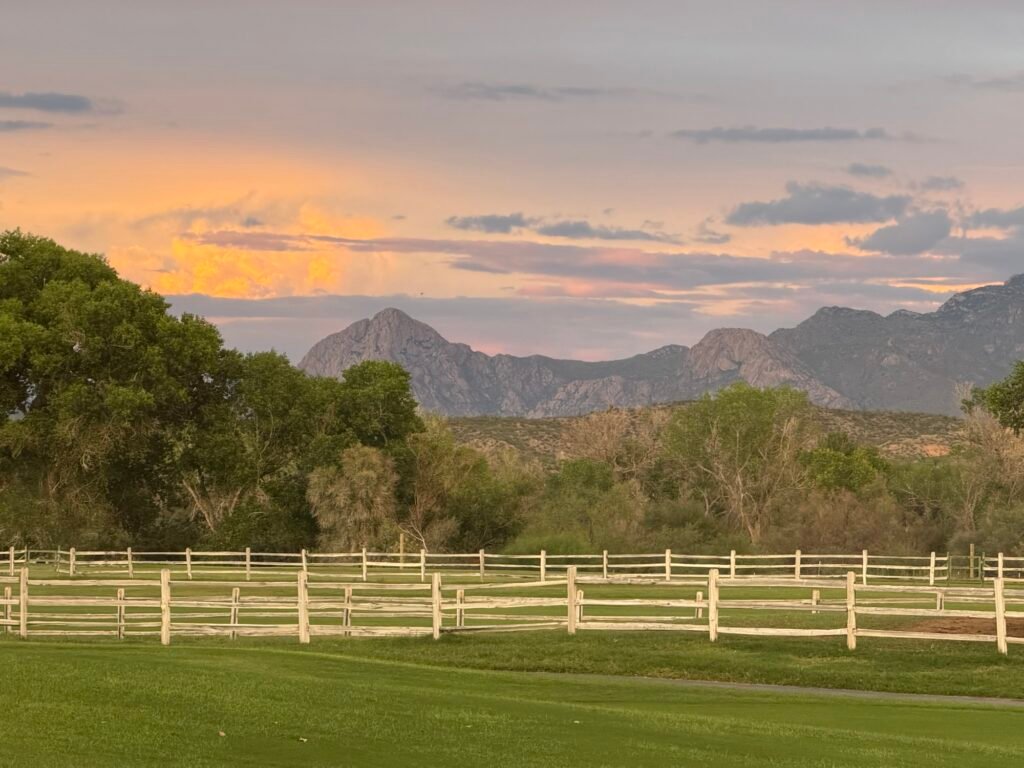
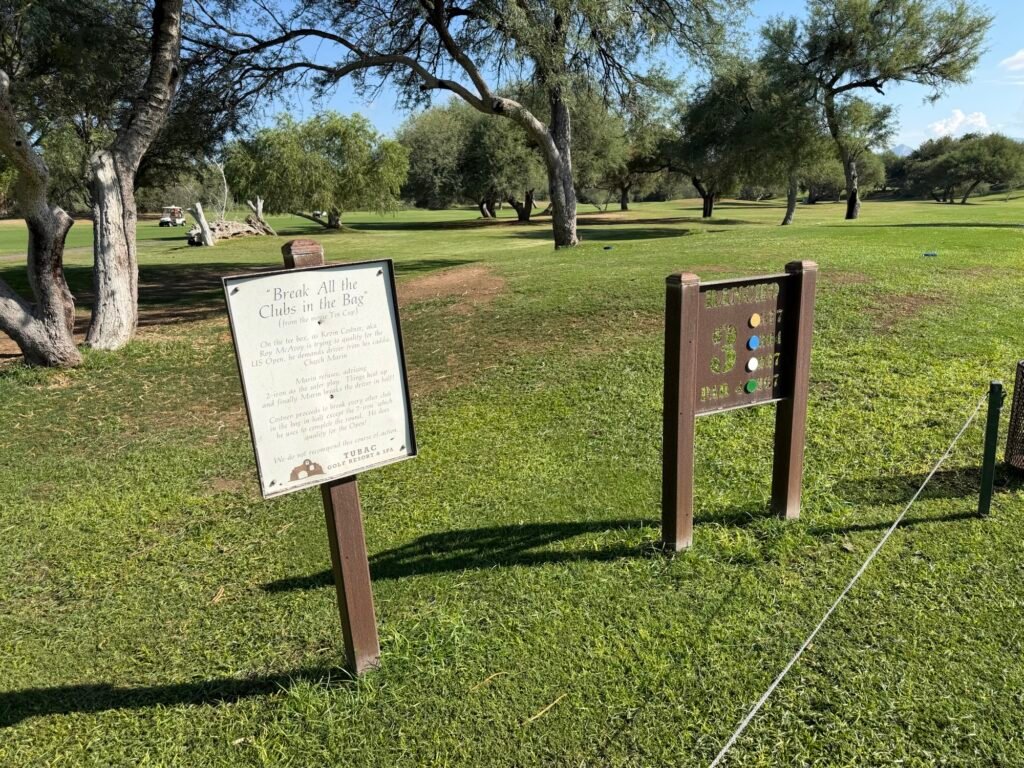
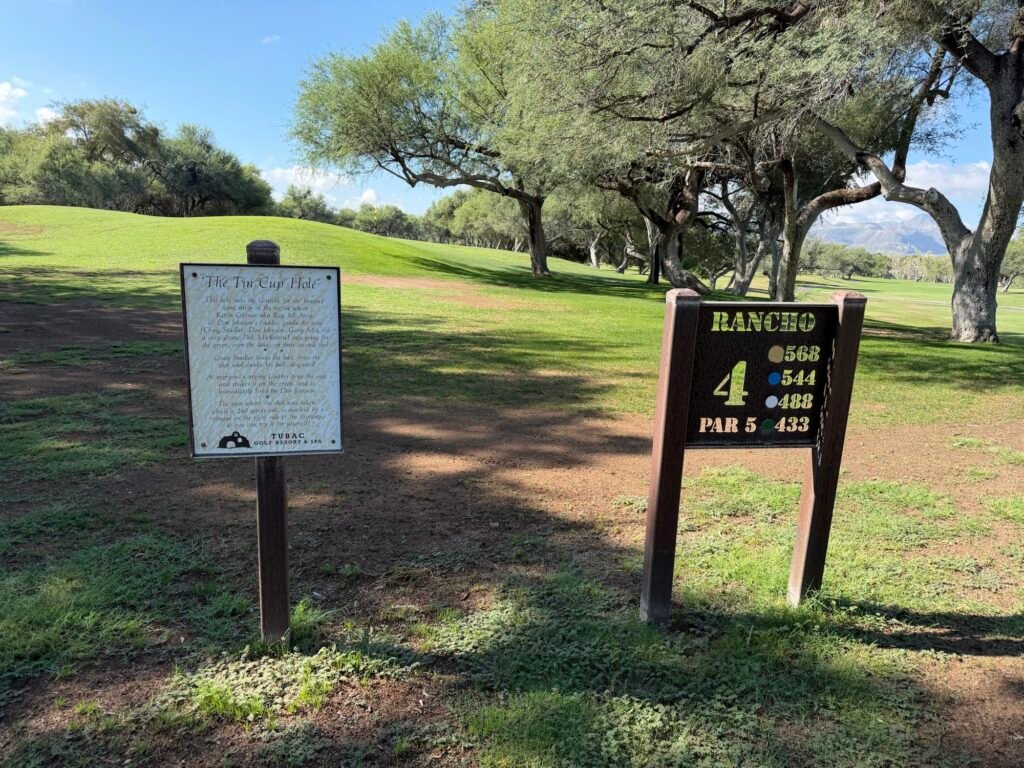
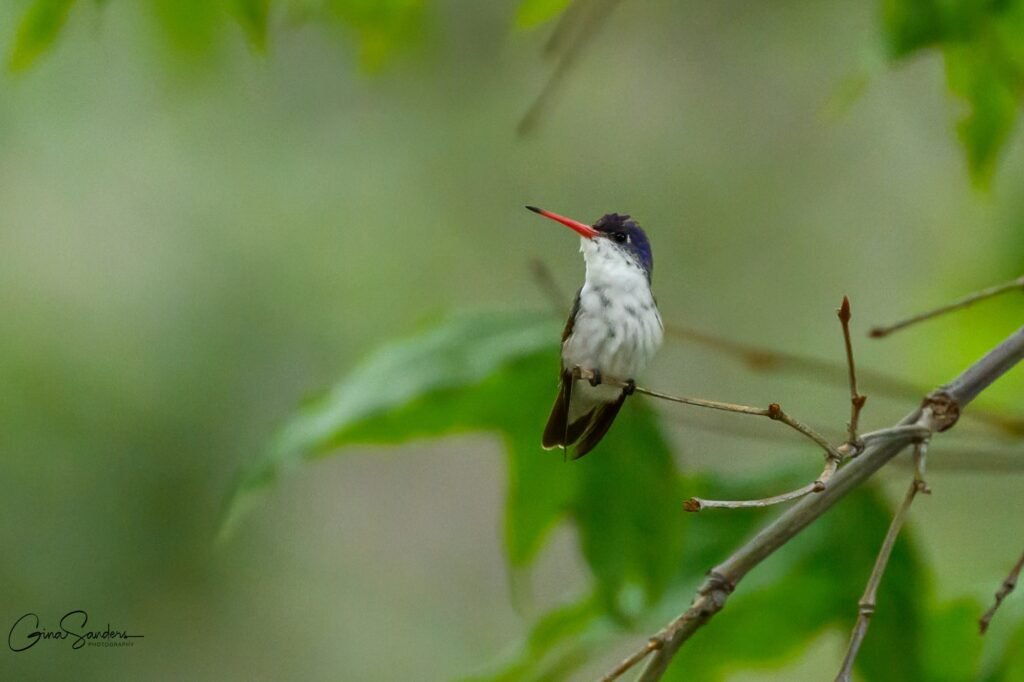
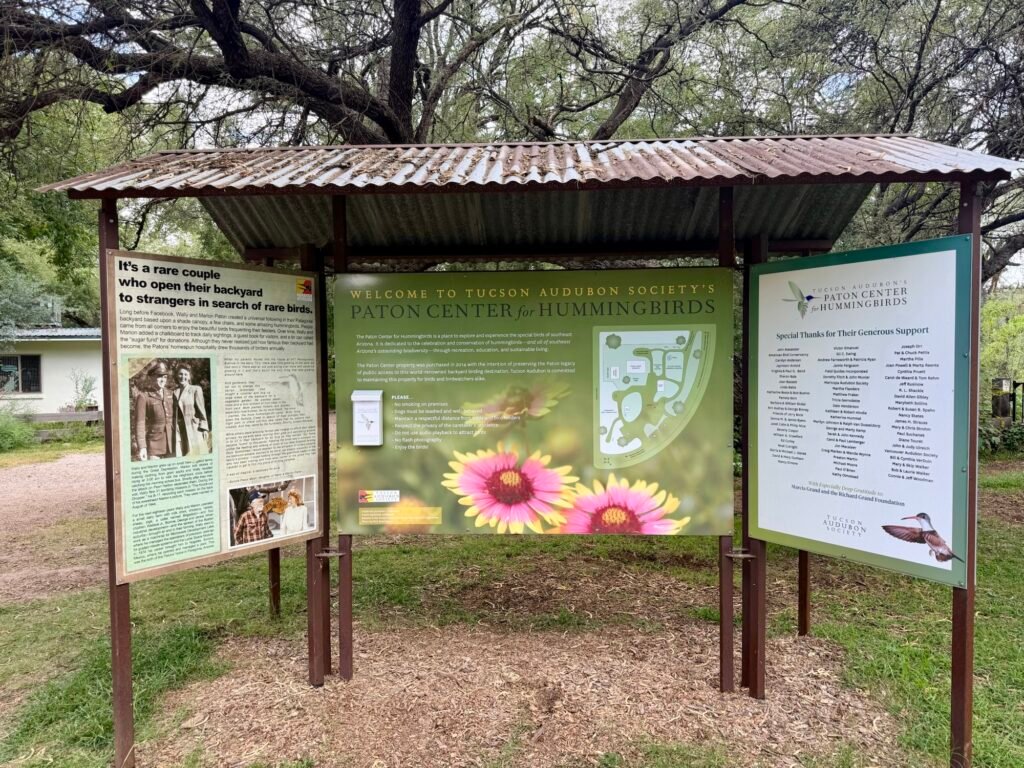
Next to the resort, in fact right alongside the driving range, is the Juan Bautista de Anza National Historic Trail. We spent a morning birding along the river and I picked up two more life birds – Western Tanager and Say’s Phoebe. We also drove over to Patagonia and the Paton Center for Hummingbirds, where we saw large numbers of hummingbirds, including the Violet-crowned Hummingbird. Tubac proved to be a beautiful stop, and the nearby village of Tubac had some wonderful shops selling beautiful decor and local art.
As we worked our way back toward Tucson, our final day was spent at the Saguaro National Park West and the Desert Museum. If you’re looking for great souvenirs, both of these locations have fabulous gift shops!
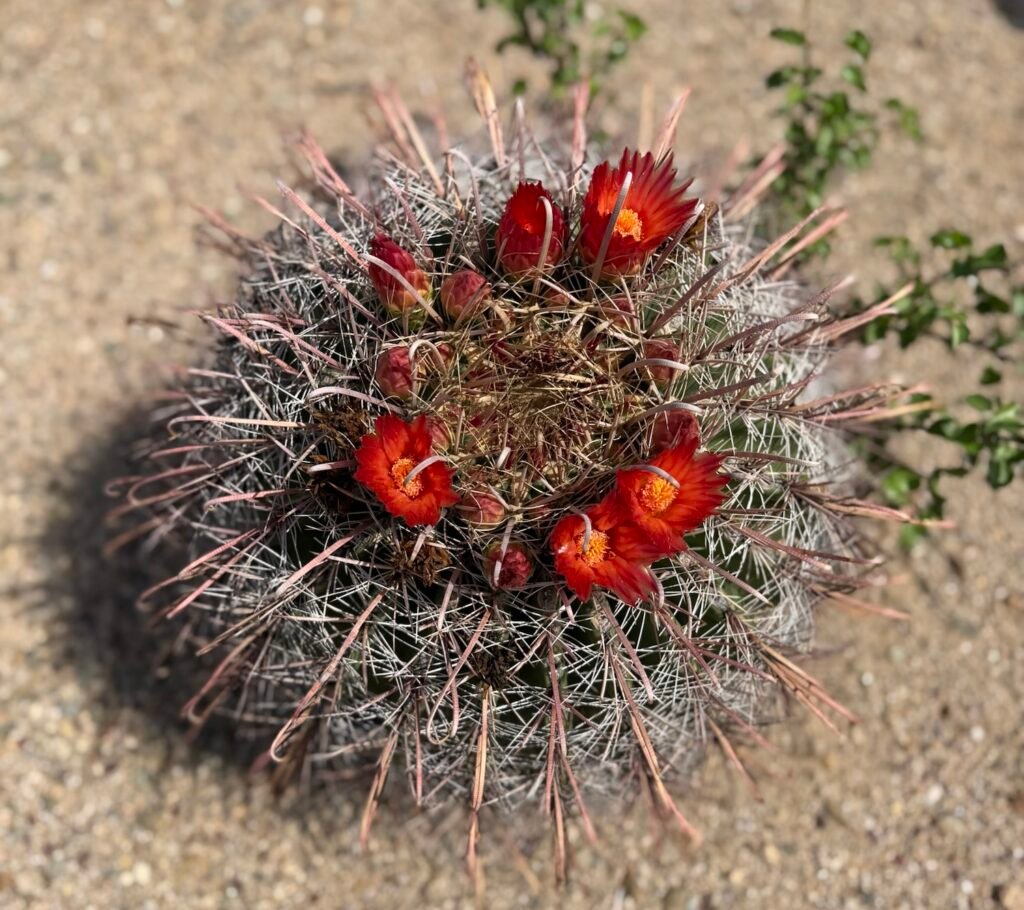
It was a great week, and I was thrilled with my first trip to the desert, and of course the 39 life birds I saw. And seeing all the hummingbirds was a true highlight for me. On the plane coming home, Jeff asked me if I would ever go back, and if so, what I would do differently. Yes, I definitely would, and I would probably go in spring to see the beautiful color of the desert wildflowers. And I would stay a little longer. It takes a while to soak in all the beauty, the wildlife, and of course, all the birds. After all, I still have a few more life birds to find!
Written and photographed by Gina Sanders
Leave a Reply